



Buckle up, humans: why driverless cars matter
The idea of a fully autonomous vehicle, driven without human involvement, lingered for decades in science fiction and engineers’ daydreams. Yet rapid advances in artificial intelligence, machine learning, robotics and computing in recent years have brought that future closer than ever.
Today, leading carmakers and young start-ups are actively developing and testing driverless cars, while governments are setting legal frameworks for their operation on public roads. Scientists and engineers are tackling remaining issues in algorithms, hardware and the cybersecurity of robocars.
If this revolution in transport succeeds, the changes could be epochal—from logistics and urban ecology to traffic management and consumer habits. Are we ready to overtake the future by handing the wheel to artificial intelligence? Forklog set out to answer.
- Driverless transport appeared 100 years ago, but real progress came only in recent decades thanks to advances in AI, robotics and computing.
- The accepted taxonomy describes six levels of autonomy—from no automation (level zero) to full automation (level five).
- Autonomous cars use a sophisticated array of sensors paired with powerful chips and algorithms.
- Mass adoption promises societal benefits but also entails risks and challenges.
- For ubiquity, remaining technological issues must be solved, public concerns addressed and urban infrastructure adapted.
A century of driverless-car evolution
The notion of self-driving machines dates to the dawn of the automobile industry. As early as 1925 the company Houdina Radio Control demonstrated the radio-controlled American Wonder based on a Chandler, which drove itself through New York’s busy streets.
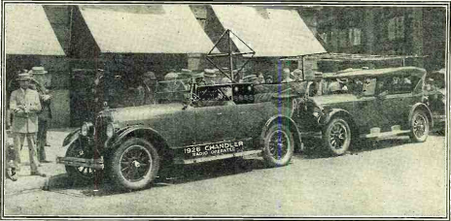
Though it cannot be considered fully autonomous, the “American Wonder” marked the start of work in this direction. Serious experiments began in 1939, with promising trials in the 1950s. Research has continued ever since.
The first truly autonomous cars emerged in the 1980s thanks to the Navlab and ALV projects at Carnegie Mellon University, as well as Eureka Prometheus by Mercedes-Benz and the Bundeswehr University Munich. That spurred further development of self-driving technology.
In recent decades many large companies have built working prototypes, including Mercedes, GM, Continental, Bosch, Toyota, Audi, Volvo, Google and others. One standout was the Vislab’s BRAiVE car, which in 2013 completed a mixed route.
That same year saw the launch of the Cruise start-up and Tesla Autopilot, both pivotal for the industry. Three years later Tesla unveiled the more advanced Full Self-Driving (FSD).
In 2016 Google created the subsidiary Waymo—now one of the leaders in driverless technology. Chinese firms Baidu and Pony.ai announced similar systems in 2013 and 2016, respectively.
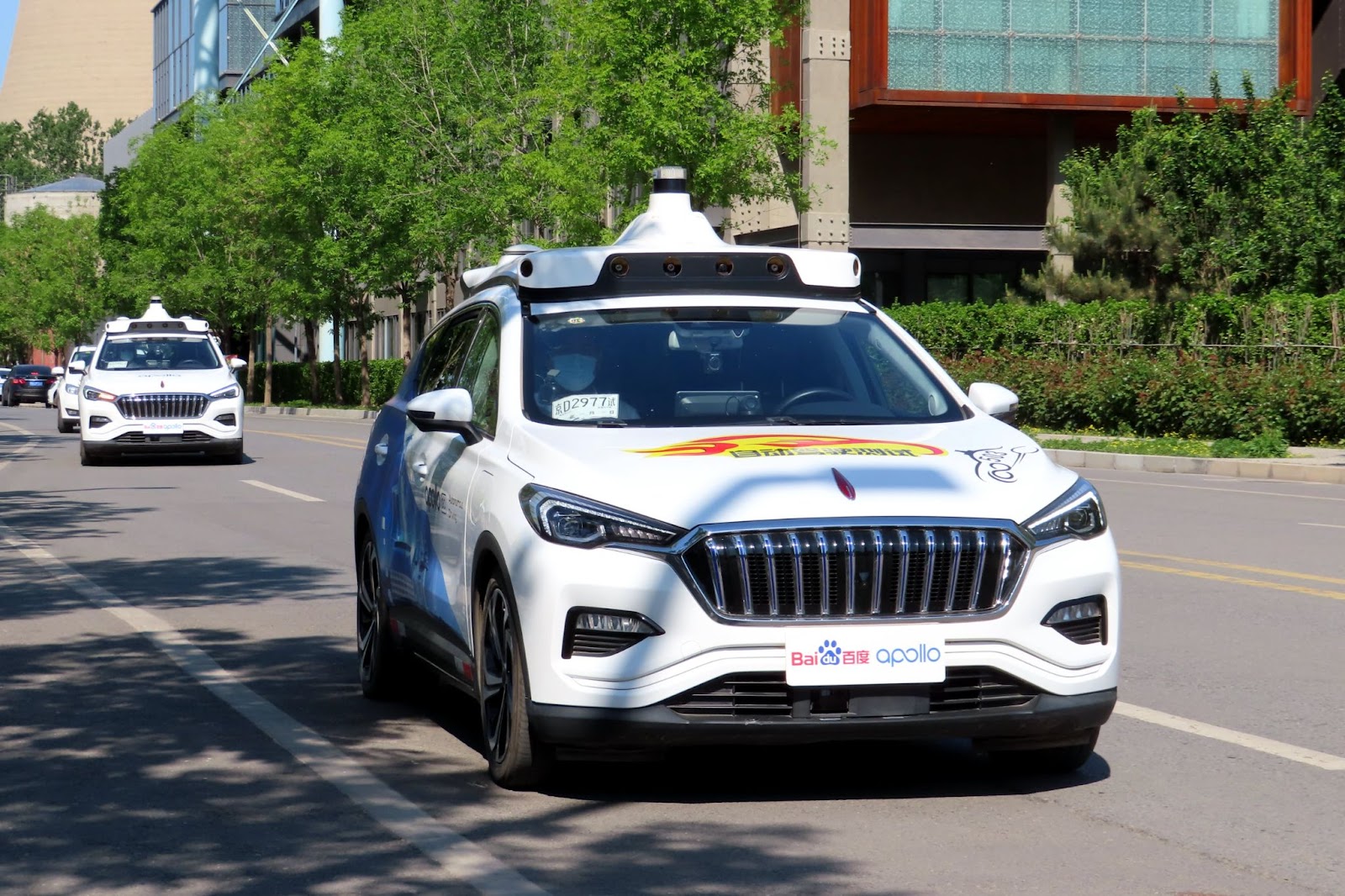
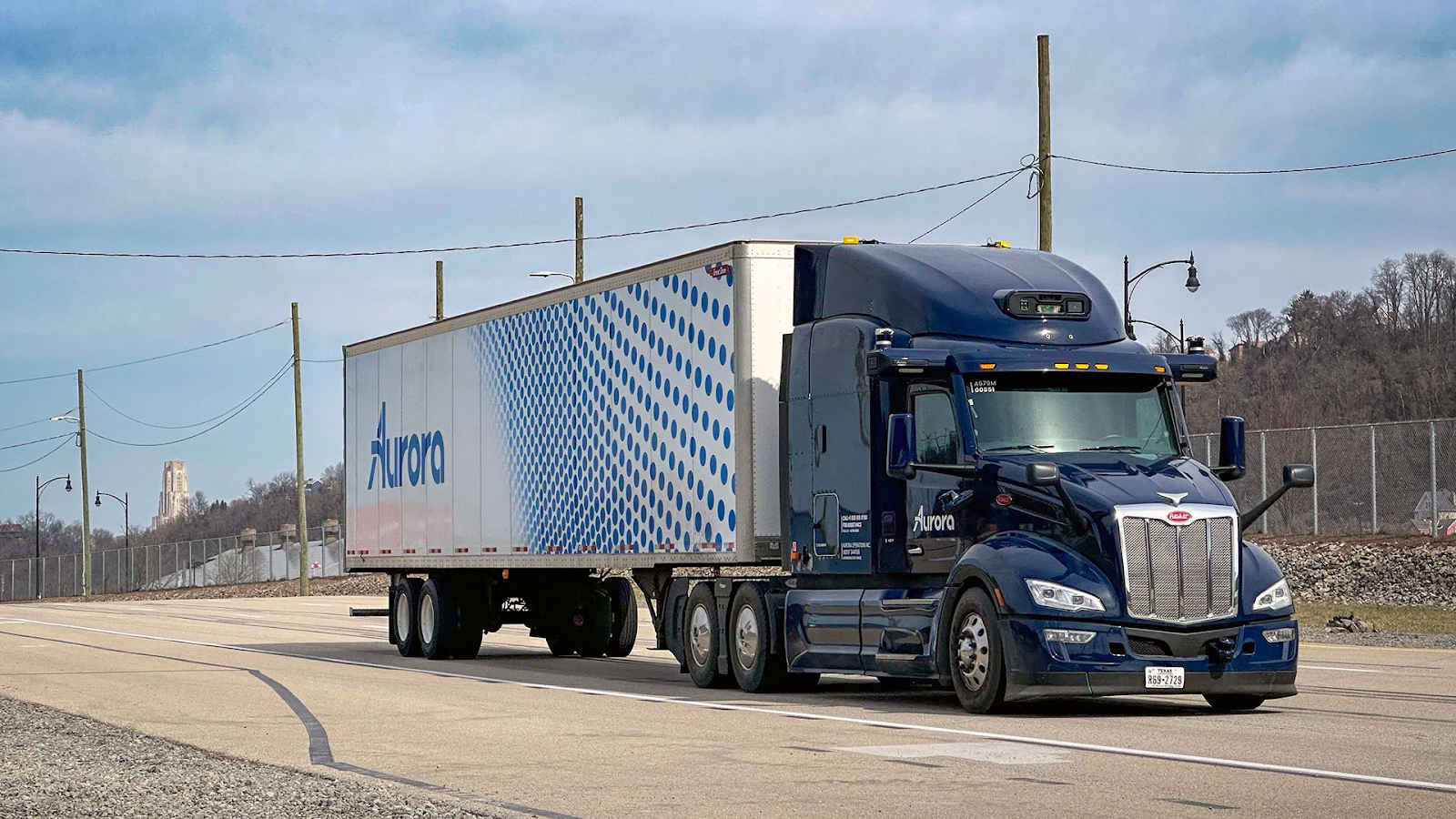
In parallel, driverless trucks were being developed by start-ups such as Aurora, TuSimple, Kodiak Robotics and others. Waymo also ran a project in this field, but last year it focused solely on passenger services.
Levels of autonomy: from assistant to full driver replacement
In the fast-evolving driverless-car industry, there are as yet no unified international standards: comprehensive regulation is still taking shape. In many countries, the lack of a legal framework makes it hard to define what counts as a fully autonomous vehicle.
Helpfully, there is the levels-of-automation taxonomy, developed by the Society of Automotive Engineers (SAE). It defines six levels of autonomy.
| Level | Name | Description |
| 0 | No Automation | The driver performs all aspects of driving, even if it is “augmented with warning or intervention systems” |
| 1 | Driver Assistance | Steering or speed is controlled by ADAS depending on the driving mode |
| 2 | Partial Automation | One or more driver-assistance systems control steering and speed depending on the driving mode |
| 3 | Conditional Automation | The driver must respond appropriately to a request to intervene |
| 4 | High Automation | If the driver does not respond appropriately to a request to intervene, the car can come to a safe stop |
| 5 | Full Automation | The system controls the vehicle in all conditions |
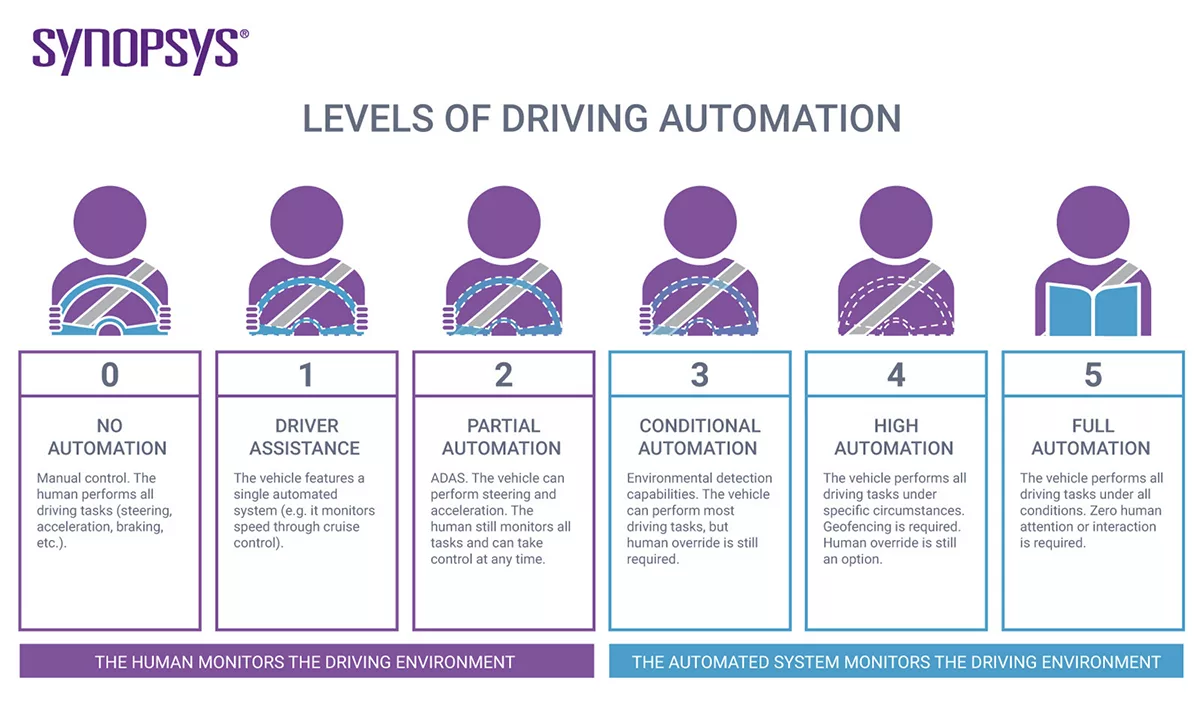
At the first three levels, a human remains responsible at all times. From level four, driving is performed entirely by automated systems.
Technologies such as cruise control in modern cars belong to level one, while systems such as Tesla Autopilot and FSD are level two under SAE’s classification. Prototypes from Waymo are assessed as level four or five, and Cruise’s robotaxis as level four.
The SAE taxonomy is criticised for its linear, technology-first approach and for overlooking how automation affects infrastructure and road-user behaviour. Even so, America’s National Highway Traffic Safety Administration (NHTSA) adopted it as a basis in 2016.
Under the bonnet: sensors, algorithms and actuators
To drive themselves, autonomous cars rely on a complex suite of sensors, actuators, algorithms and computing systems.
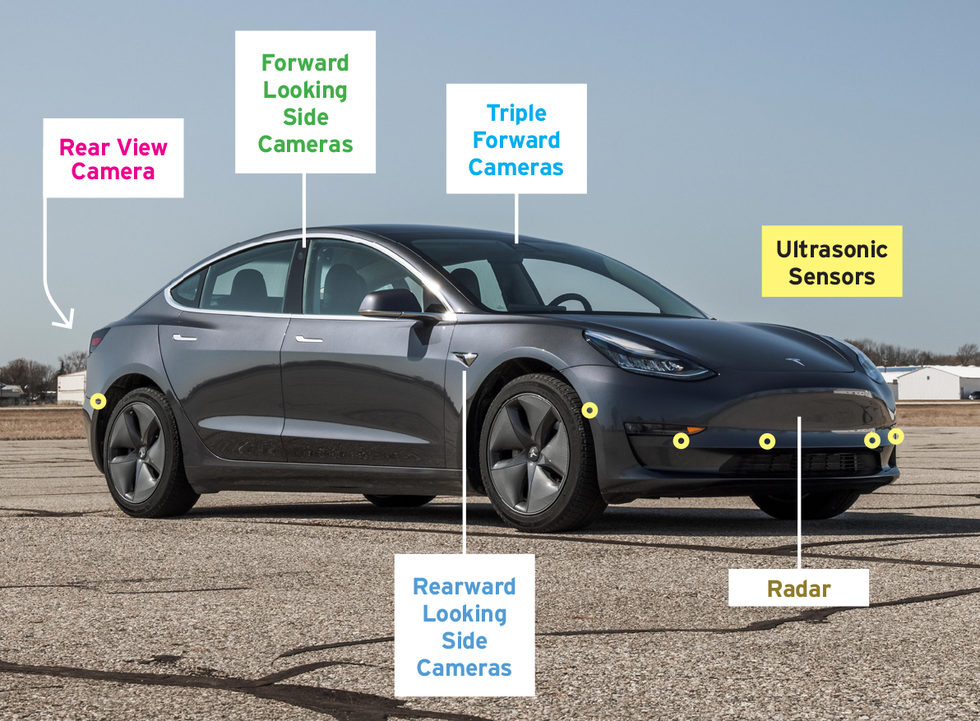
The core of a robocar’s “vision” is a set of sensors mounted around the vehicle:
- radar tracks the position of surrounding vehicles;
- cameras detect traffic lights, road signs, vehicles and pedestrians;
- lidar scans space with light beams, measuring distances and detecting road edges and markings;
- ultrasonic sensors in the wheels spot obstacles when parking.
Powerful processors fuse data from all sensors, plot a route and send commands to the actuators, which control acceleration, braking and steering.
Complex algorithms, including machine-learning systems, help a robocar follow traffic rules, avoid obstacles, predict situations on the road and recognise objects.
Manufacturers use different sensor combinations. Waymo equips its cars with all of the above. Tesla abandoned radars and lidars, opting for cameras, radars and advanced AI in Autopilot and FSD.
A bright driverless future: pros and cons
Driverless technology brings clear benefits as well as risks. Potential advantages include safer roads, efficiency and environmental gains.
Because robocars make fewer mistakes, their mass adoption could cut road accidents, easing pressure on emergency services and healthcare. In logistics, autonomous lorries can optimise routes, reducing wage costs and downtime.
Growth in robotaxi services would reduce the need for private cars, improving urban air quality and the efficiency of road infrastructure. People without driving licences, including minors, would also be able to use personal transport.
Robocars would be indispensable for delivering cargo into disaster zones, areas of industrial accidents and war zones.
At the same time, concerns about the safety and reliability of current driverless technology fuel public mistrust. Marketing for some systems, such as Tesla’s Autopilot and FSD, is criticised for being misleading.
There is also a risk of mass job losses among taxi, lorry and bus drivers. New professions may emerge, however, around the operation and maintenance of robocars.
Ordinary people risk losing driving skills altogether, and enthusiasts could be deprived of the chance to drive themselves unless special zones are set aside.
Regulation
In recent years many countries have introduced laws regulating the testing and use of driverless cars on public roads.
In the United States, at federal level the Department of Transportation and NHTSA established general principles and safety requirements for autonomous vehicles. A raft of state laws also exists, both permitting and restricting their use. Testing is particularly active in California, Arizona, Texas and Florida.
China in 2018 introduced road-testing rules covering different autonomy levels. In 2020 it adopted a development strategy for intelligent vehicles through 2025.
In the European Union, since 2022 unified requirements are in force for type approval of different categories of autonomous vehicles. A draft law has been published regulating the use of cars with automated driving systems.
In Japan, since 2020 it has allowed level‑three autonomy on public roads, and since 2023 level four.
Several European countries, including Norway, France, Germany and the United Kingdom, have also passed national laws permitting testing and use of self-driving cars under specified conditions.
When robocars will hit the roads
Driverless cars are likely to become a common sight in the coming years. Industry and rule‑makers in developed countries are moving in that direction.
Yet hurdles remain. Algorithms must be refined for greater accuracy; more powerful chips are needed to process vast data sets on board; and public concerns about safety must be addressed.
A breakthrough in artificial intelligence could spur the semiconductor industry, benefitting both hardware and software for autonomous vehicles.
Beyond the vehicles themselves, cities must prepare infrastructure—ensuring reliable traffic lights, clear markings, accurate signs and other cues for robocars.
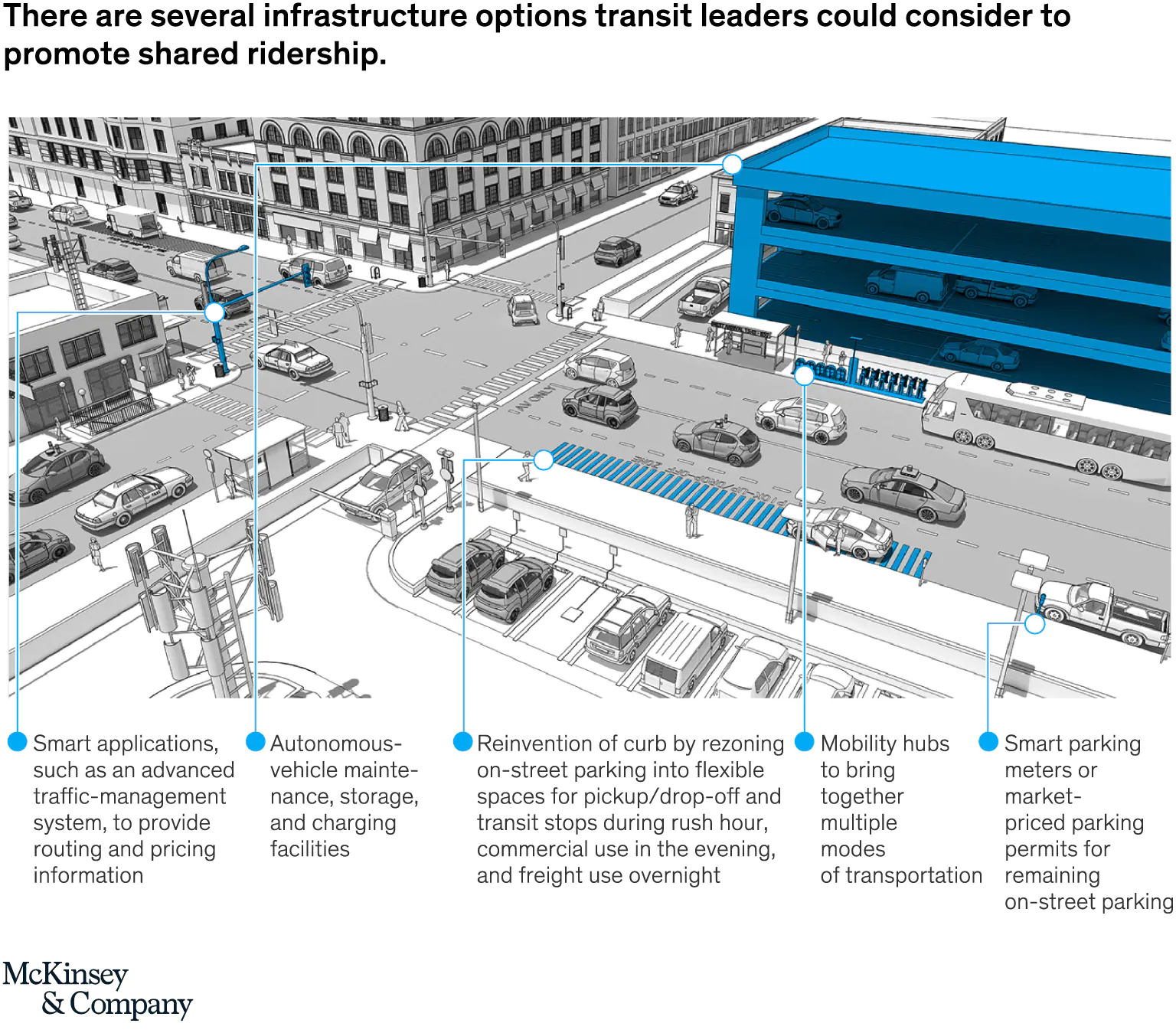
Mass adoption of self-driving cars is therefore a complex undertaking that demands colossal effort and close coordination across sectors that at first glance have little to do with transport.
If existing problems are solved, autonomous transport will reshape many spheres of human life in the coming decades.
Text: Bogdan Kaminsky
Рассылки ForkLog: держите руку на пульсе биткоин-индустрии!