



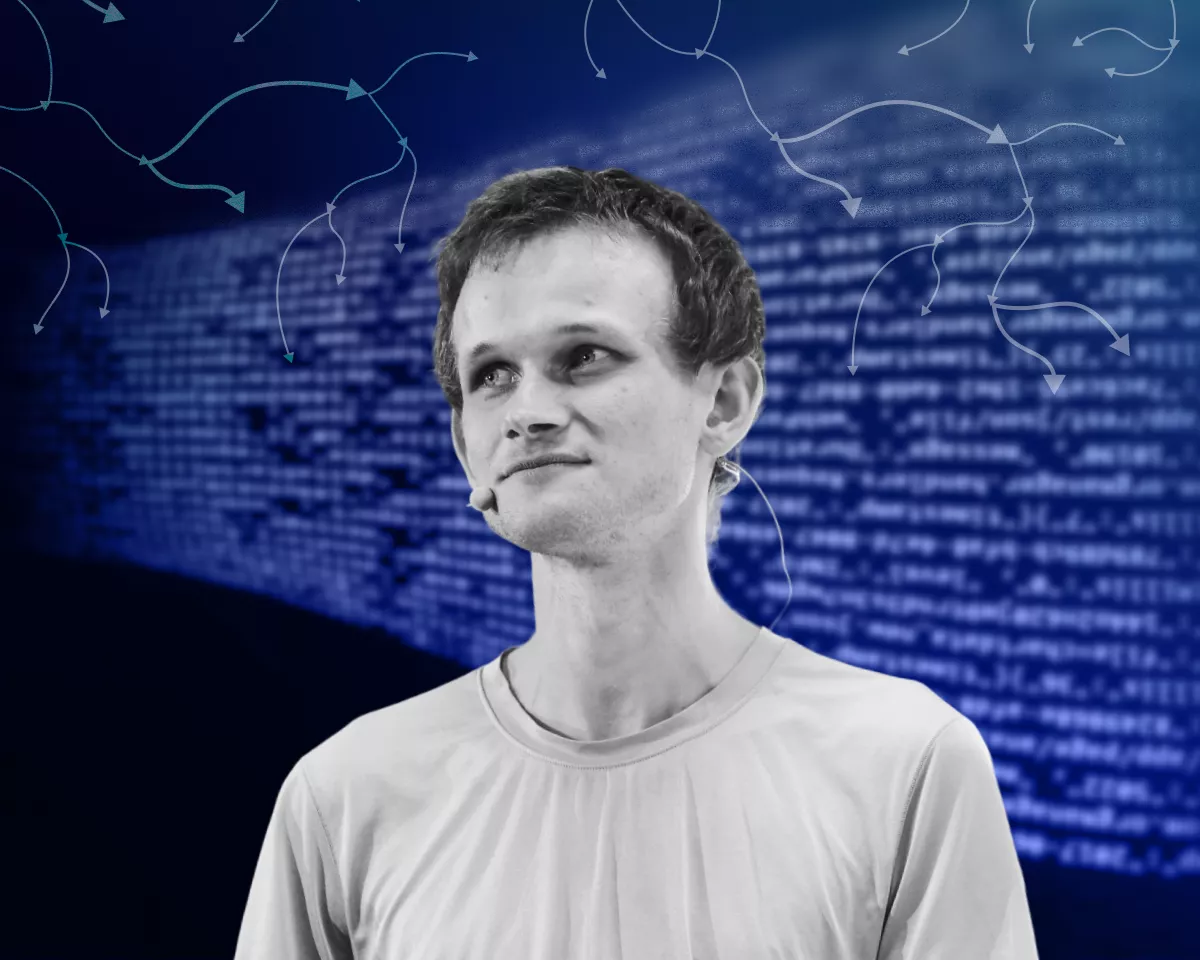
The emergence of “low-risk DeFi” and groundbreaking applications based on ZKID have the potential to transform financial markets. This was stated by Ethereum co-founder Vitalik Buterin in a conversation with HashKey Group Chairman Xiao Feng, as reported by Chinese journalist Colin Wu. writes
“Lately, I’ve been talking a lot about ZKID. Why? Because identity and privacy are extremely important in the modern world,” he noted.
According to the programmer, centralized databases are “inevitably hacked,” leading to leaks. ZKID uses zk-SNARKs to verify information without third-party involvement.
Buterin noted that the technology can be used in undercollateralized lending. A borrower can prove creditworthiness through transaction history analysis without needing to disclose the full extent of their assets.
“Artificial intelligence and cryptocurrencies are seen as the fourth industrial revolution, and it too should bring new financial services. […] New fundraising models may emerge. Imagine entrepreneurs using ZKID to raise $100,000 globally,” Feng added.
Previously, the Ethereum co-founder introduced the concept of “pluralistic identification.” In this system, no single authority fully controls the issuance of digital IDs.
According to him, this enhances privacy protection, which Buterin considers the foundation of freedom.
Centralization of Applications and AI Payments
In the conversation, the HashKey Chairman also touched on the limits of application decentralization. Feng highlighted the paradox of stablecoins: despite decentralized infrastructure, they always depend on a centralized issuer like Circle.
Buterin acknowledged that many applications cannot exist without an element of trust, which is sometimes implemented through centralized components.
“Take email: theoretically, it’s a decentralized protocol, but in practice, a few large platforms dominate. Blockchain still offers significant advantages: even if L2 is semi-centralized, users can independently withdraw their assets through contracts on L1. This is a real advantage,” added the Ethereum co-founder.
Buterin also noted the growing role of AI in payments. According to his forecasts, in the next five to ten years, artificial intelligence will begin processing “many micropayments.” However, full automation for large sums is too risky.
“AI is too easy to attack. But for small payments, it will be suitable. Additionally, artificial intelligence can serve as a risk management tool for large transfers — checking whether a $100,000 transaction looks suspicious or not. I think we will gradually discover the right ways to combine AI with payments. There will be successes, but also mistakes,” he explained.
Buterin approaches artificial intelligence with caution — in August, he stated that superintelligent AI could become a catastrophe. The Ethereum co-founder also warned of the dangers of using this technology in the crypto industry.