



The explosive growth of the decentralized finance sector has raised questions about the regulatory status of DeFi protocols and their responsibility to comply with regulatory requirements. Chainalysis analysts detailed the topic in their latest report.
DeFi’s explosive growth has been one of cryptocurrency’s biggest stories this year, but there are questions around DeFi platforms’ regulatory status and compliance responsibilities. Read our breakdown here. https://t.co/8FuXxQ0N8I
— Chainalysis (@chainalysis) October 29, 2020
The company noted a renewed active inflow of funds into the DeFi sector after activity cooled in October. It was preceded by a surge in September. Then the growth amounted to $26 billion, three times higher than in August.


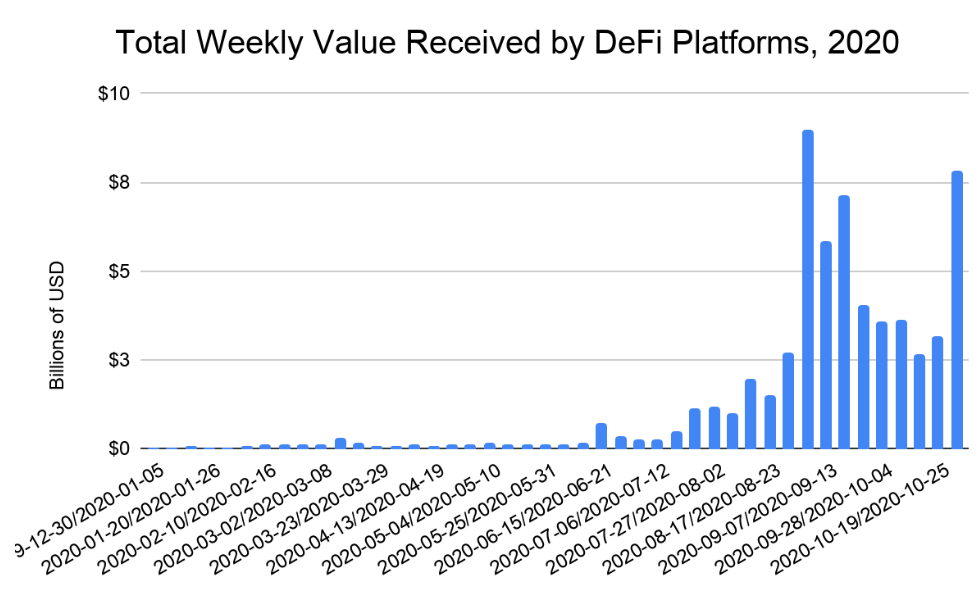
Weekly inflows to DeFi protocols. Source: Chainalysis.
Analysts point to a chart showing that the largest inflows were concentrated on decentralized exchanges Uniswap, Kyber, Curve Finance, and on 1inch, the DEX liquidity aggregator.


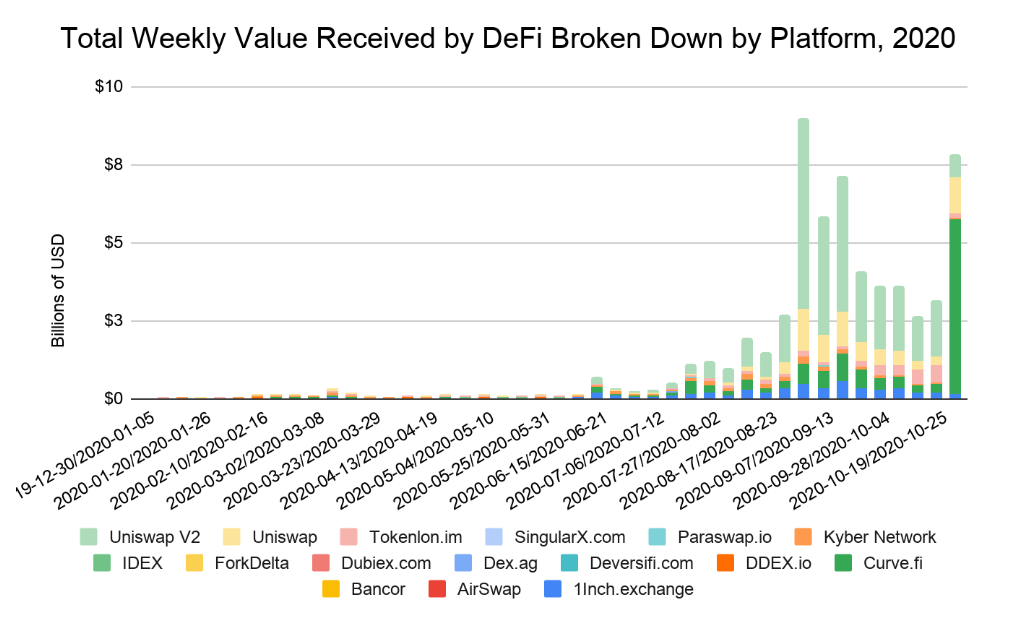
Weekly inflows to DEXs, broken down by platform. Source: Chainalysis.
According to Chainalysis, the overwhelming majority of transfers did not exceed the equivalent of $10,000. Almost half of the funds on DeFi platforms were transferred in tranches exceeding $100,000.


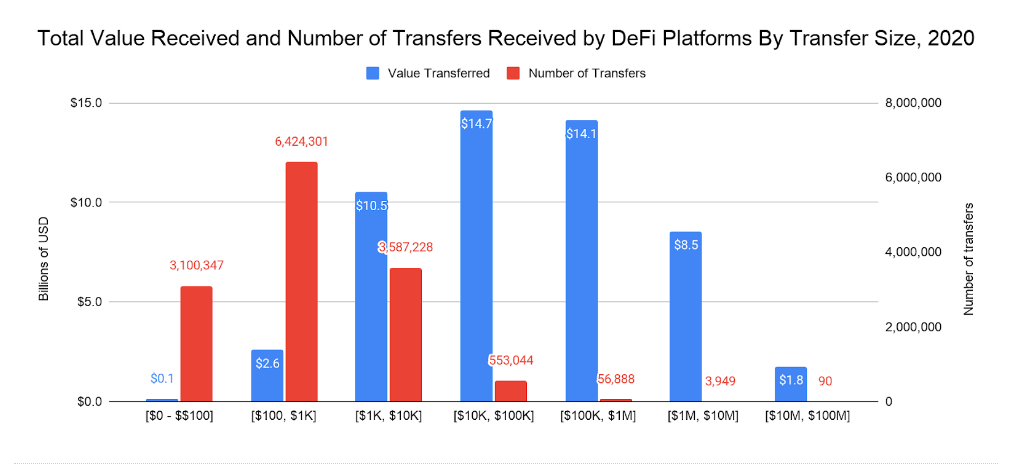
Structure of transfers to DeFi platforms. Source: Chainalysis.
Researchers stressed that not all funds had a legitimate source of origin. By their calculations, 0.05% of all funds received by DeFi platforms originated from addresses associated with criminal activity, and 0.07% of the total volume was sent to such addresses.


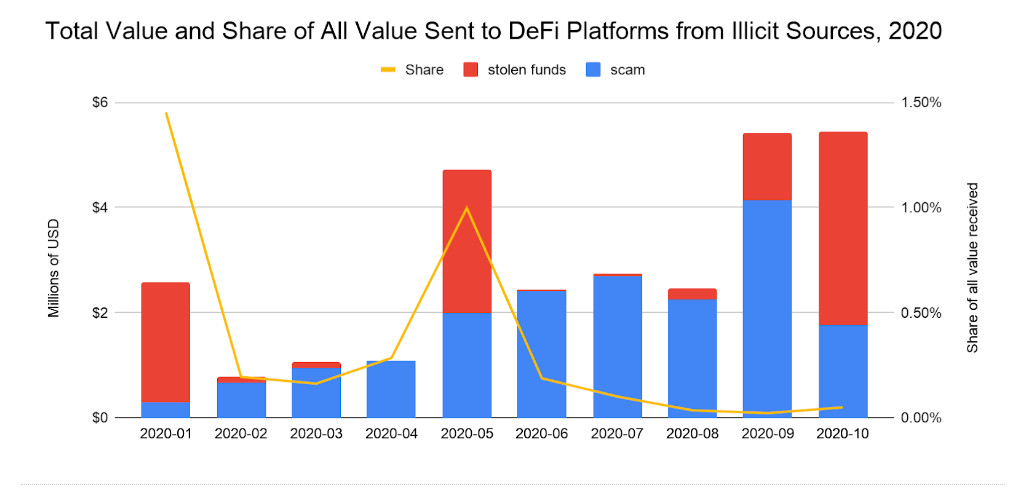
Weekly share of inflows to DeFi platforms from illicit sources. Source: Chainalysis.
According to Chainalysis’s annual crime report, DeFi platforms accounted for only 1.1% of transactions related to criminal activity.
The firm asked how to interpret DeFi platforms in the context of the Bank Secrecy Act, securities legislation, and regulatory acts touching on safety issues. For many observers, the theoretical operation of services without human intervention and the absence of custody of client funds suggest that DeFi platforms may not be subject to regulation.
Chainalysis also pointed to an alternative view. Its supporters note a notable degree of centralisation in the projects across the industry. This manifests in the fact that the developers behind DeFi platforms can block risky transactions and deter criminal activity. For proponents of tighter oversight, this is an argument for regulating DeFi protocols on par with other cryptocurrency platforms.
Experts stressed that even with a high degree of decentralisation, regulators will demand answers to many questions, such as:
- Who audits the code?
- Who is responsible for addressing discovered vulnerabilities?
- Who acts to assist victims of fraud and other forms of financial crime?
Chainalysis believes regulators are likely to study any means of ensuring compliance with laws on DeFi platforms, regardless of whether they are linked to a registered company or not.
The researchers cited analyst Ryan Selkis. The head of Messari argues that the teams behind most DeFi platforms have all the necessary levers to freeze funds or block transactions if needed. This was demonstrated by the KuCoin exchange breach in September, when developers of Uniswap and Kyber Network responded to attempts by an attacker to exploit their services.
Chainalysis is confident that, in the future, regulators will raise questions about ensuring legal compliance. For now they see no grounds for this given the relatively low share of illicit activity within the overall cryptocurrency ecosystem.
Experts predict that those DeFi platform teams that implement on-chain transaction monitoring and KYC protocols will be in a winning position.
In October, predicted by SEC Commissioner Hester Peirce that the agency would face many difficult questions concerning DeFi-sector regulation.
Earlier, Cinneamhain Ventures partner Adam Cochran saw a threat to the DeFi sector in the U.S. authorities’ charges against the crypto-derivatives exchange BitMEX.
In early November, analytics firm Coinfirm announced the integration of the Chainlink oracle network into its AML solution. This will enable DeFi projects to track transactions with suspicious patterns.
Subscribe to ForkLog news on Telegram: ForkLog FEED — the full news feed, ForkLog — the most important news and polls.