



Chainalysis Uncovers $100 Million Gray Market for Peptides
Chainalysis reports $100 million in gray market peptide transactions.
ForkLog is categorically against drugs and does not promote their sale or purchase. All materials are provided for informational purposes only.
Chainalysis analysts have recorded an explosive growth in the turnover of the gray market for peptides. According to a report, the annual volume of on-chain payments in this sector has exceeded $100 million.
Experts noted that in the first quarter of 2026 alone, the inflow of funds jumped by 159% — from $12 million to $32 million. Forecasts suggest that in the second quarter, the figure will reach $39 million.
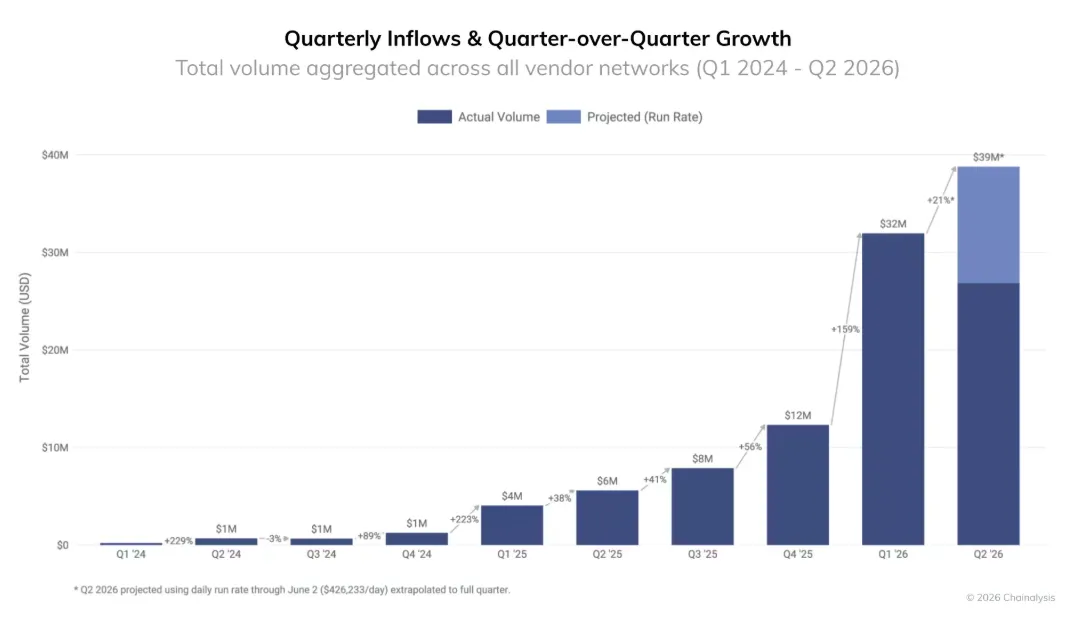
Analysts attribute the growing popularity of these substances to the shortage and high cost of official weight-loss drugs (like Ozempic). Due to banking restrictions on the sale of non-prescription compounds, the industry has almost entirely shifted to using Bitcoin and stablecoins.
TikTok and the ‘Looksmaxxing’ Ideology
Specialists identified three stages of market development. Until 2025, it remained niche with an average inflow of about $200,000 per month.
This was followed by a surge of interest amid political events in the US — particularly, Robert Kennedy Jr.’s promotion of the Make America Healthy Again (MAHA) initiative. However, the key catalyst came at the end of 2025, when the topic of peptides went viral on TikTok within the ‘looksmaxxing’ subculture (the pursuit of radical appearance improvement).
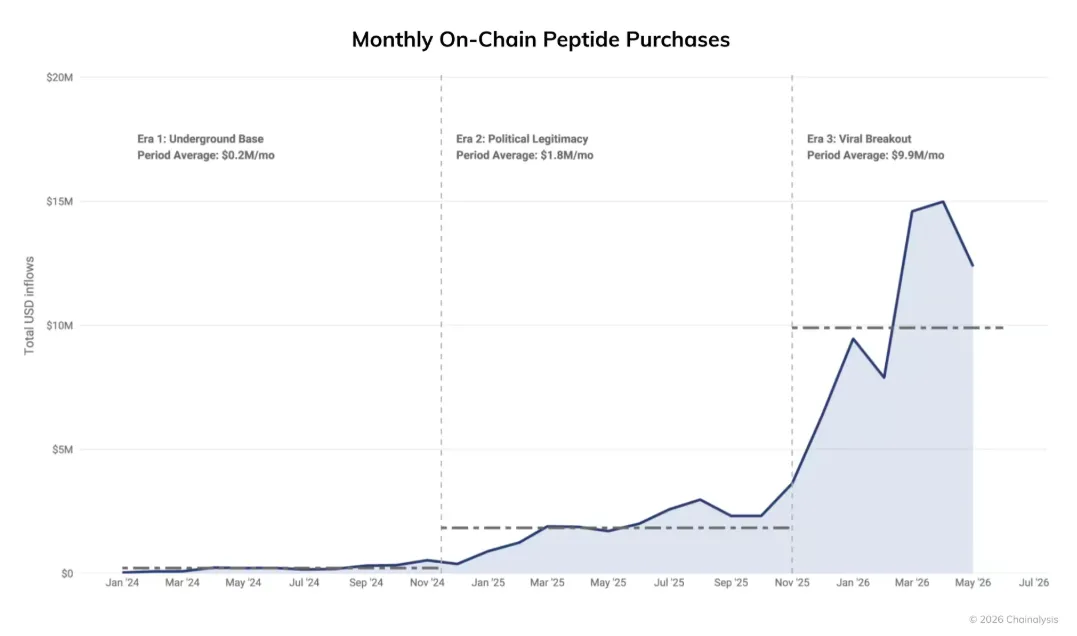
Against this backdrop, average monthly revenues for sellers rose to $9.9 million. According to the report, influencers actively promote Chinese suppliers, ignoring the risks of side effects. Meanwhile, minors are increasingly found in communities and Discord channels, seeking ways to bypass KYC to purchase substances.
Decline in Safety Controls
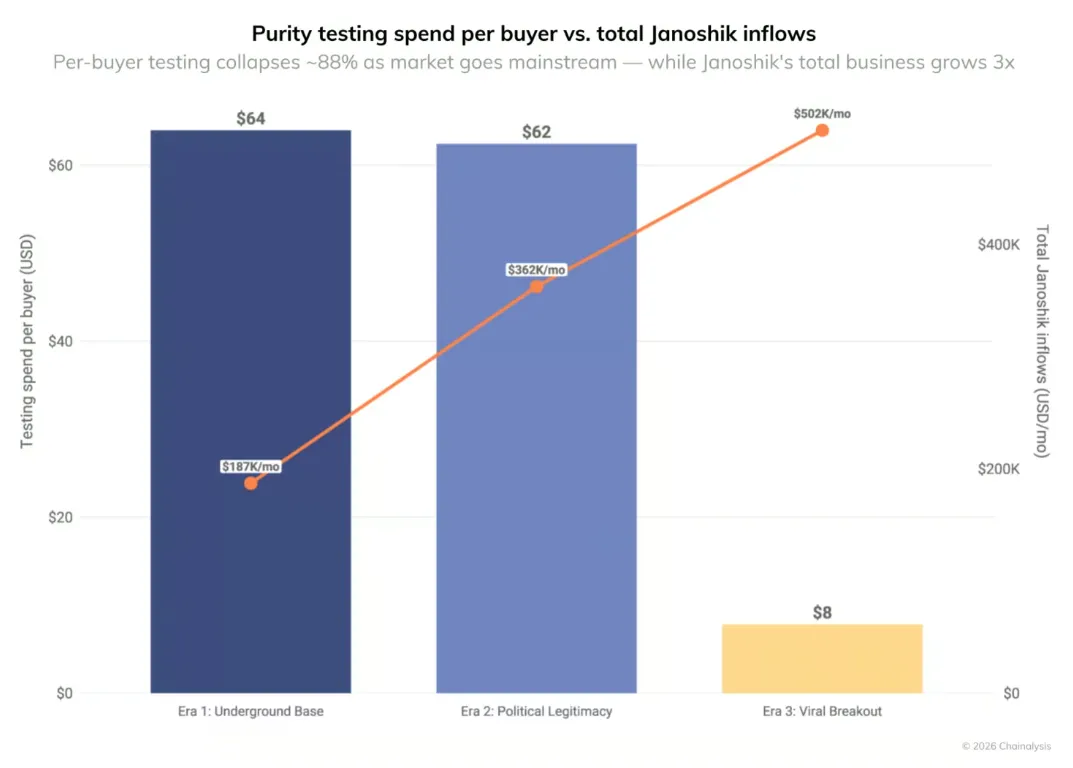
As an indicator of buyer behavior, Chainalysis cited data from Janoshik laboratory (Czech Republic), which specializes in testing the chemical purity of substances. Since 2023, wallets associated with it have received over $12 million in cryptocurrency.
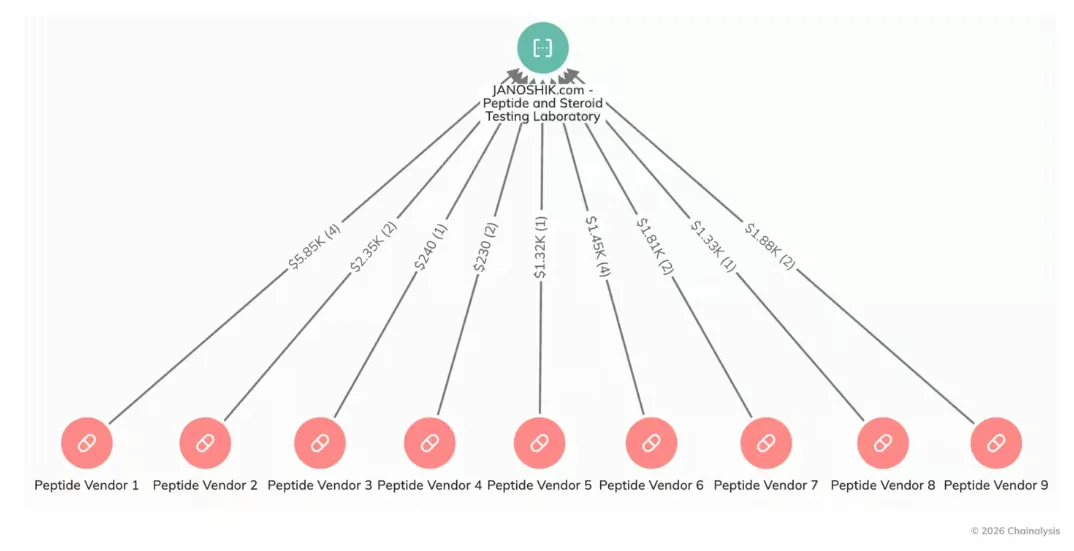
Despite the overall revenue growth of the laboratory, average spending on substance testing per buyer fell by 88% — to $8. Consumers increasingly trust certificates published by sellers themselves. Analysts warned: such documents often confirm the purity of the substance but not its sterility, which is deadly dangerous for injections.
Links to Drug Cartels
Chainalysis found that several major peptide suppliers are Chinese chemical companies that previously supplied drug cartels with precursors for fentanyl and amphetamine. Under regulatory pressure, they shifted to a less legally risky but more profitable D2C format.
The report mentions two companies:
- Shanghai Sigma Audley: previously identified as a supplier of fentanyl precursors, including for darknet marketplaces. In 2025, the company began selling ‘cosmetic’ peptides on Reddit, using the same contact phone number as in ads for drug raw materials;
- Bigreat Technology: a supplier of reagents for synthetic drugs focusing on the Russian and Kazakh markets. Under the pseudonym Zhengzhou DEPU Technology, the firm switched to retailing weight-loss substances for cryptocurrency.
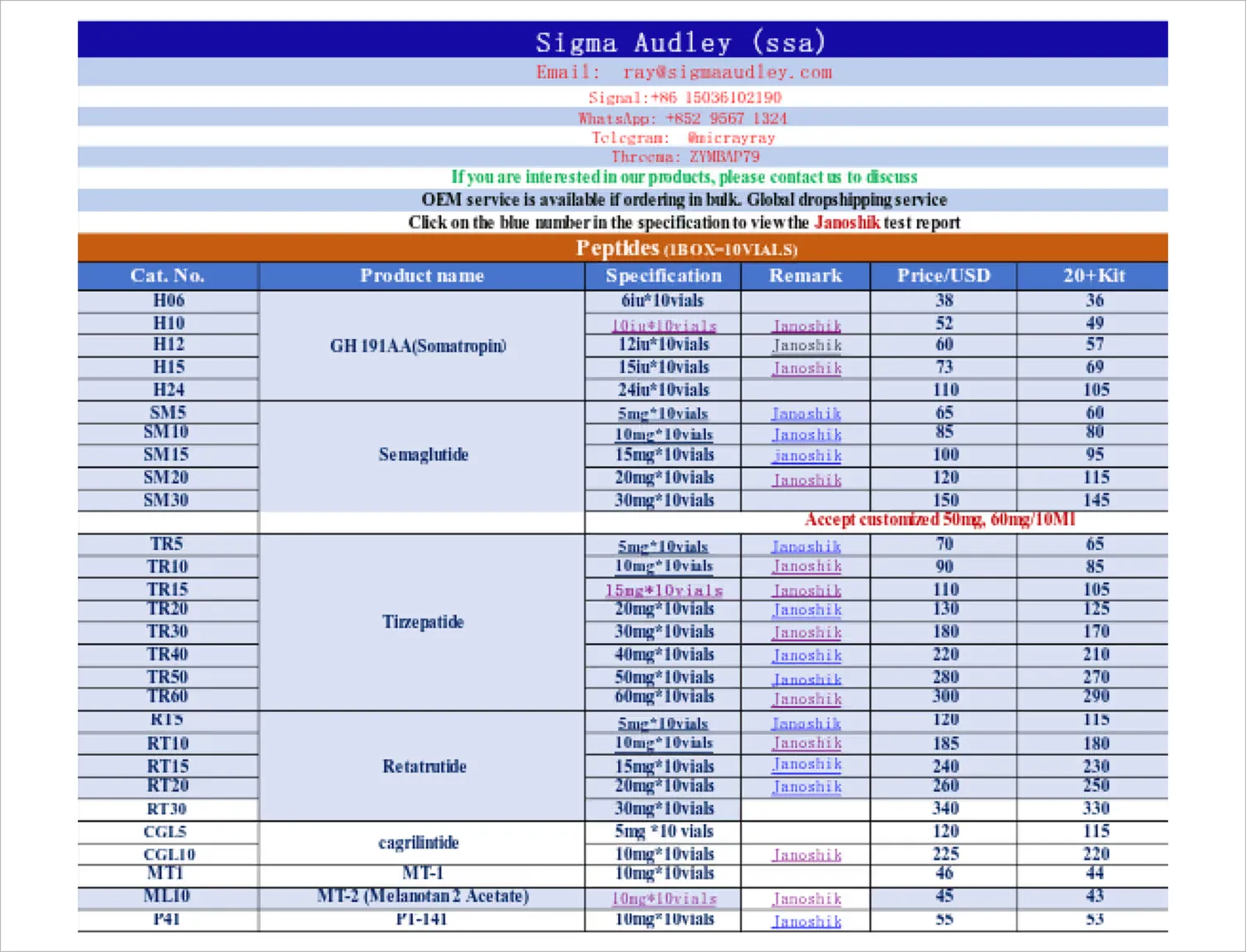
Analysts emphasized that blockchain transparency allows tracking such transformations of illegal supply chains in real-time.
Between 2020 and 2025, the volume of money laundering through cryptocurrencies increased from $10 billion to $82 billion.
Рассылки ForkLog: держите руку на пульсе биткоин-индустрии!