



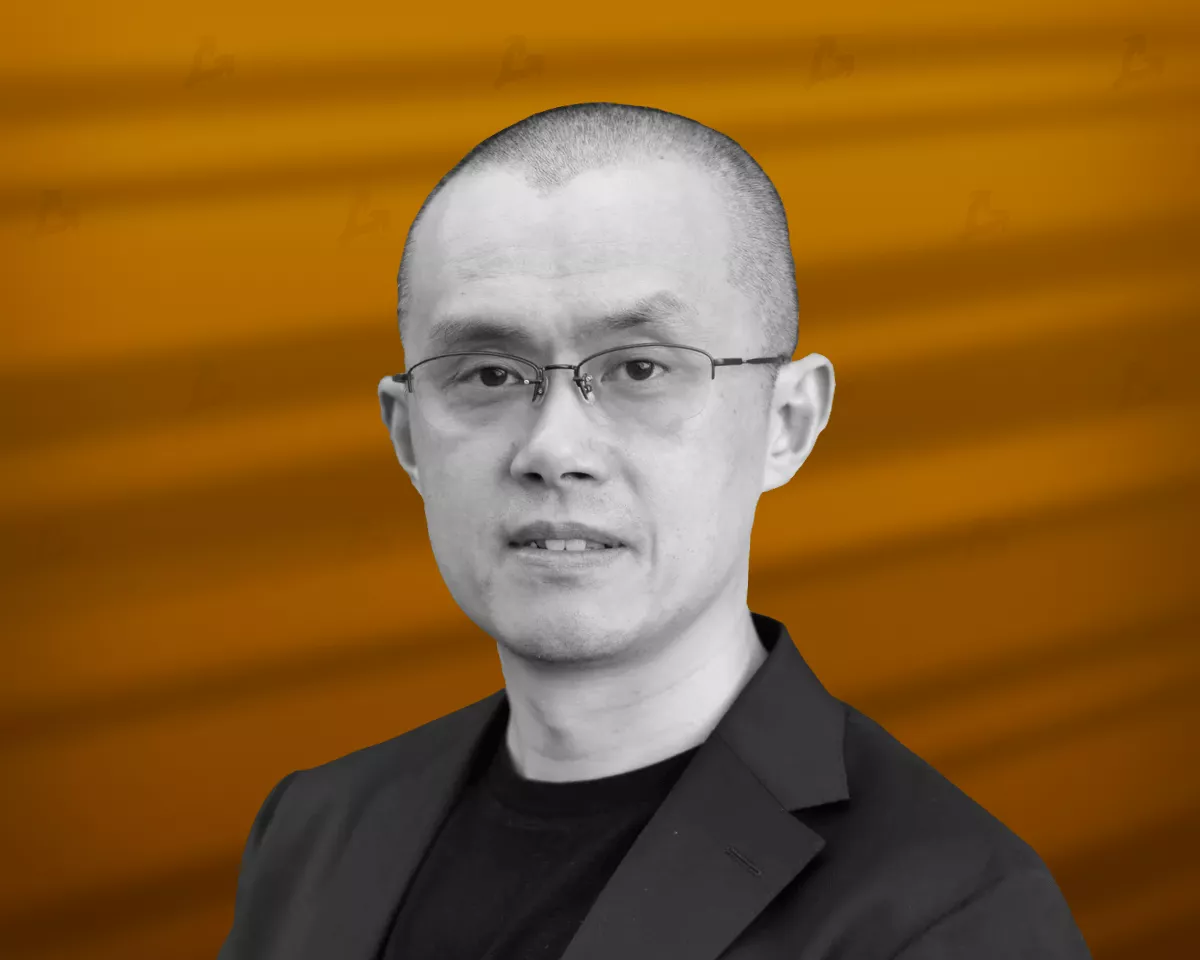
Binance founder Changpeng Zhao (CZ) told Colin Wu in an interview about the exchange’s rise, his view of Ethereum’s issues, why meme tokens boomed on Solana and the industry’s prospects.
Interview with Binance founder CZ
We discussed CZ’s childhood and college experience; how Binance succeeded in just one year; whether FTX can be saved; CEX’s listing dilemma; why Solana exploded; the difficulties Vitalik faced; the future development of the United States and… pic.twitter.com/hkzVB9Vcvt
— Wu Blockchain (@WuBlockchain) January 27, 2025
Childhood and emigration
CZ recalls a happy childhood in China. His parents were teachers and the family often lived on university campuses. Their pay afforded a reasonably comfortable life, and his father’s overseas assignments brought useful extra income.
“Life in childhood was carefree. Our family was not wealthy, but I did not feel a lack of money. I was satisfied with everything,” said Zhao.
His parents moved to Canada when CZ was 12. He noted that their material circumstances did not worsen, but the family ended up among the less well-off, though in his home country they had belonged to the middle class.
His mother had to take a job as a seamstress at a factory — because of the language barrier other jobs were unavailable to her. His father obtained a position as a teaching assistant.
“The salary was low, but the university provided a housing subsidy. So we lived in a small house that was, in fact, more spacious than the one where I lived in China,” CZ added.
Overall, the family income was close to the minimum, but it covered basic needs without trouble, he said.
Career and education
CZ dropped out in his final year after receiving a lucrative offer of full-time work in Japan, where he was interning.
“Initially it was supposed to take only a few months — a semester. The offer was too good to pass up, so I kept postponing graduation, and after two years I never returned to my studies,” Zhao explained.
Later, to avoid visa issues, he obtained a diploma remotely, but at another institution.
Binance’s rise
CZ cited the key drivers of Binance’s rapid growth since its 2017 founding as:
- his 20 years’ experience in technology and trading, including five years in crypto;
- a capable team and community support;
- a customer-first approach;
- the ICO boom.
Most projects issuing tokens used Ethereum’s ERC-20 standard. The then-dominant exchanges such as Coinbase, OKCoin and Huobi focused mainly on bitcoin and did not pay due attention to such assets.
Binance had itself launched BNB as an ERC-20 token, so it could support the standard from the outset and quickly become a platform for ICO coins, the entrepreneur stressed.
At the time, users could wait two to three months for a response from exchanges’ support teams. From day one Binance set a target of responding within 24 hours. Today the response time has been cut to five minutes, Zhao said.
Under Chinese rules, ICO projects were obliged to return funds to investors if they operated at a loss. But many token issuers from the Binance listing lost money and could not return investments to users.
The exchange’s team decided to cover affected investors’ losses, which totalled $6m. That sum represented 40% of the freshly raised $15m, even though the exchange was not yet profitable.
“These factors — our ‘user first’ approach, a strong product, timing and, of course, a dose of luck — allowed Binance to grow so fast,” CZ noted.
Challenges and innovation
According to Zhao, from the outset a critical task was safeguarding assets.
“Here is a little-known detail that many may have forgotten: during the first four months, from July to mid-to-late October, all withdrawals from Binance were processed manually,” CZ said.
The process took several hours and did not run at night.
The main problem at the time, however, was the performance of the fast-growing platform, the entrepreneur admitted.
“Although our matching engine was fast, the surrounding options such as registration systems, KYC, deposits and withdrawals often became bottlenecks,” he specified.
Zhao acknowledged the issue of listing small-cap tokens on large centralised exchanges. Binance and other platforms prefer more stable assets, while decentralised venues profit from supporting volatile coins such as memecoins.
In this expanding segment, CEX can succeed, CZ is convinced. He sees possible solutions in creating innovation zones and providing direct support for assets in Web3 wallets.
On the reasons for the meme-token boom, the entrepreneur offered his hypothesis:
“Solana had close ties with FTX, and after the latter’s collapse many people in the blockchain ecosystem who lost money and did not receive support from the exchange turned to pump-and-dump schemes.”
On regulation, CZ expressed confidence that as they scale, centralised exchanges will make ever greater efforts to comply with rules.
Implementing compliance solutions entails additional costs. Second-tier platforms, often quite large, avoid the constraints imposed on industry leaders.
The unevenness of regulatory approaches is a problem, but meeting standards and requirements offers big opportunities for growth, he stressed.
Zhao said he expects that under President Donald Trump the United States will create a more favourable regulatory environment for the industry. In his view, crypto regulation in the world’s largest economy will become “more progressive and clear”.
In this context he forecast a recovery in the position of the American unit Binance.US after settling the authorities’ claims. At its peak, the platform’s trading volumes reached 40-50% of Coinbase’s.
Ethereum’s troubles
Recently, social-media criticism of the Ethereum Foundation and of co-founder Vitalik Buterin personally has grown. In CZ’s view, this stems more from a public-relations crisis.
“Ethereum is still very strong. If you look at market capitalisation, it is second only to bitcoin. Solana’s rise has been fast, but the figures still lag in terms of market value,” he said.
Zhao viewed advice to Buterin from Tron founder Justin Sun with scepticism. He noted that it looks like recommendations from a small project to a major platform.
“Frankly, Sun has always been keen to ride the hype, and he does PR quite well,” CZ said.
As for Buterin’s much-discussed statement about his sole control over the project, Zhao urged tolerance:
“His manner of speaking may not be the most pleasant. He is a techie, so he is straightforward and blunt, and he is young.”
In CZ’s view, Buterin’s contribution to Ethereum is “huge” and cannot be ignored.
Crypto-market outlook
Zhao declined to forecast bitcoin’s future price, noting only that digital gold has not yet reached its peak.
He pins serious hopes on crypto initiatives from the Trump administration.
“I expect certain positive events in the near future. I have always been optimistic about the industry, even during the worst bear markets, and the same applies to bull runs,” CZ said.
He added that he does not expect a radical change of a friendly policy towards the industry after Trump departs. Crypto investors have become a significant part of American society whose interests no politician can ignore, Zhao stressed.
In September 2024, the entrepreneur was released after serving a four-month term in the United States for money laundering and other illegal activity related to Binance.