




The crypto market, supported by treasury-backed companies, has entered a PvP phase, yet it still has momentum for growth in the fourth quarter, according to a report by Coinbase.
“Bitcoin continues to exceed market expectations as it directly benefits from existing macroeconomic tailwinds. Excluding an energy price shock (or other inflationary factors), we believe the immediate risk of a change in the current US monetary policy is actually quite low,” writes Colin Basco, the study’s author.
Coinbase anticipates a reduction in the Fed rate both on September 17 and October 29, as the labour market has provided “compelling evidence of weakness.”
Stage of Confrontation
Experts believe that by the end of the year, the crypto market will be bolstered by reliable liquidity support, a favourable macroeconomic environment, and encouraging regulatory changes.
Digital Asset Treasuries (DAT) are also generating a steady inflow of funds, yet the phenomenon has reached a “critical inflection point.”
“We are no longer in the early adoption stage that characterised the last six to nine months, but we are also not near the end,” the report states.
The DAT segment has entered a “player versus player” stage—where success depends on execution, differentiation, and timing, rather than merely copying Strategy. The scarcity premium that benefited early players has already vanished, Coinbase clarified.
Nonetheless, firms continue to accumulate digital assets. Bitcoin treasuries hold more than 1 million BTC (>5% of total issuance).
Organisations specialising in Ethereum have absorbed about 49 million ETH worth $213 billion, accounting for over 4% of the circulating supply.


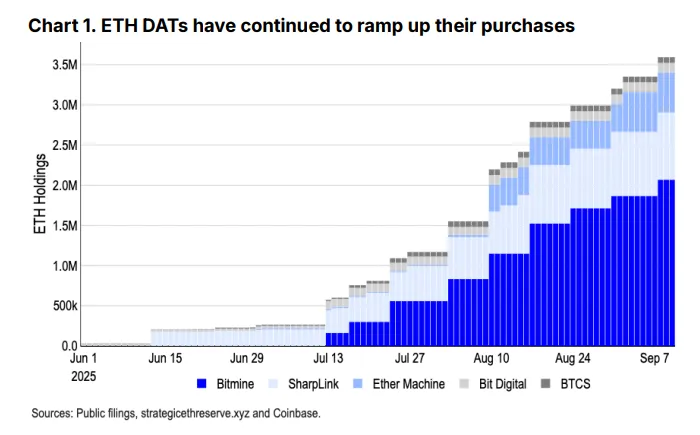
“The DAT cycle is ripe, but it is neither early nor late. Certainly, the days of easy money and guaranteed mNAV premiums are over, as only the most disciplined and strategically positioned players will succeed at this PvP stage. We expect cryptocurrency markets to continue benefiting from the unprecedented capital inflow from these yield-enhancing instruments,” analysts concluded.
September Concerns
The issue of seasonality continues to haunt the crypto industry, as historically digital gold has fallen every September from 2017 to 2022, Coinbase highlighted.

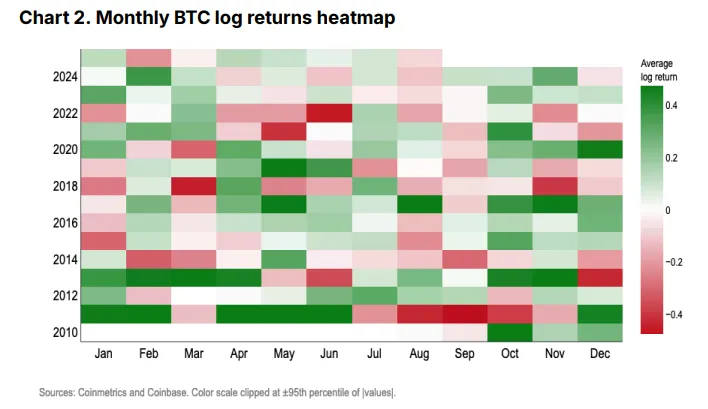
However, in 2023 and 2024, this trend did not persist. Analysts noted that the small sample size and wide range of possible outcomes limit the statistical significance of such seasonal indicators.
“Across all frequency charts, logistic odds ratios, out-of-sample assessments, and placebo checks, the conclusion is the same—the month of the year is not a statistically reliable predictor of whether BTC’s monthly return will be positive or negative,” the researchers concluded.
Earlier, JPMorgan described the exclusion of Strategy from the S&P 500 as a “blow to crypto treasuries.”
Galaxy Digital compared the trend of forming companies with reserves in digital gold to the investment trust bubble of the 1920s in the US.