




Analysts at Coinbase Institutional forecast a crypto-market upswing in the second half of 2025. In their view, bitcoin will set a new all-time high thanks to improving U.S. economic indicators, a possible rate cut by the Fed and greater regulatory clarity.
The biggest trend—and risk—is the growing popularity of corporate bitcoin reserves. This phenomenon has been dubbed the “clone attack”.
“Clone attack” and systemic risks
David Duong, head of research at Coinbase Institutional, noted that more public companies are adding the first cryptocurrency to their balance sheets. The trend accelerated after U.S. accounting rules changed. New standards allow firms to carry digital assets at fair market value, removing a major impediment to corporate investment.
According to BitcoinTreasuries, 234 firms now hold a combined 820,542 BTC.


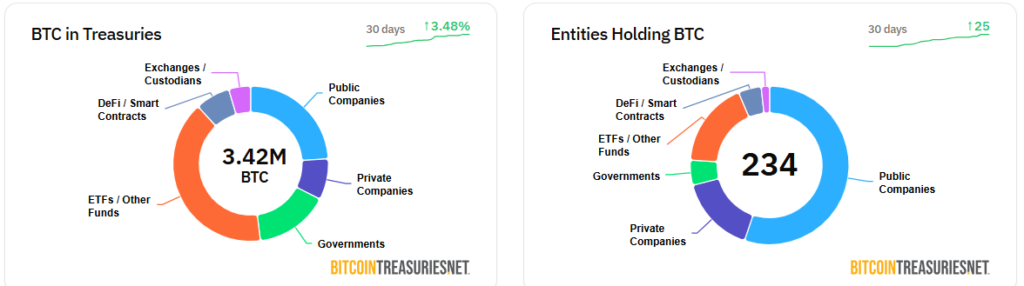
Around 20 of them use a debt-financed capital-raising model first employed by the company Strategy.
Duong warned that such strategies create systemic risks. Many of these firms issue convertible bonds to fund crypto purchases. In times of market stress, they may face forced selling to meet obligations, potentially sparking investor panic.
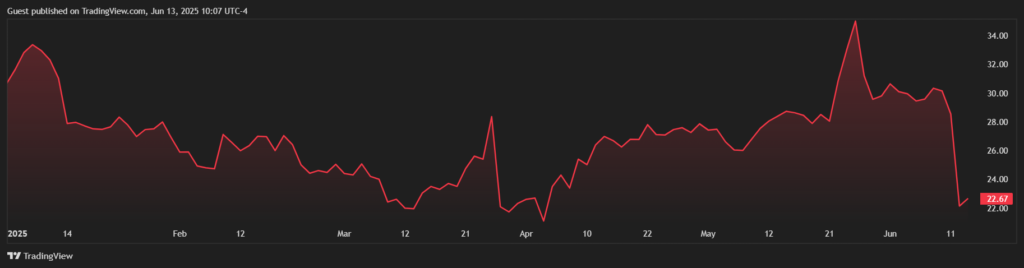
GameStop is a recent example. The company increased its private placement of convertible notes from $1.75bn to $2.25bn. Proceeds are intended, among other things, to top up its bitcoin reserves, which already stand at 4,710 BTC.
After the initial announcement of the bond issue, GameStop (GME) shares fell 22.5%. Year to date, the stock is down more than 30%.


Investor Anthony Pompliano is also pursuing the trend. According to the Financial Times, he will head ProCapBTC, which aims to raise $750m to buy bitcoin via a SPAC-merger.
In Duong’s view, the near-term risk of cascading liquidations is low. Most such firms’ debts come due no earlier than late 2029. But that could change as debt accumulates and new players adopt similar strategies.
Volatility in practice: the SharpLink case
How sensitive the market is to the actions of such companies is illustrated by the U.S. sports-betting platform SharpLink Gaming. After the close, its shares plunged by more than 70%.


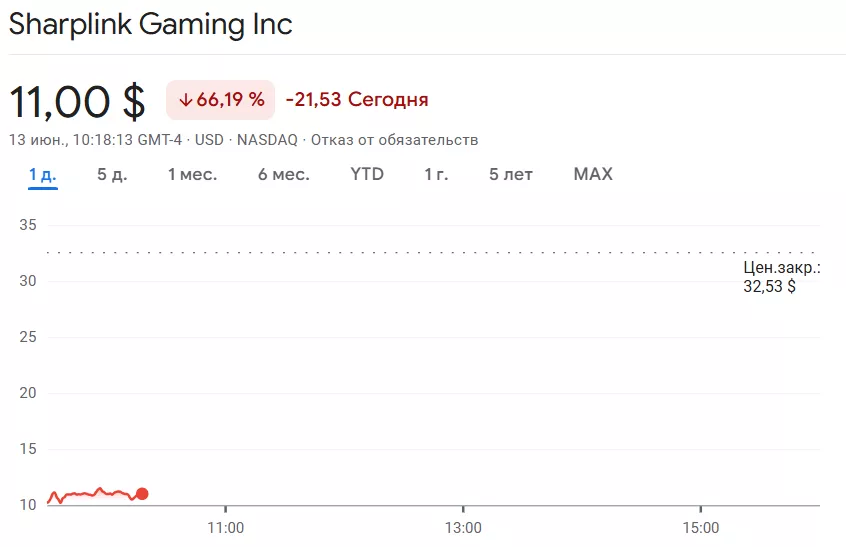
The trigger was a routine S-3 filing with the SEC that registers prior investors’ right to resell their shares. Traders apparently misinterpreted the document as an announcement of a mass sell-off.
Joseph Lubin, ConsenSys’s chief executive and SharpLink’s chairman, explained that this is a standard procedure and does not imply actual sales.
Some are misinterpreting SBET’s S-3 filing:
It registers shares for potential resale by prior investors
The “Shares Owned After the Offering” column is hypothetical, assuming full sale of registered shares.
This is standard post-PIPE procedure in tradfi, not an indication of…
— Joseph Lubin (@ethereumJoseph) June 12, 2025
He said neither he nor his company sold shares.
SharpLink acquired 176,270.69 ETH for a total of $462.9m, making it the largest publicly traded Ethereum holder in the world and the second largest after the Ethereum Foundation.
The average purchase price, including all fees and expenses, was $2,626 per coin.
As of June 13, more than 95% of SharpLink’s Ethereum is actively engaged in staking and liquid-staking solutions.
SharpLink became the first Nasdaq-listed firm to officially make Ethereum the centrepiece of its treasury policy.
Macro and regulation
Despite the risks, Coinbase’s overall outlook remains positive. Recession fears in the U.S. are easing. According to the FRB of Atlanta, GDP growth could reach 3.8%, signalling strong economic momentum.
U.S. rule-making is also undergoing a significant shift. Unlike the prior “regulation by enforcement” stance, both parties in Congress are now working on stablecoin legislation and an overall framework for the crypto market. This could create a more predictable legal environment.
In addition, the SEC is reviewing about 80 applications to launch various crypto ETFs, including funds on Solana, XRP, AVAX and Dogecoin. Decisions are expected between July and October and could significantly affect the market.
A decentralised alternative
Against the backdrop of corporate centralisation of assets, the Polkadot ecosystem has proposed a different approach. The community is discussing creating a strategic bitcoin reserve for the project’s treasury.
The initiative envisages gradually buying tokenised bitcoin (tBTC) worth 501,000 DOT over a year. It would diversify reserves in a decentralised manner and without using debt capital. The proposal is still under discussion.
Coinbase Institutional concludes that bitcoin’s upward trend is likely to continue. The success of altcoins, however, will depend on their individual circumstances and fundamentals.
In May, a user going by the nickname Lowstrife claimed that the execution of the bitcoin strategy resembles a pyramid supported by a securities premium relative to the valuation of the coins.