


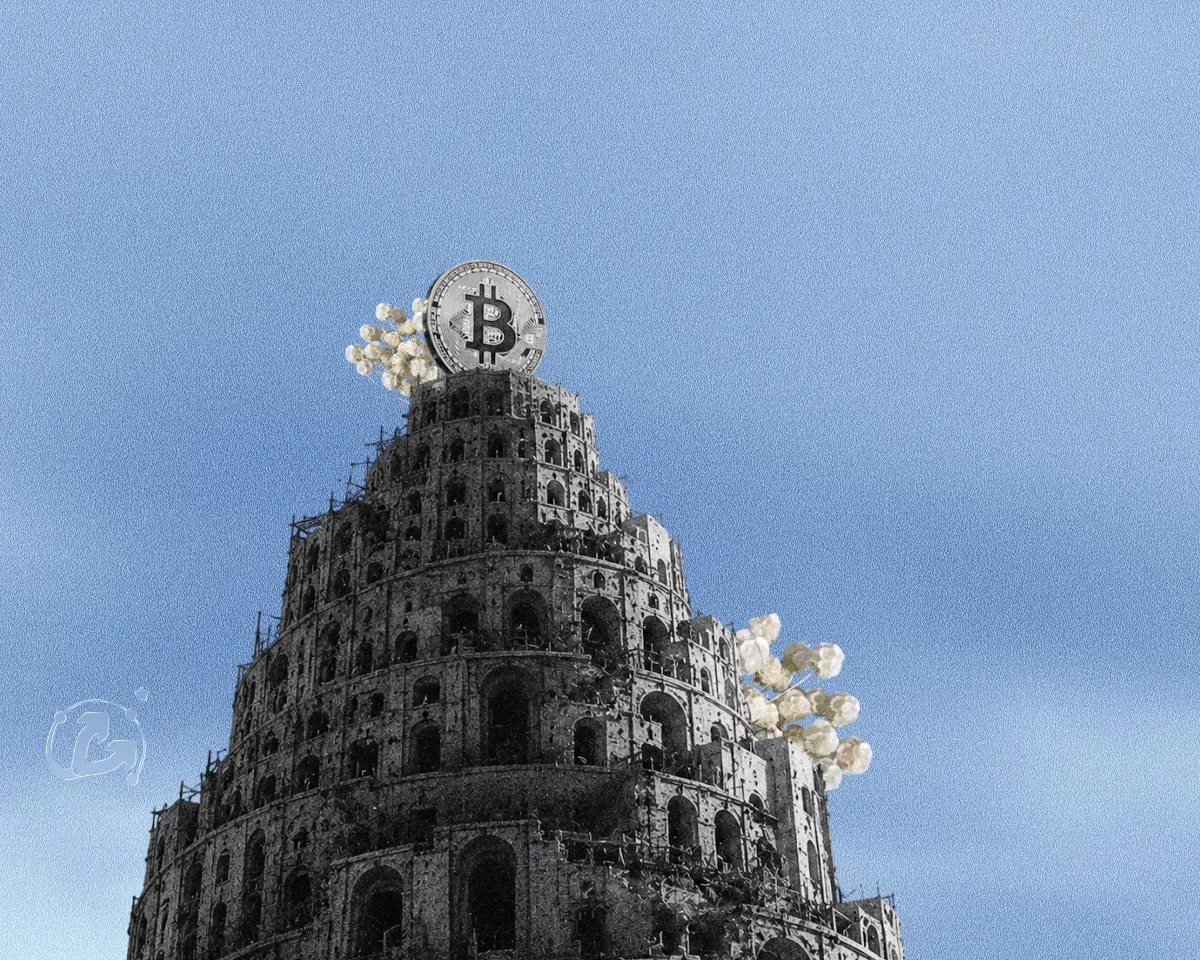
Crypto without the punk
What remains of Web3’s original ideology
Over the years the crypto industry has acquired a thick crust of manifestos: “money without states”, “code is law”. Such slogans would be unworkable without cryptographic engineering and alternative economic mechanisms.
ForkLog examined which blockchain technologies retain value without cypherpunk ideology, which rely mainly on community faith, and gathered views from researchers and project representatives.
Ideology and technology: where the boundary lies
Bitcoin appeared in 2008 as a political response to the banking crisis. Later concepts — Web3, DeFi, DAO — largely inherited the original idea: decentralisation was seen not only as a technical fix but as an ethical principle.
Over the years the technology has outgrown its initial ideology. Cryptographically protected ledgers are used by JPMorgan, BlackRock, SWIFT and the central banks of Hong Kong, Singapore and the EU. In July 2025 America’s Securities and Exchange Commission (SEC) launched Project Crypto — a migration of market infrastructure onto blockchain rails, including tokenisation of equities and clearing. None of these players shares cypherpunk ideals.
This suggests the technological foundations of blockchain can exist apart from the political and cultural precepts with which they were first associated.
With BTC, however, the line is harder to draw. Web3 researcher Vladimir Menaskop argues that ideology is embedded in Bitcoin’s very architecture:
“What is written in the white paper of the first cryptocurrency? That is the ideology embodied in technology — if you know how to read between the lines.”
The expert noted that Bitcoin’s uniqueness is not only its capped issuance. Every component at its core existed long before the cryptocurrency: the PoW algorithm, hash functions, timestamps.
The obvious question follows: what stopped anyone from assembling these elements into a single system earlier? Why did even such eminent specialists as Hal Finney, and the whole cypherpunk community, wait for Satoshi Nakamoto?
According to Menaskop, a brilliant technical composition was not enough: Bitcoin also needed a powerful ideological foundation, which the anonymous creator of BTC provided.
A similar view comes from Nikolai Bordunenko, CPO at MetaLamp. In his opinion, separating technology from ideology in Bitcoin is a mistake, and the hard cap of 21m coins is above all a political statement.
“In the Coinbase message of the genesis block there is a quote from a 2009 The Times headline: ‘Chancellor on brink of second bailout for banks’. This is a direct allusion to the events of those years — the British government was preparing to pour taxpayer money into failed banks again, and central banks were launching issuance on an unprecedented scale. And it is precisely against this backdrop that an asset appears whose issuance no one can change by fiat,” the expert explained.
Georgy Verbitsky, founder of TYMIO, allows only a partial separation. Fixed issuance, he says, is an engineering decision but also a fundamental ideological choice, reflecting limits on money supply and independence from centralised monetary policy.
Mikhail Pshenichnikov, head of development at Dash, sees it differently. He argues that it is better to separate the technological and ideological components, since the former can exist on its own: fixed issuance is merely one Bitcoin feature, and there are projects that do not follow this rule.
“The emergence of Bitcoin gave a boost to a new industry united by a common foundation, but now everyone builds their own principles and values,” the expert summed up.
What endures beyond ideology
Cryptographic primitives
Hash functions, digital signatures, zero-knowledge proofs (ZK) — the maths predated Bitcoin. Crypto has become their main proving ground.
Today ZK technologies are used beyond digital assets. They are being tested for identity verification without disclosure, authenticity checks for AI content and audits of ML models. This layer will persist under any scenario — it is useful in its own right.
Tokenisation of real assets
RWA is among the industry’s fastest-growing segments, not grounded in anarchist values. Big finance is interested mainly for pragmatic reasons: faster settlement, programmability of transactions and lower infrastructure costs.
Settlement networks
After the adoption in the US of the GENIUS Act, stablecoins obtained a clearer regulatory status. Firms like Tether and Circle have already become important providers of infrastructure for cross-border dollar transfers, especially in underbanked countries.
USDT’s popularity is not about decentralisation but simple efficiency: transfers via stablecoins are often cheaper and faster than traditional payment systems.
According to Andrey Velikiy, co-founder of Allbridge.io, without widespread crypto cards it would be all but impossible to use digital assets in everyday life. He likens Bitcoin to digital gold locked safely in a vault, while actual payments have shifted towards regulated, centralised stablecoins.
Smart contracts as a class of software
Automatic execution of conditions without an intermediary is a useful abstraction for escrow, derivatives, subscriptions and royalties. It works in both private and public networks.
What rests on ideology
“Maximalism” and money-replacement narratives
The thesis “Bitcoin will replace the dollar” lives in the media, not in financial statements. The market’s flagship behaves like a risk asset correlated with the Nasdaq, not a means of payment — the share of P2P transactions in its volume is small. This does not negate its role as a store of value, but it weakens scenarios of fully displacing fiat currencies.
Radical decentralisation for its own sake
Many projects are formally decentralised but in practice depend on a narrow circle of developers, concentrated staking and centralised access interfaces.
Velikiy mentioned the exchange Kraken, which introduced compulsory application of the Travel Rule for European accounts to all transactions over €1000, as well as Tether, blocking wallets at the first request of regulators.
“There is now almost more freedom in the banking system than on centralised exchanges,” Velikiy believes.
Does a structural difference from traditional finance remain? Bordunenko thinks it does. Looking at the concentration of validators, developers and stablecoin issuers, the gap is smaller than is often claimed. One structural distinction endures, however — permissionless entry. No regulator’s approval is needed to issue a new stablecoin or build a settlement rail.
The expert recalled that when USDT began freezing addresses at the behest of American regulators, the market responded with alternatives and a shift of volumes into networks facing less pressure.
Verbitsky identified openness as the key distinction: in public blockchains the system’s rules, code, architecture and often decision-making processes are available for market scrutiny. That does not eliminate centralisation risks, but it makes them far more visible. In his view, the distributed ledger today forms an intermediate model between classical centralised finance and fully decentralised systems.
Menaskop urged people “not to mix all blockchains into one flask” — they differ radically. A validator, he says, can be “if not everyone, then anyone”: not everyone has 32 ETH, but upgrades and pooling are being created, so a figure above a million validators no longer looks frightening. At the same time there are projects like TON, where 400 validators is an outlandish figure.
The expert also allowed for the emergence of projects that are hard to distinguish from financial institutions, citing Base, XRP Ledger and BNB Chain.
Meme coins and “culture”
Meme coins rely heavily on community attention and media effects. Technically, most are standard tokens without unique infrastructure. That does not make the segment pointless, but it places it closer to digital entertainment and speculative assets than to financial transformation.
Where capital will flow
Experts’ 3–5 year allocation forecasts diverge markedly, reflecting market uncertainty. Bordunenko bets on infrastructure and security. Big capital goes where rules are clear: custody of cryptoassets, stablecoins and tokenisation.
He singles out security for huge investment: protection from the quantum threat, audits and remediation of software vulnerabilities. He sees insurance as especially “under-ripe” — not all threats can be prevented, but hedging against the loss of billions is quite realistic.
As for the cultural layer — DAOs, DeSoc, everything that reimagines social structures via blockchain — it is losing scope to attract capital, Bordunenko believes. He sees a chance for serious inflows only in one scenario: a crisis on the scale of 2008. A new wave, he says, could come when people en masse realise they own neither their data, nor digital identity, nor intellectual property. That would require an incident of incredible scale — a major platform hack, a data leak or serious damage affecting officials as well.
Verbitsky offers a similar forecast, with a geopolitical caveat. In his view, the infrastructure layer will see the largest inflows: blockchain is gradually turning from a purely “cryptocurrency” technology into a universal financial infrastructure. Platforms such as Hyperliquid, he notes, already allow trading not only cryptoassets but also derivatives linked to traditional markets. Should doubts about the resilience of state currencies intensify, the narrative of independent money and “hard assets” could return to the fore.
Menaskop sees an asymmetry in funding. Infrastructure gets so much money, he argues, because many analytic firms and venture funds insisted: “It is almost 100% ready — just take it and assemble dapps like Lego bricks.” They were wrong, and the LayerZero hack is the best confirmation. He predicts money will flow not where crypto-enthusiasts would like: into various corporate “blockchains” and the RWA segment. Even so, the ZKP sphere will not stall — the balance of power will simply shift.
Pshenichnikov emphasises the cultural and consumer segment. Projects with strong communities and marketing support, he observes, traditionally attract more attention and liquidity. This demand pattern does not always align with a project’s technological significance, but it largely determines capital allocation in the industry.
Openness as a practical advantage
Ideological theses about “open finance” are often stress-tested by hacks and scandals. Menaskop points to a comparative argument: access to open data is itself a breakthrough. “Many shriek that DeFi is hacked at every turn,” he says, yet a single comparison with hacks in banking shows the problem is not DeFi. Traditional institutions keep failures secret for years, and when they surface the sums are in the billions. He calls the “head-in-the-sand” effect the burden of centralised finance — and a very frightening one.
Bordunenko shares a similar view, but for states rather than users. To some degree, he argues, governments are also interested in decentralisation. After 2022 it again became clear that the dollar can be used as a tool of political influence, and no one knows whose head it will “hit” next. A permissionless network turns from ideological whim into a backup plan: those who yesterday pressed on crypto-infrastructure and demanded blockages may turn to it tomorrow — simply because there will be no other options.
A de-ideologised scenario: what a mature industry looks like
If today’s trends are extrapolated — regulation in the EU and US, licensing in Hong Kong and the UAE — a three-layered industry emerges:
- Infrastructure: blockchain as a backend for settlement, clearing and rights registries. Users will not see it, just as they do not see the TCP/IP protocol.
- Regulated financial products: spot ETFs, tokenised Treasuries, stablecoin payments.
- Public networks as testbeds: DeFi, on-chain games, identity, ZK-privacy applications. There remains space for what was originally deemed the “spirit of crypto” — but without claims to replace the rest of the world.
What will endure?
Strip out ideology and crypto leaves: cryptography, tokenisation, programmable settlement, a new class of financial products. What departs is the eschatology, the maximalism and a chunk of the marketing. The technological layer proves sturdier than the ideological — normal for a mature industry: electricity outlived 19th-century utopias of a “new human of the electric age”, and the internet outlived the libertarian manifestos of the 1990s.
The picture painted by experts is contradictory — which is itself a diagnosis of the industry’s condition. Capital goes where rules are clear: into infrastructure, stablecoins, tokenisation, security and insurance. Ideology either awaits “its 2008”, or returns in spurts.
Bitcoin remains the point where the technical and the ideological are still stitched together — a manifesto for some, an engineering compromise for others. Public blockchains are in an intermediate state: no longer entirely decentralised, yet still more transparent and open than regulated finance — even if Tether’s latest decisions and those of large CEXs make one doubt even that.
Web3 has ceased to be a single project. It is a set of distinct networks, communities and values. Each segment is progressing through its own stage of maturity.
Рассылки ForkLog: держите руку на пульсе биткоин-индустрии!