


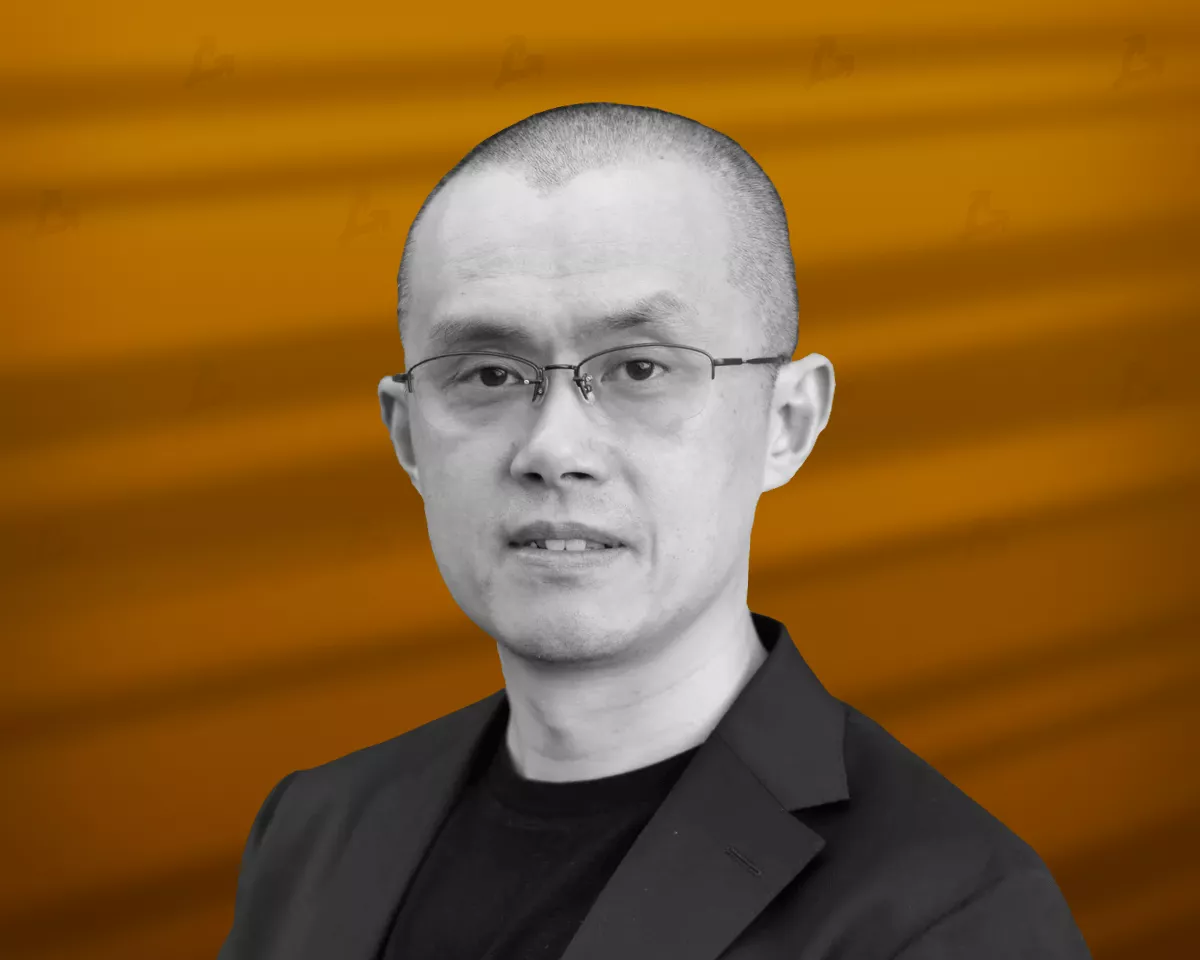
CZ Envisions Bitcoin as Future Currency at Abu Dhabi Conference
A Bitcoin reserve is one of the most effective solutions for a state concerned about its finances, according to Binance founder Changpeng Zhao (CZ) at the Bitcoin MENA 2024 conference.
20–30 Years to Mass Adoption
CZ noted that people still view Bitcoin as an investment asset, focusing heavily on its price. In the next 10–15 years, the applicability and utility of blockchain will come to the forefront.
“Bitcoin should be used as intended. Later, we will not call it ‘Bitcoin,’ just ‘money’,” Zhao stated.
As states begin to add the first cryptocurrency to their balance sheets, its price will rise, along with the number of use cases, according to the Binance founder.
He mentioned that currently, about 5–10% of people worldwide use Bitcoin. In a few years, this figure will exceed 15%:
“We probably won’t see full Bitcoin adoption for another 20–30 years. […] Several generations must pass before we see 100% adoption.”
Bitcoin is already one of the most popular assets, yet it still lags behind gold. However, the precious metal is mainly held by states, not individual investors. Among this category, the first cryptocurrency, according to Zhao, may already be a leader.
In his view, Bitcoin surpasses gold in terms of transportability, storage, and limited supply. This means the asset’s capitalization should exceed the precious metal’s $16 trillion mark.
Strategic Bitcoin Reserve — A Good Idea
Zhao supported the idea of creating a Bitcoin reserve in the US, calling it the most effective solution for states.
“You have an asset with a limited supply. If you can print money and buy it — it’s the simplest solution today. The sooner you do it, the better,” he noted.
In his opinion, if the US creates a national reserve, other states will follow suit. Those who stay on the sidelines will miss out:
“Bitcoin is the future of money. If you don’t want it, you will be poor in the future.”
Smaller states are likely to engage in “Bitcoinization” first.
“I’m surprised the US is taking steps earlier than others. It highlights interesting mechanisms for innovation in the country’s constitution. They ensure a change in political and ideological leadership,” Zhao believes.
However, he explained that countries generally change slowly. Decisions require consensus among many agencies, creating friction:
“Those who were crypto advocates in the past are now moving faster: UAE, Bahrain, Bhutan, other parts of Asia and the world.”
Now, the US may become a competitor for those interested. This will affect the Bitcoin market, labor, and others, CZ believes.
When the American Bitcoin reserve launches, noticeable moves from the Chinese government, which has not yet announced any plans, can be expected.
According to the Binance founder, “less democratic” states are often opaque but can implement changes very quickly if necessary. This is also true for adopting the crypto market.
The creation of a Bitcoin reserve is inevitable, he believes, including in China and other countries that have not yet shown interest.
National BTC Reserve in Practice
According to Zhao, most governments wanting to hold cryptocurrency should start with third-party custodial storage solutions.
“As [governments] learn and accumulate assets, their interest will shift towards multisig storage, self-hosting, open-source solutions,” he noted.
In his view, the ideal solution is a non-custodial multisig storage based on open source. States will “savor” the know-how and implement the relevant technologies gradually:
“All these technologies are already available, they are at Binance. But you shouldn’t choose a non-custodial solution from day one. […] It will just lead to key loss.”
Zhao also emphasized the importance of having multiple signatories located in different parts of the world. Neither the president nor they themselves should know all the key holders.
“At Binance, I didn’t know who the signatories were. I wasn’t among them and didn’t know who they were. If asked, I can’t help,” the exchange founder explained.
The more money in storage, the more key custodians will be needed, he added.
Bitcoin Mining at the State Level
Zhao considers mining a promising activity for state authorities — they can afford to deploy a large-scale enterprise capable of generating profit and mining bitcoins cheaper than purchasing them on the market.
He cited the example of the Kingdom of Bhutan, located on a mountain slope in the Himalayas:
“Bhutan is unique in that they have a lot of excess ‘clean’ electricity from hydropower. They use only 30% of the generated energy. Exporting it is difficult. […] When Bitcoin appeared, it was logical for them to convert the excess electricity into it.”
According to Zhao, this was about 10 years ago, and the idea was suggested to the royal government by Bitmain founder Jihan Wu, who has his own farm in Bhutan.
“Mining is a cheap way to get Bitcoin if you have patience and scale. In retail, it no longer works,” CZ noted.
For states, this method of slow accumulation is well-suited. According to Zhao, many countries are already engaged in mining.
Three Steps Towards Cryptocurrency Adoption
According to the Binance founder, there are several important changes that will simplify the implementation of a Bitcoin reserve and accelerate cryptocurrency adoption.
Using the US as an example, he first mentioned abandoning regulation through enforcement and urged the SEC to withdraw all lawsuits where there was no fraud.
“All registration issues, all securities discussions — all this should go away,” Zhao believes.
The second stage will bring clear rules for the industry and classification of various types of digital assets. Legal frameworks will be needed for exchanges, miners, stablecoins, and more. The third stage involves investing in the industry:
“Grants are needed, large businesses need to be attracted to the US, […] Educational programs in universities and the like need to be organized,” CZ listed.
In his opinion, these steps will definitely work for the US, given the authorities’ access to resources and talent.
Hyperbitcoinization — A Direction, Not a Goal
According to the Binance founder, the world is moving towards “hyperbitcoinization” — the full spread and adoption of the first cryptocurrency.
“A lot can still happen. A better alternative to Bitcoin may appear. For now, I don’t see one. Bitcoin has some features that are difficult for other projects to replicate,” Zhao noted.
He mentioned that the anonymity of Satoshi Nakamoto and the open community are some of Bitcoin’s key aspects that would be difficult to replicate now.
Despite its shortcomings, digital gold, according to Zhao, will remain the main store of value not only in the crypto industry but also in the global economy.
As reported, Riot Platforms’ Director of Government Relations Sam Lyman believes a Bitcoin reserve will become a geopolitical tool for the American authorities.
Рассылки ForkLog: держите руку на пульсе биткоин-индустрии!