



We have collected the most important cybersecurity news of the week.
- Forty-five million rubles will be allocated for software to test facial-recognition systems in Moscow.
- In China, attackers used photographs purchased on the dark web to create deepfakes and deceive the state facial-recognition system.
- A Russian court fined Twitter almost 9 million rubles.
Chinese hackers hacked the state facial-recognition system using deepfakes and earned more than $76 million
In China uncovered the scammers who hacked the state facial-recognition system to forge tax invoices.
The criminals deceived the identity-checking platform used by the tax service with fake personal data and photographs bought on the dark web.
They used the obtained photographs to create deepfakes. They also bought special phones, with cameras that were not activated during facial authentication, so the system received a pre-recorded video.
Using this scheme the scammers registered a shell company that issued fake tax invoices to clients. In two years they earned $76.2 million from this scheme.
Apple fixed a zero-day vulnerability in iOS
Apple released an update with a fix for a zero-day vulnerability that could have been actively exploited by attackers.
Other details have not been disclosed yet.
A court in Russia fined Twitter 8.9 million rubles
The battle against Twitter in Russia continues. The court three times fined the company for refusing to remove information “to which access is restricted under Russian law.”
In total, Twitter must pay 8.9 million rubles in fines.
As a reminder, Roskomnadzor also threatened the social network with full blocking in Russia if it does not delete prohibited content.
Docker Hub finds 30 malicious images used for covert mining
In the Docker Hub container repository, 30 malicious images used for covert mining were discovered. They were downloaded over 20 million times.
For the most part, the attackers mined cryptocurrency, primarily Monero; other mined cryptocurrencies included Grin and Aronium.


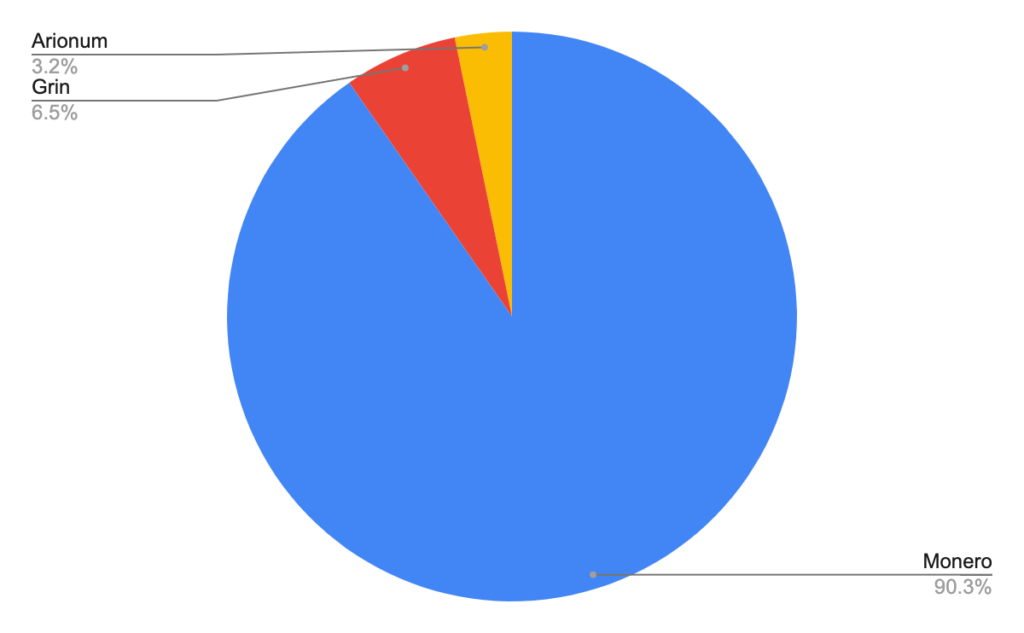
Using cryptojacking, the criminals earned around $200,000.
In Moscow, facial-recognition systems will be tested
The Joint-Stock Company “Electronic Moscow” allocated 45 million rubles for software to test facial-recognition systems, according to MBK Media, citing the corresponding tender.
The software is intended to create test tasks in the form of image sets, where modules should identify people’s faces.
Read ForkLog’s exclusive on how Russia is deploying facial-recognition technologies.
North Korea hackers target security researchers, posing as experts
Google discovered a fake SecuriElite company website that allegedly does pentesting and security assessments. Experts believe the site is run by North Korean hackers.
Earlier Google warned that North Korean hackers were attacking cybersecurity experts — they gained trust by posing as colleagues and directed them to malware-laden sites, exploiting zero-day vulnerabilities in browsers.
A Ukrainian resident suspected of developing phishing software. Damages estimated in the tens of millions of dollars
A resident of the Ternopil region is suspected of creating malware aimed at hundreds of banks and their customers.
According to the Office of the Prosecutor General of Ukraine, the software allowed control over user accounts on already compromised resources and the entry of payment details there.
Preliminary estimates put the damage from its use at tens of millions of dollars, with victims in banks across Australia, the United States, Chile, Mexico and many EU countries.
More than half of all phishing attacks in Australia in 2019 were carried out using this software, law enforcement found.
Also on ForkLog:
- warnings of a breach on Coinhive-related domains.
- Fake Trezor app in the App Store stole cryptocurrencies from users.
- The operator of the dark-net site DeepDotWeb admitted to money laundering through Bitcoin.
- In the Call of Duty cheat code, an installer of a hidden miner was found.
- The operator of the Bitcoin ransomware Ziggy will return money to its victims.
- In Runet, a surge in fake sales of bank card databases for Bitcoin was recorded.
What to read this weekend?
Authorities in many countries have for years talked about giving law enforcement access to information protected by end-to-end encryption. We examine whether this is possible in ForkLog’s feature.
Read ForkLog’s Bitcoin news in our Telegram — cryptocurrency news, prices and analysis.