




The Central Bank of Iran has acquired stablecoins USDT valued at $507 million, according to Elliptic experts.
🚨 New Elliptic research: We have identified wallets used by Iran’s Central Bank to acquire at least $507 million worth of cryptoassets.
The findings suggest that the Iranian regime used these cryptoassets to evade sanctions and support the plummeting value of Iran’s currency,… pic.twitter.com/I7NHGO0wtP
— Elliptic (@elliptic) January 21, 2026
The bulk of the funds were purchased by the regulator in the spring of 2025. With sanctions and disconnection from the SWIFT system, cryptocurrencies became the country’s sole alternative to international bank transfers.
According to the analysis, until the hack in June, the Central Bank directed most of the funds to Nobitex, Iran’s largest crypto exchange for trading and selling digital assets for the local currency (Iranian rial).
After the hacking attack on the platform, the bank changed its strategy, adopting a more complex scheme using decentralized cross-chain bridges and DEX, primarily on two networks: TRON and Ethereum.
The regulator converted assets and moved them between blockchains before the final transfer to centralized platforms.
Why Does Iran’s Central Bank Need USDT?
Experts linked the Central Bank of Iran’s active accumulation of “stablecoins” to economic instability. The buildup of reserves occurs against the backdrop of the collapse of the national currency.


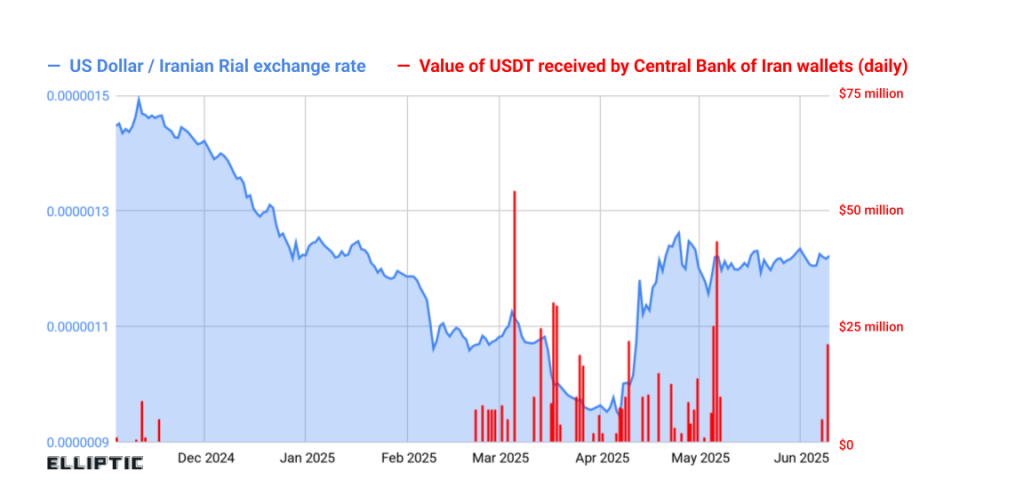
“The main motivation for purchasing USDT is the desire to control currency markets. This aligns with blockchain activity. Directing funds to Nobitex indicates a strategy of injecting dollar liquidity into the local market to support the rial,” they noted.
Analysts believe the Central Bank attempted to halt the decline of the Iranian rial by buying fiat with USDT on the exchange. The regulator used stablecoins for open market operations, typically conducted using foreign exchange reserves.
The Central Bank is also building a “sanction-proof” banking mechanism, according to Elliptic. By using “stablecoins” as an offshore account equivalent, Iran is creating a parallel financial infrastructure to store dollar value beyond the reach of American regulators.
Stablecoins remain a primary tool for illicit operations. According to Chainalysis, over $154 billion flowed into illegal crypto wallets in 2025, with the majority in fiat-pegged assets.
“Stablecoins” are also frequently used to circumvent sanctions. For instance, 80% of Venezuela’s oil revenue is converted into USDT.
Amid mass protests and the fall of the Iranian rial, citizens of the country sharply increased the volume of Bitcoin withdrawals from exchanges to personal wallets.