



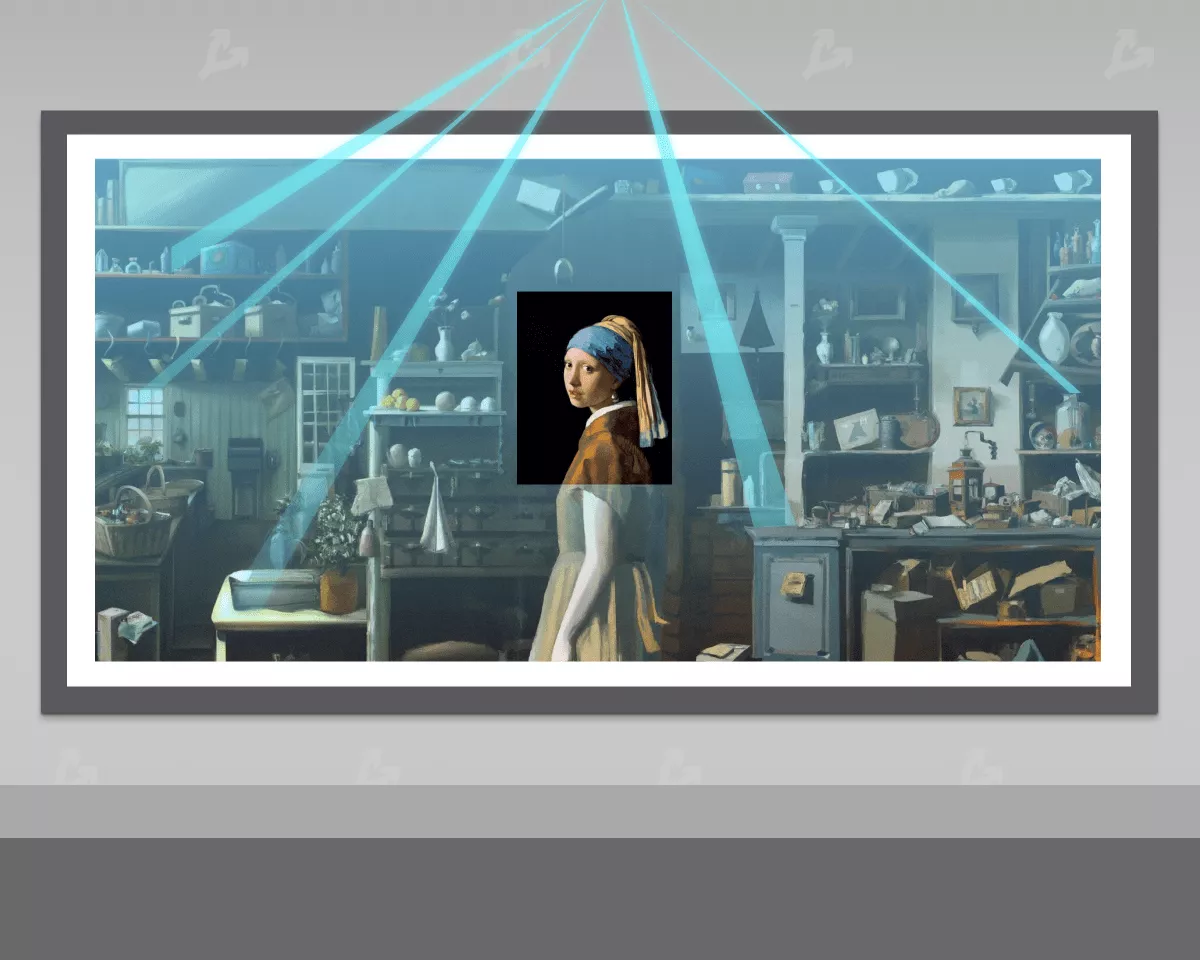
Visual art has always been one of the core products of human culture. For centuries it has allowed people to express themselves and tell stories.
First there was cave painting, then oil paintings and photography. Now the era of “visual” artificial intelligence and, in particular, neural networks.
ForkLog has investigated which AI models are used to work with images and whether such systems could replace artists.
- Researchers began applying image-creation algorithms in the 1950s–1960s.
- Neural networks allow copying artists’ styles, turning sketches into photorealistic illustrations, “bringing to life” portraits, and creating new images.
- The cost of developing and training an algorithm ranges from zero to hundreds of millions of dollars.
- AI art can inspire, but its accessibility may raise a number of issues.
A Brief History of AI Art
The history of generated AI art can be traced back to the advent of machine graphics and the invention of the computer. Early researchers used basic algorithms to create simple patterns and forms.
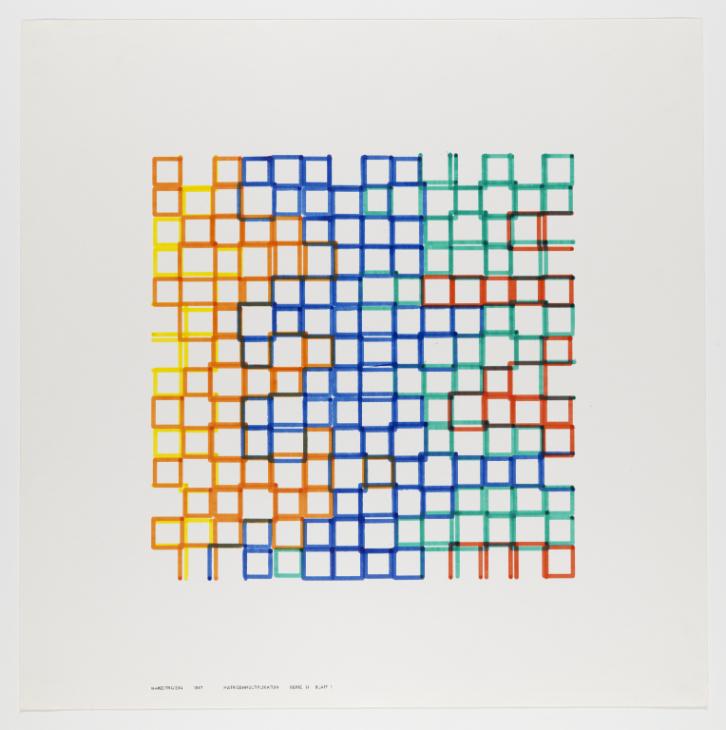
In 1967 the German mathematician and scientist Frieder Nake developed a portfolio titled Matrix Multiplications, consisting of 12 images. He created a square matrix and filled it with numbers that were multiplied by themselves in sequence.
The researcher translated the results into images of given intervals, assigning a visual sign in a particular form and colour for each value. He then arranged the shapes on a grid according to the matrix values.
In his works Nake frequently used a random-number generator and probably partially automated the multiplication process.


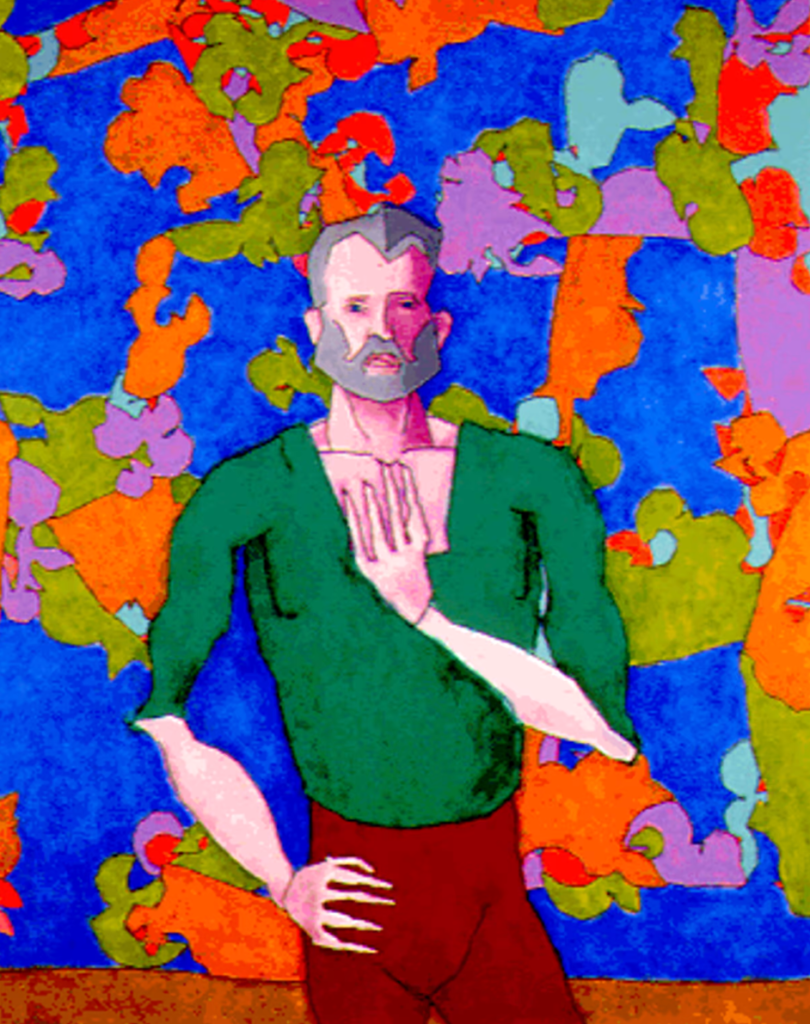
In 1973 the artist Harold Cohen developed a set of algorithms AARON capable of drawing “by hand” specific objects. He found the system began to create forms previously unknown.
Initially the program generated abstract paintings, then learned to draw more complex shapes, including stones, plants and people.


Since 1990 researchers and artists began using AI models in robotics, teaching machines to create paintings and sculptures.
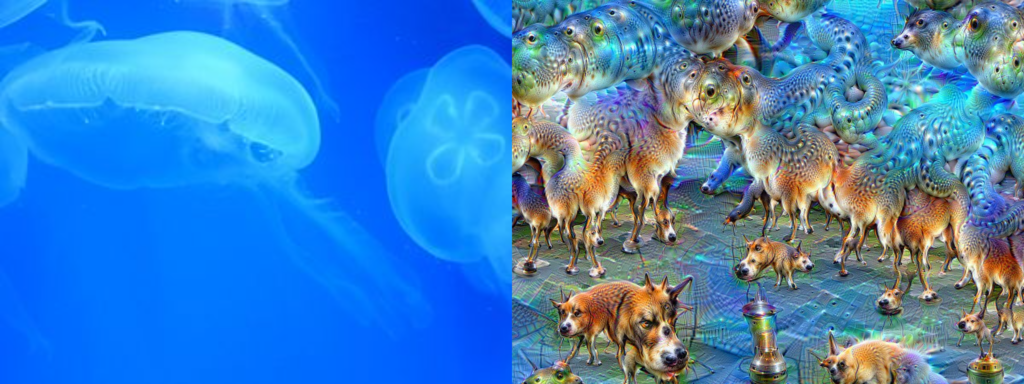
In 2015 the Google engineer Alexander Mordvintsev launched the computer-vision program DeepDream, which used a convolutional neural network to search for and amplify patterns in images using algorithmic pareidolia.
The system works by distorting the original image according to which fragments resemble familiar objects.
When Google published the approach and released the source code of the algorithm, the market saw many tools and services that allowed anyone to transform their photos into “psychedelic” images.


In 2022 AI art appeared in various domains, including marketing, fashion and entertainment.


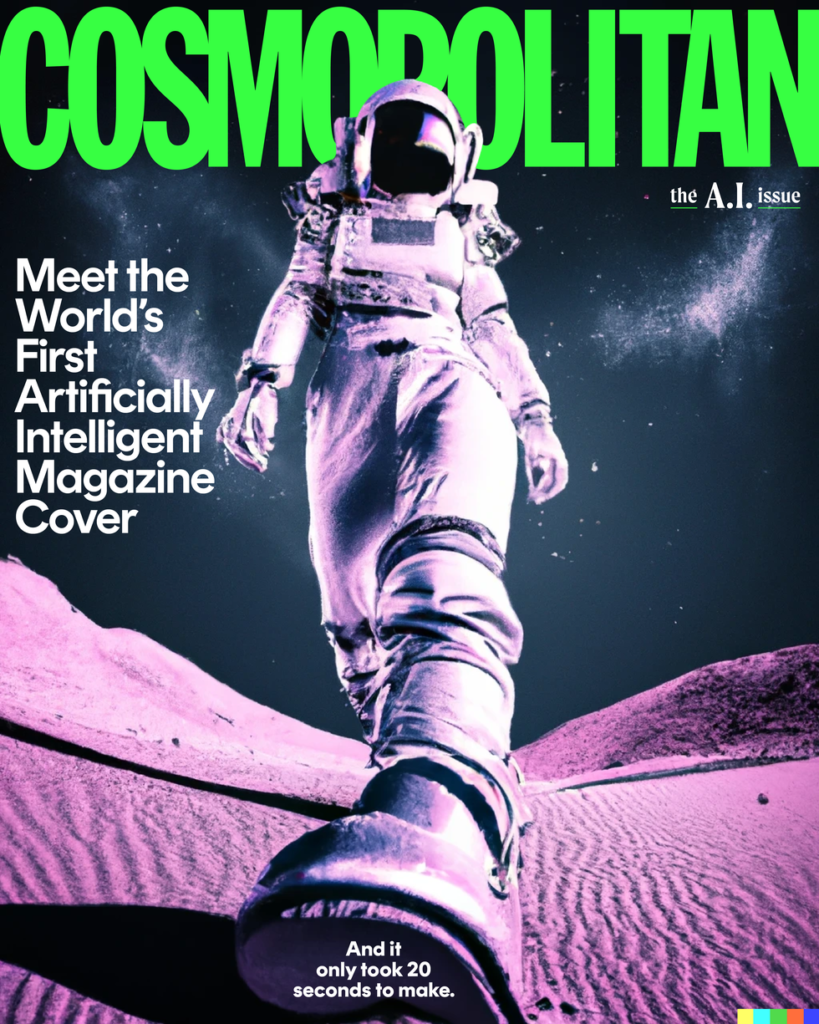
Also, these models help create paintings.


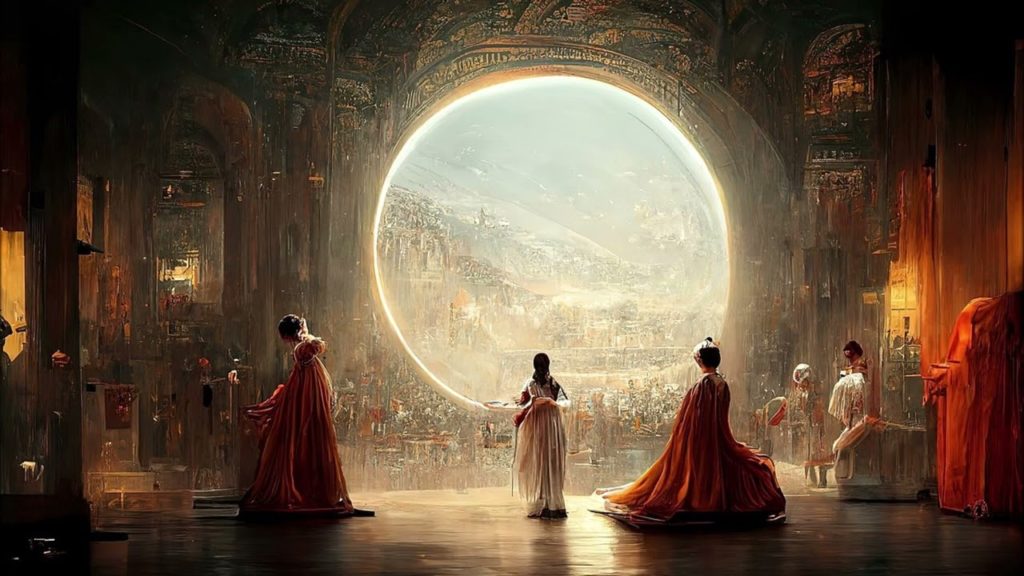
Neural Networks for Image Work
2022 may go down in history as the moment AI art went mainstream. A boom in high-quality tools built on various algorithms makes neural creativity accessible to anyone with a smartphone connected to the internet.
AI models let users copy painters’ styles, convert sketches into photorealistic illustrations, “bring portraits to life” and create new images. Different tasks employ different or similar approaches and tools.
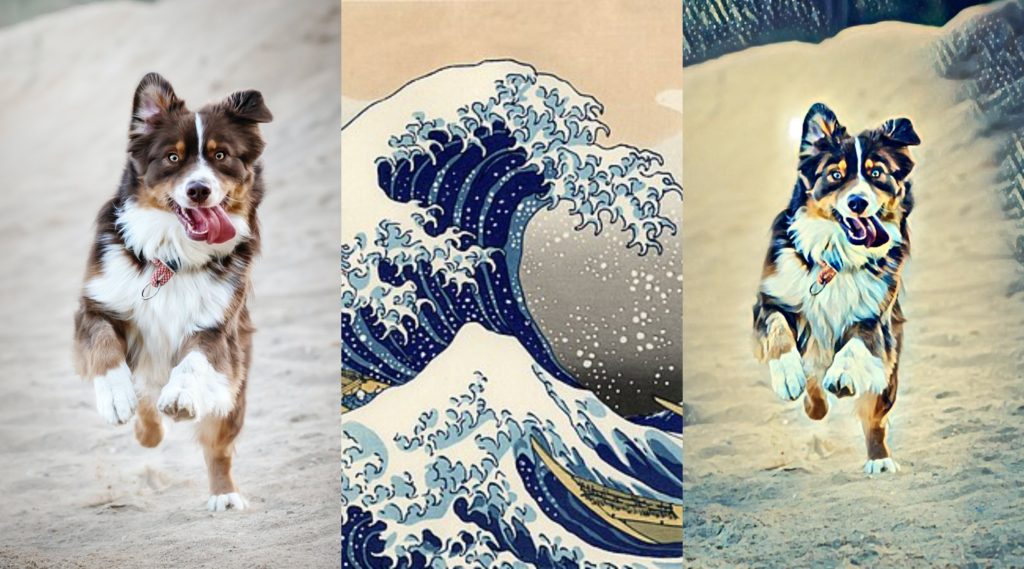
Neural style transfer (NST) is a method based on convolutional neural networks that can create a painting imitating the style of another image. A user can transform a photo of a running dog into an engraving by Katsushika Hokusai or generate the Mona Lisa in the brush of Jan Vermeer.


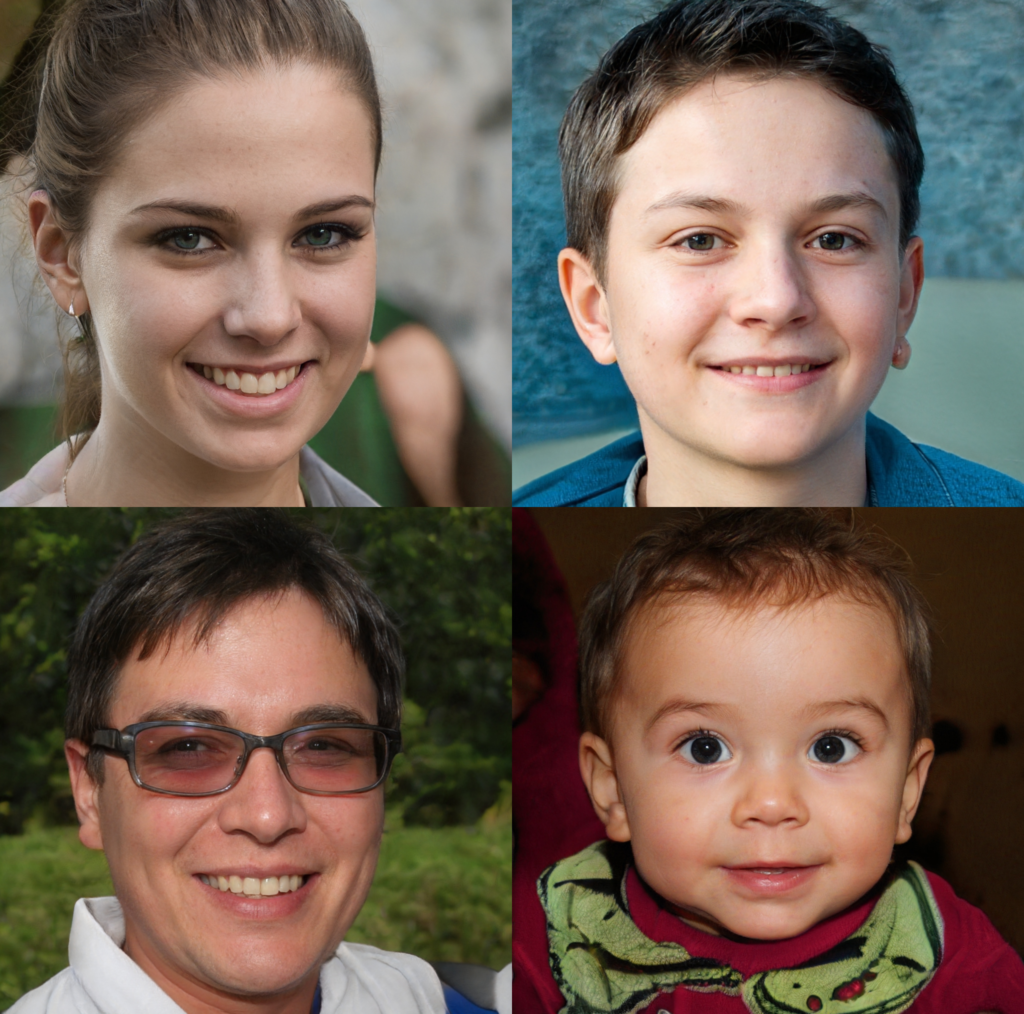
Generative adversarial networks (GAN) power the creation of new artworks or paintings in the style of other images. GANs consist of two models: a generator that produces content and a discriminator that evaluates it.
GAN-based systems can produce images that resemble pictures in the training set, including faces, cats’ mugs, furniture, and other objects.


GANs can also help “bring to life” a sketch of a landscape.
Today, however, the most popular artistic tools are text-to-image generators that rely on language models like OpenAI GPT-3.


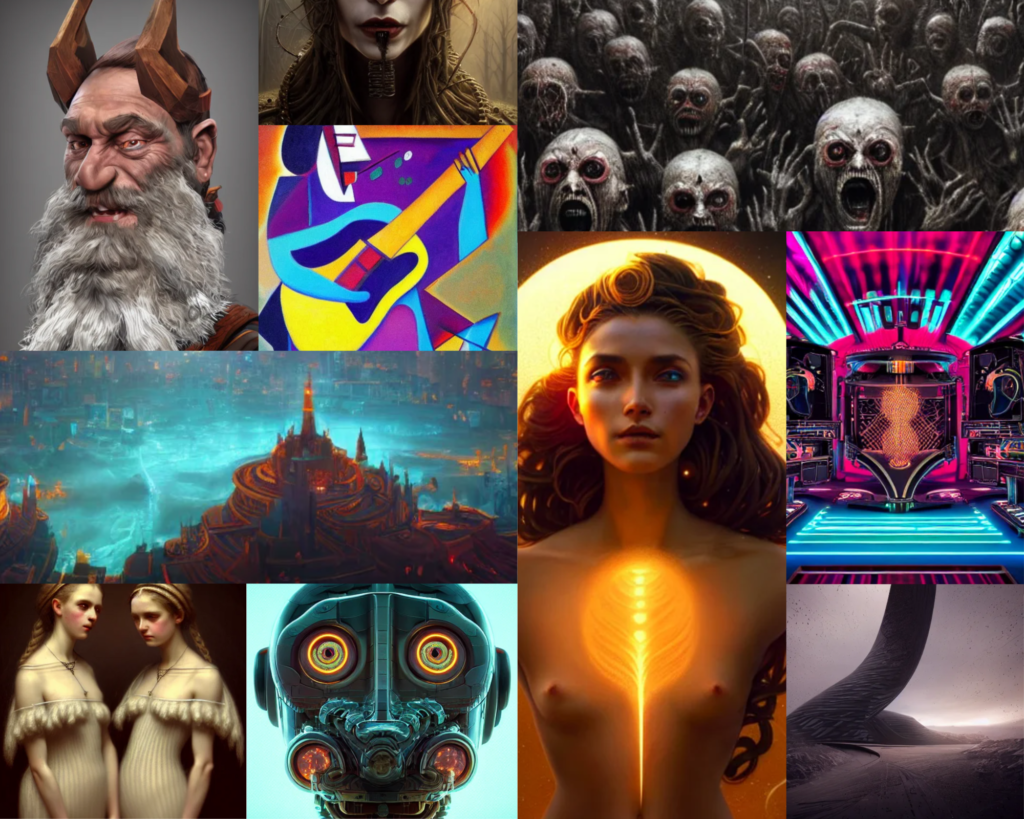
The motto of such systems is “print and you’ll get.” Users simply type a natural-language prompt like “A llama with dreadlocks in a spacesuit,” and the algorithm generates an image to match the prompt.


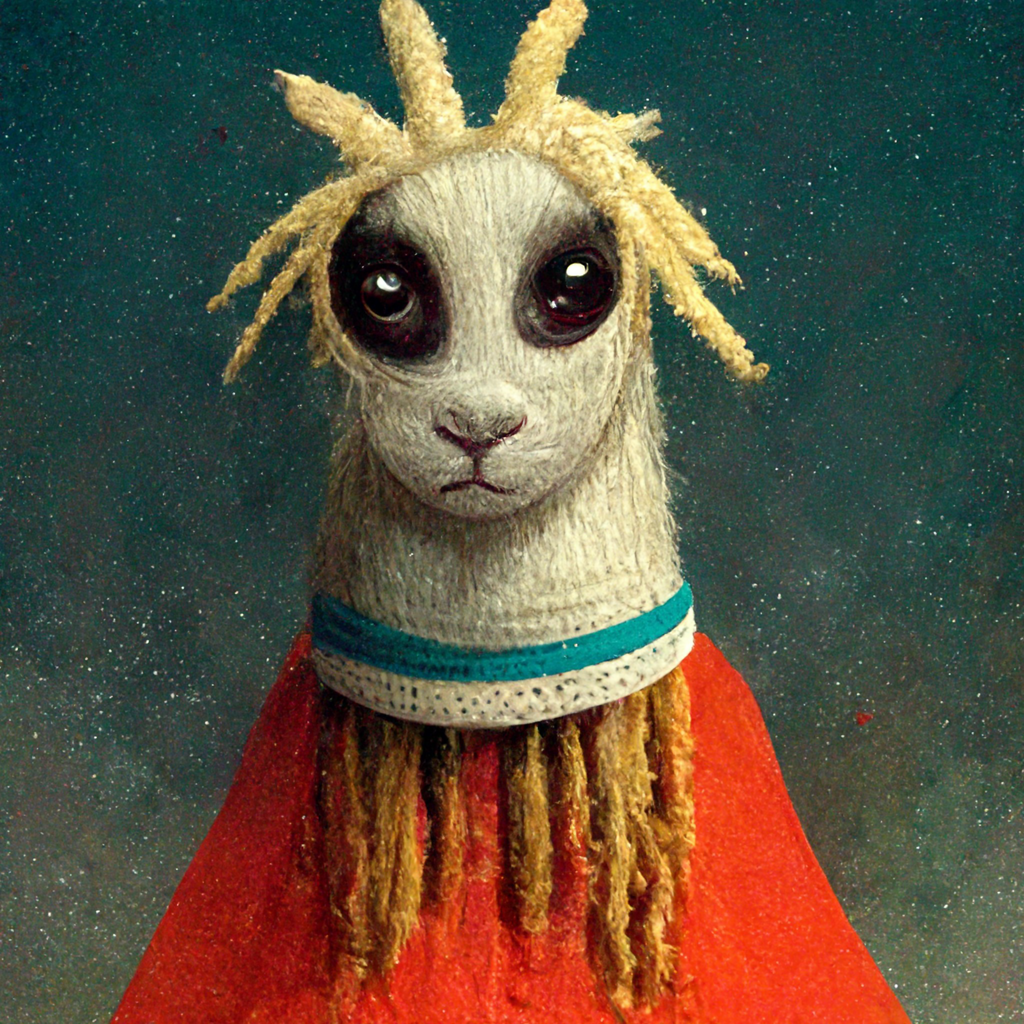
Text descriptions can consist of hundreds or thousands of words; adding or removing words can radically alter the result. They play a key role in image creation. There are even marketplaces where people can buy prompts for a particular visual style.
Developers train AI generators on vast corpora of images and their textual descriptions, teaching the model to recognise connections between them. They also frequently use the diffusion process—where generation begins from random points and gradually improves the image, approaching the prompt and reducing noise.
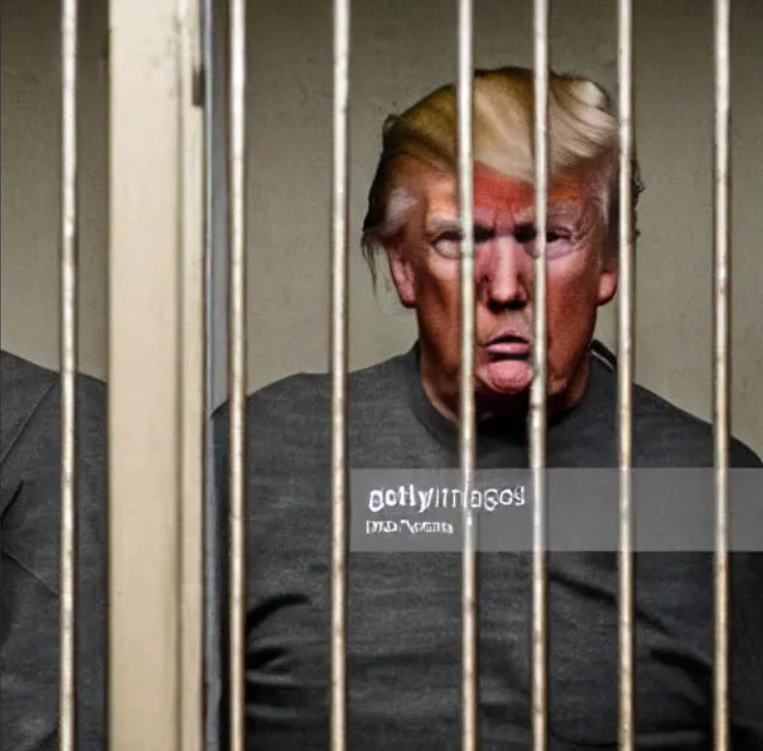
Most popular AI generators impose content restrictions: they cannot depict nudity, violence, realistic faces, or political figures. Tools such as OpenAI DALL-E 2, Google Imagen, and Midjourney are examples. Sometimes access is paid.
But there are systems without such filters, such as Stable Diffusion. The company behind Stability AI has stated the model has no filters and can generate any content.


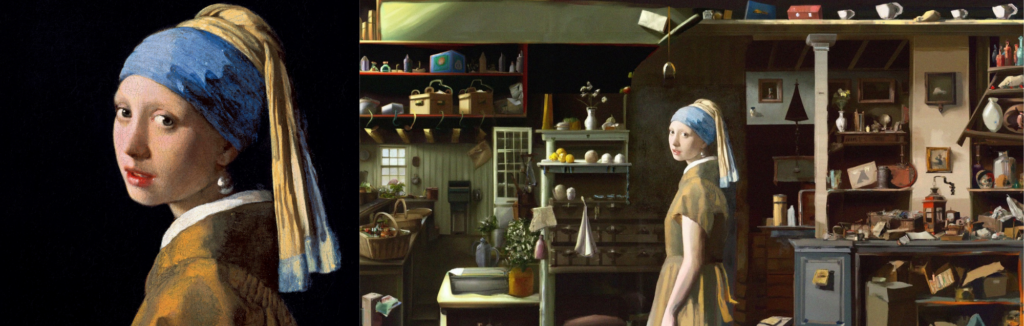
Text-to-image generators can be used to refine existing works. In August, OpenAI introduced a feature called Outpainting, allowing DALL-E 2 to extend paintings through prompts.


How Much Does It Cost to Develop a Neural Network?
That is a highly nuanced question. The answer ranges from zero to several hundred million dollars.
First, creating and training an AI algorithm requires expertise. Users without programming skills and with little appetite for courses should first learn the principles of neural networks. There are many free articles, resources and services such as Google’s Teachable Machine that can help.
Also needed are programming language skills such as Python and a library for development and training of neural networks—TensorFlow, PyTorch or another.
Beyond that, one must assemble a training dataset tailored to the task, which can be created in house, sourced from open repositories or purchased. To develop a text-to-image generator you will need a set of images and their textual descriptions.
The accuracy of the model depends on the quality and quantity of data, as well as on the hardware and computational resources employed.
With all of the above, it is possible to build an image-focused neural network for free.
Nevertheless, large companies like Meta, Amazon, Apple, Microsoft and Alphabet are investing tens of billions of dollars in such products. Expenses cover research, development, training, verification, deployment, commercialisation and ongoing support. Sometimes projects take years and may be abandoned or, conversely, become indispensable.
Advantages and Disadvantages of Visual AI Algorithms
Among the advantages of using neural networks to create artworks is the generation of realistic data. Such images can find use in films, advertising, games and other sectors.
AI algorithms think in unconventional ways. They can create images never seen before, compose objects in unfamiliar ways and mix textures in original fashion. Such art can inspire larger projects.
Thanks to constant improvements in technology and data, AI art also continues to evolve and bring new ideas.
Moreover, the algorithms can speed up some tasks. Neural networks can be used to create logos, music videos and be employed for marketing purposes.
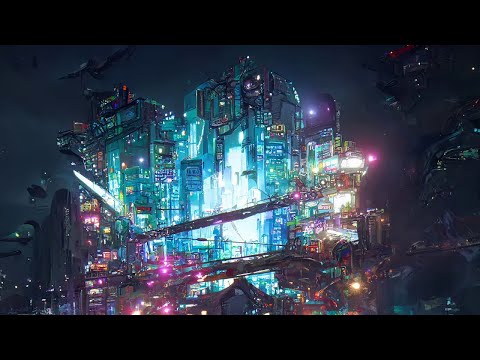
Among the drawbacks is the absence of human emotion. Sometimes this is an asset, but when creating a work of art, many people require a narrative.
Due to the limited size of training datasets AI art can become monotonous. Without constant upgrading and training on new data, generated images may begin to repeat and lose their novelty.
Also, developers cannot fully control the creative process of the neural networks. After training, the algorithm yields results based on fixed weights, and if the result is unsatisfactory, the model must be retrained.
But the core concerns around AI relate to ethics. Developers cannot always control how the technology is disseminated and used. Algorithms cannot be regarded as authors of artworks, but the creators bear responsibility for their misbehaviour.
The ease of access to the technology can enable wrongdoing as AI-generated images could be used to deceive people, steal personal data and spread hate speech.
Will Neural Networks Replace Artists?
Once photography was considered a new trend in creativity. After nearly 200 years, it did not replace artists and art-world figures, but compelled them to evolve and adapt.
That gave rise to a new generation of creative individuals. Artists and photographers began collaborating to create works capable of surprising, captivating and provoking thoughts about beauty.
Art, in whatever form it takes, invites people to feel. There is ample room for new artistic frontiers that can evoke previously unknown sensations.
Creators of generative AI may slightly shift existing forms of creativity, but they will not erase them.
Tools such as DALL-E 2, Stable Diffusion and Midjourney are likely to continue evolving into highly sophisticated artistic engines and help artists augment their work.
With sufficient and sustained development, people may regularly use the technology to inspire and broaden their conceptual horizons.
Subscribe to ForkLog News on Telegram: ForkLog AI — all the news from the world of AI!