


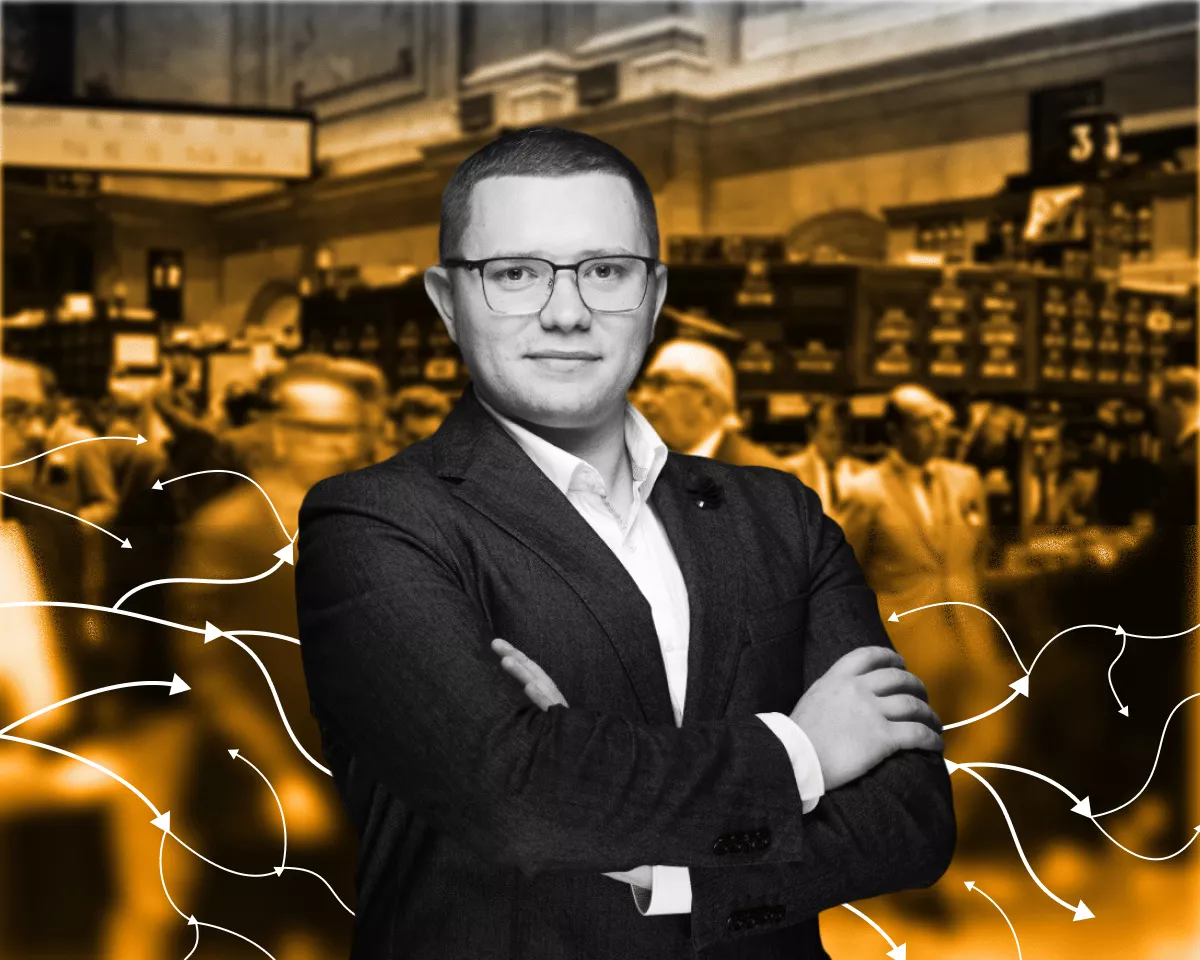
Exchange freezes an account — what should you do? AMLCompliance founder explains.
The year now ending could be described as the ‘year of blockages’: users of the Coinbase exchange, the DEX dYdX, the Wasabi Wallet wallet, the P2P service LocalBitcoins and many other platforms faced them.
ForkLog spoke to Taras Podgorodetsky, founder of AMLCompliance. He talked about the most common reasons for account blockages, the futility of Bitcoin mixers, and the future of cryptocurrency regulation.
ForkLog: Hello, Taras! Tell us about AMLCompliance. Why consultancy?
Taras: AMLCompliance is a full-service agency. We help clients at all stages of interaction with centralized platforms: from dealing with support to court hearings.
The project is less than a year old, but we have a strong background. I own a fintech company StarExchange.io, which has created more than ten cryptocurrency exchanges. Clients often turned to us for various legal questions.
Moreover, a few years ago we opened an exchange with an Estonian licence. We learned compliance from experience: the legislation was only taking shape, and the rules of the game were changing almost every week. After some time we wound down the business and decided to apply the knowledge gained in practice.
There are five people at AMLCompliance and a large number of freelancers. All team members have qualifications in cryptocurrency compliance — they understand the situation from both sides and speak the language of lawyers.
ForkLog: Have you already shared significant results?
Taras: Yes, during this period we conducted 12 investigations, unblocked 68 accounts and helped clients recover $4.5 million. In the process of thawing — another $122 million.
In the near future we will launch a service that will analyse accounts and provide instructions for self-unblocking.
ForkLog: What is the most common reason for account blockages?
Taras: In 2022 — sanctions. A large amount of sanctioned cryptocurrency entered the market, including from Russia. About 30% of clients come to us on these questions.
Analytical services mark all transfers to sanctioned counterparties: in Bitcoin, Tether and other assets. Even those made several years ago.
On cold wallets end up ‘toxic’ coins: if you send them to a friend or business partner, the crypto exchange will block their account.
I’m talking about real cases. One of our clients received cryptocurrency valued at $12,000, and the exchange froze his funds to the tune of $487,000.
ForkLog: And what about the remaining 70%?
Taras: Another 20% — stolen money. When a legal proceeding begins, the accused’s funds are marked in AML services. Owners of related wallets also come under suspicion.
We had a case in Germany: the exchange blocked an account with $500,000 and accused the client of money laundering. And he had simply received three transactions from a company that later closed down.
We prepared operation reports, formulated our position, and then spent 16 hours explaining to German lawyers how the blockchain works. We successfully closed the case: the client had the charges dropped and the account unlocked.
The remaining blocks relate to receiving suspicious transactions or verifying sources of income. The latter is particularly relevant for residents of the post-Soviet space who are used to cash.
ForkLog: Can all these blocks be avoided with mixers?
Taras: No. Any mixer can be analysed: identify cleansing patterns and find the cryptocurrency that passed through it. This has already been done for all popular services.
In December we unravelled two mixers and traced user addresses. Cleansing crypto and anonymity are illusions.
ForkLog: And what if you use non-custodial wallets?
Taras: In the case of Tether (USDT) and USD Coin (USDC) the level of regulatory oversight is the same as on exchanges.
It is enough to file a police report and take the matter to court, so that the issuer blocks the stablecoins even on a cold wallet.
ForkLog: Suppose the funds are already blocked. What should you do?
Taras: Call us as soon as possible and do not try to talk to support yourself. I will explain why.
After the blockage, exchange staff contact the account holder and ask for evidence of the origin of the cryptocurrency. In practice, people provide answers that raise suspicion and lead to new questions.
We prepare responses taking into account the platform’s counter-questions and help avoid disclosing unnecessary information.
ForkLog: Do exchanges cooperate in the unlocking process?
Taras: Yes, they are not interested in freezing accounts: that way users do not trade, and may even move to another platform. The aim of exchanges is to obtain answers and documents to present to the regulator as quickly as possible.
All top platforms on CoinMarketCap are motivated to help their clients. But often users themselves let emotions run wild and worsen the problem.
ForkLog: Are there exceptions?
Taras: Yes, but very rarely. For example, STEX has been ignoring our request for six months, even though we provided all the necessary data.
We hope the exchange will fulfil its legal obligations and provide information to the regulator. If this does not happen, we will return 100% of the advance payment to the client.
As far as I know, to date AMLCompliance is the only agency that returns money if it cannot close a case.
ForkLog: In what cases do you refuse to help?
Taras: We do not provide services to users in the United States and Venezuela. In addition, we do not work with scammers and accounts blocked for breaking the law.
We have already exposed several traders who took funds for management, conducted a couple of trades, withdrew cryptocurrency and deleted accounts. Clients were told that they lost everything or that the exchange blocked them — providing photos and videos.
However, regulated exchanges keep a history of transactions even after deleting accounts. We gained access — either by logging in or via a request STR — and found out what happened. STR — and found out what happened.
ForkLog: Have you ever dealt with unlocking FTX accounts?
Taras: Of course. Both before and after the collapse. Recently helped clients from Turkey recover funds.
Account blocking is not a sentence. The key is to act quickly: that increases your chances of recovering funds.
ForkLog: Does AMLCompliance also help return cryptocurrency in case of theft? How do you do this?
Taras: We receive the application and within four hours mark the transactions in AML services. After the block by the regulator we begin the process of recovering funds.
In the near future we will launch a platform where users can submit requests to block their accounts themselves.
ForkLog: After our conversation, it seemed the future of cryptocurrency lies in total regulation…
Taras: And in the present as well. Tether and Circle already block specific addresses, and decentralised exchanges censor transactions.
This year Coinbase received 66% more requests from law enforcement. The tracking tools are ready at 110%, and regulators are actively learning to use them.
The point is, cryptocurrencies have become an ideal substitute for banks: you can send $2 billion to another country and pay 40 cents. But they can also become channels for financing wars and terrorism. That cannot be allowed.
ForkLog: And what does the industry have in store in the coming years?
Taras: Compliance will become the main trend of 2023. And after a while the market will be fully regulated: the state will know exactly who has how much money.
Anonymous crypto is simply a pretty story. We have been given time to play with it and get used to the technology.
Read ForkLog’s bitcoin news in our Telegram — crypto news, prices and analysis.
Рассылки ForkLog: держите руку на пульсе биткоин-индустрии!