


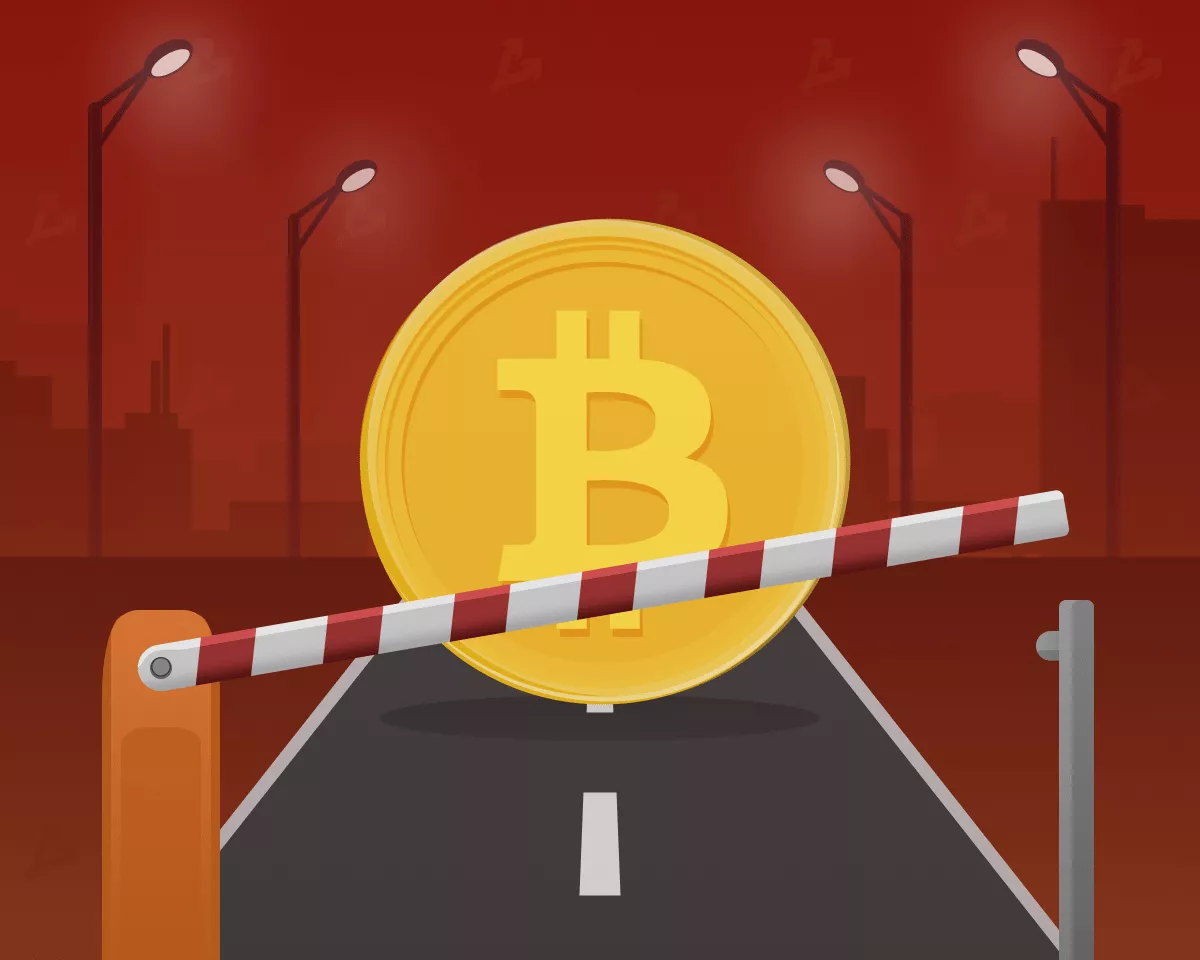
Experts assess the consequences of blocking bank transfers to Bitcoin exchanges in Russia
The Bank of Russia announced plans for the development of a blocking mechanism of bank payments to cryptocurrency exchanges and exchangers. On the one hand, this will complicate transfers for users of digital assets, and on the other hand, it could potentially trigger a rise in leading coins. This was stated to ForkLog by experts surveyed.
The regulator’s motive is fairly transparent — a desire to control hard-to-track financial flows, said Denis Voskvicov, head of the fintech company Exantech.
He is convinced that the technical implementation of the mechanism will not pose a problem for banks.
“Exchanges do not have an infinite number of accounts, and they change rarely. Accordingly, the authorities can simply block the accounts during transfers to exchanges and, at the same time, monitor their sites to see whether the details have changed. After this simple operation, it will be much harder for users to top up their accounts,” explained Voskvicov.
Technically, delaying and rejecting payments to crypto exchanges is quite feasible, agrees Sergei Troshin, head of the Six Nines data center. Earlier, gambling was restricted in Russia under a similar scheme.
“Right now a user cannot transfer money to any poker room using Russian Visa or Mastercard cards,” the expert said.
In practice, the mechanism works like this: card processing is performed, and payments to any “undesirable” organizations are declined.
“If authorities add cryptocurrency exchanges to this list, undoubtedly a significant portion of users will stop buying. However, there must be lawful grounds for that, since gambling was banned, but cryptocurrencies were not,” noted Sergei Troshin.
According to him, the mere fact of creating artificial scarcity of any asset — in this case, cryptocurrencies — can lead to a rise in its value and the emergence of shadow schemes.
CEO of Indefibank Sergei Mendeleev found it difficult to assess the adequacy of the regulator’s proposed measures:
“To be honest, I haven’t heard a single complaint from people about the ‘emotional purchase of cryptocurrency’. Perhaps because now around 80% of buyers are in the green, and for a number of assets this figure is as high as 95%?”
At the same time, the expert reminded that the information space is filled with complaints from people who have been “seduced” by various scammers into money transfers via P2P.
“Perhaps the Bank should first tackle these phenomena? For example, block new cards for a couple of days, to which hundreds of thousands of rubles of unknown origin suddenly arrive requiring personal confirmation of the legitimacy of the payment, and perhaps the victim will come to,” proposed Mendeleev.
According to him, it is already very difficult to pass currency control and send more than $5,000 to a Western crypto exchange, and he personally has not managed to do this even once across various banks.
The idea of freezing credit card payments, Mendeleev assessed skeptically:
“I would like to see how banks will technically solve such a task (spoiler: none at all).”
The issue of fiat inflows to crypto exchanges is timely and each project addresses it in its own way, the expert continues. However, in his view, any attempts by the central bank to counter the established practice will not have practical meaning in practice.
“Crypto was invented precisely to circumvent any crazy attempts at such regulation. And I am absolutely sure that it will cope brilliantly with these initiatives as well,” concluded Sergei Mendeleev.
The Bank of Russia has repeatedly stated that it regards cryptocurrencies as monetary surrogates and will never approve them as a means of payment in the country.
In one of the regulator’s latest advisory letters, cryptocurrency exchange operations were classified as suspicious and the banks were advised to monitor them closely. In case of suspicion of money laundering, credit institutions are advised to block the client’s transactions and even terminate the bank account agreement.
Read a detailed analysis of the initiative on ForkLog.
Lawyers assessed the threat of new Bank of Russia recommendations for Bitcoin exchanges
Subscribe to ForkLog news on Telegram: ForkLog Feed — the full news feed, ForkLog — the most important news, infographics and opinions.
Рассылки ForkLog: держите руку на пульсе биткоин-индустрии!