




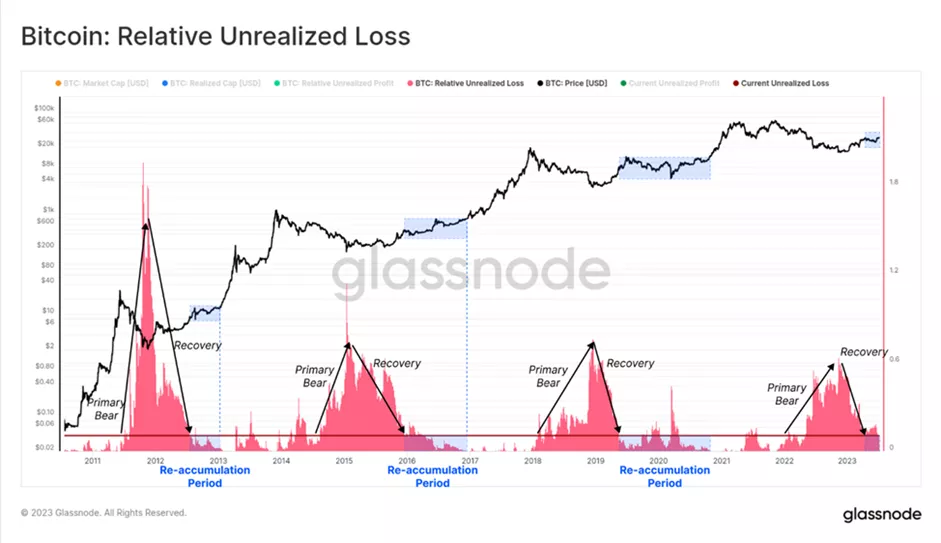
The balance of coins on the Bitcoin market is associated with the ‘reaccumulation’ phases in previous cycles. The latest cycles have been characterised by a lack of strong moves for several months, according to Glassnode.
The drawdown in Bitcoin prices since the start of the year has not exceeded 18%, which is ‘surprisingly little’ compared with previous cycles. Analysts see in this a possible corroboration of strong demand.


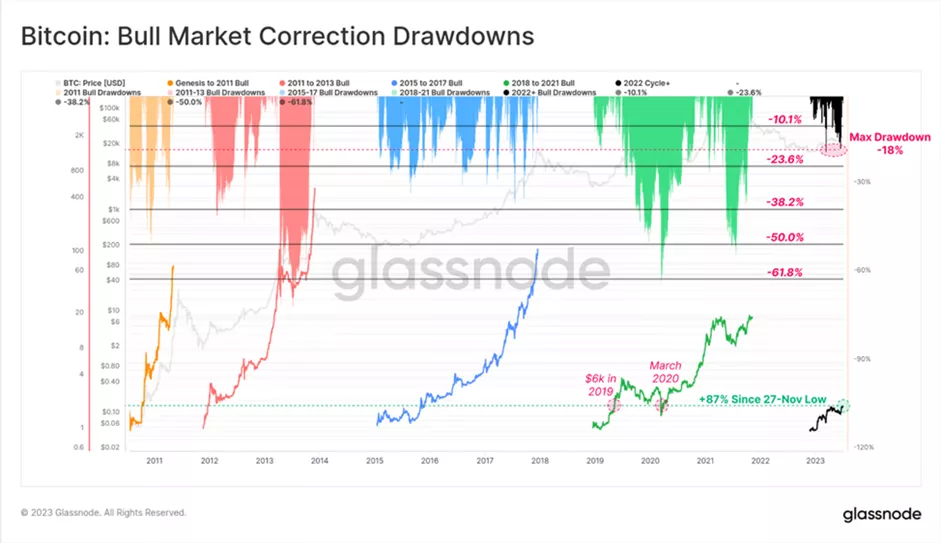
The rally from November’s lows to a peak of 91%. With the exception of 2019, all previous cycles in which a similar magnitude shift from the bottom were observed effectively marked the genesis of a new uptrend, according to experts.
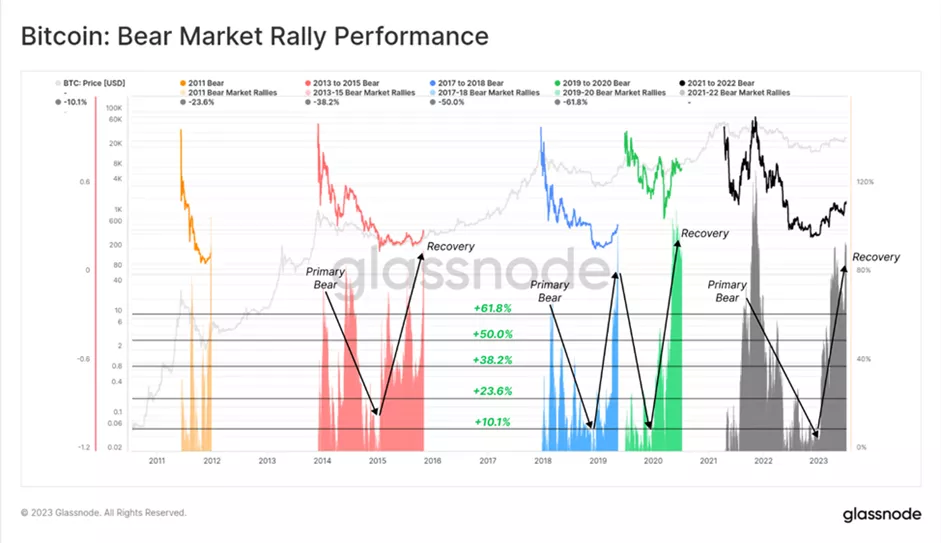
Against the backdrop of waning enthusiasm around Ordinals, network activity indicators began to point to some softening. In particular, the median transaction fee fell to $0.16, the average to $1.33. The exception is the metric of on-chain value transferred — the indicator reached $4.2 billion (+75% year-to-date).
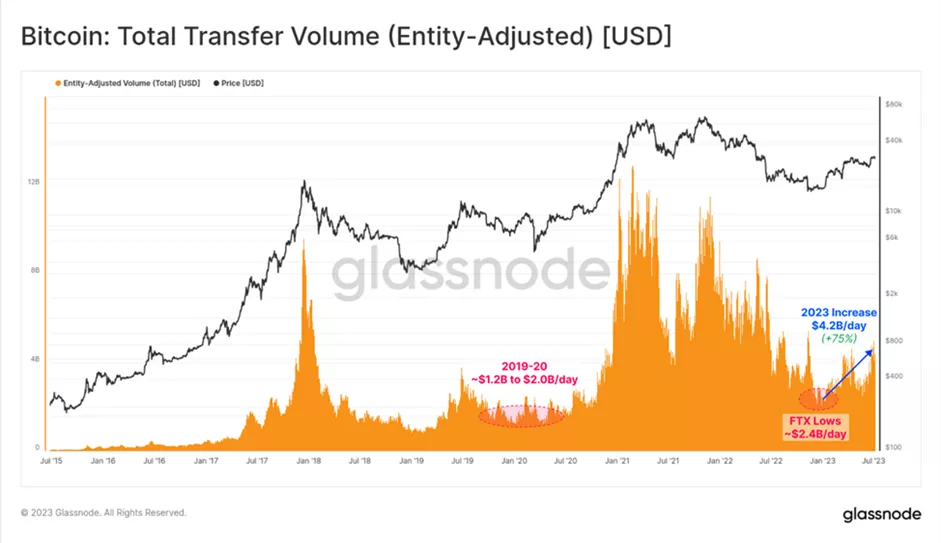
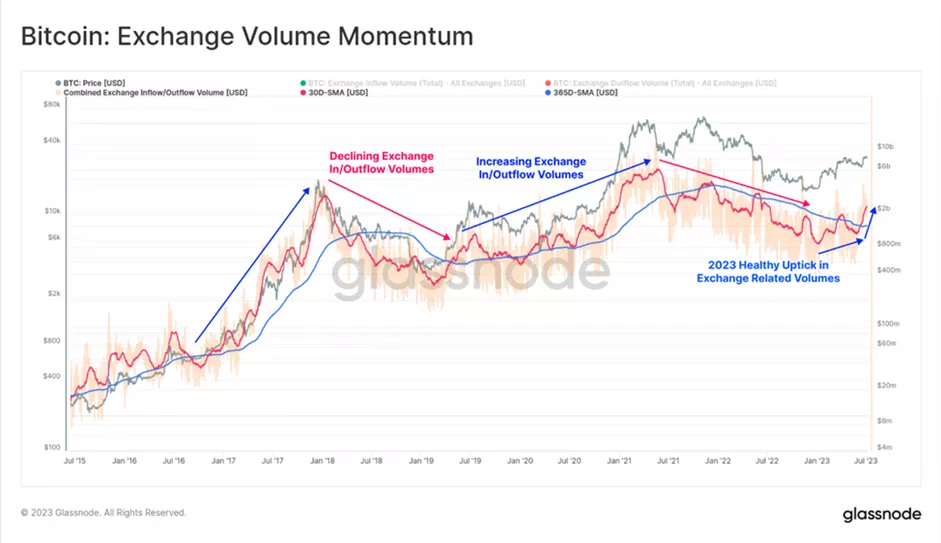
When segmenting flows to and from centralized venues, experts found that the monthly moving average of transfers exceeded the year-over-year figure. Historically, this has been a sign of growing liquidity and adoption of monetary assets.
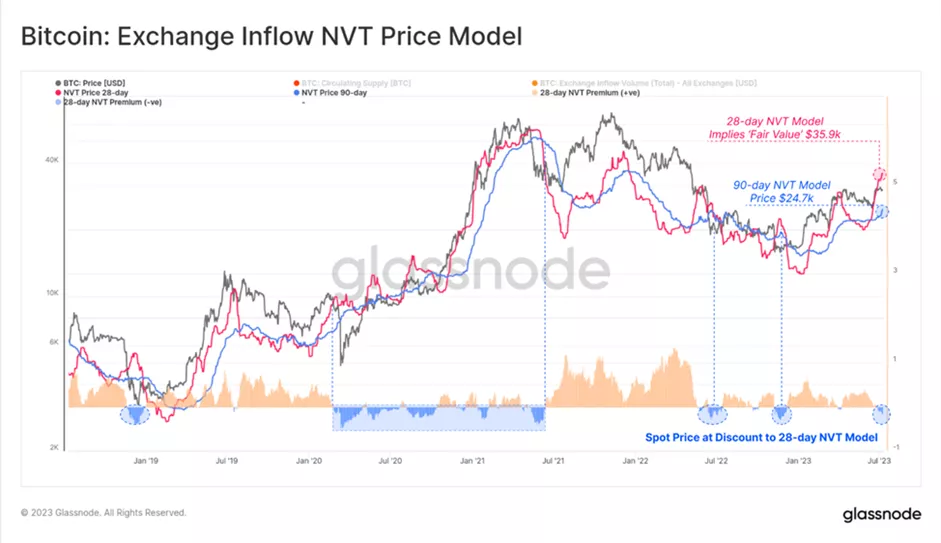
The NVT Ratio (Network Value to Transactions Ratio), based on 28DMA implies a ‘fair value’ for Bitcoin at around $35,900, higher than current prices for the first time since November 2022. The slower 90DMA metric corresponds to $24,700.
The URPD indicator, which shows the structure of realized price levels in the context of UTXO, shows a solid base of coins purchased at prices below $30,000.
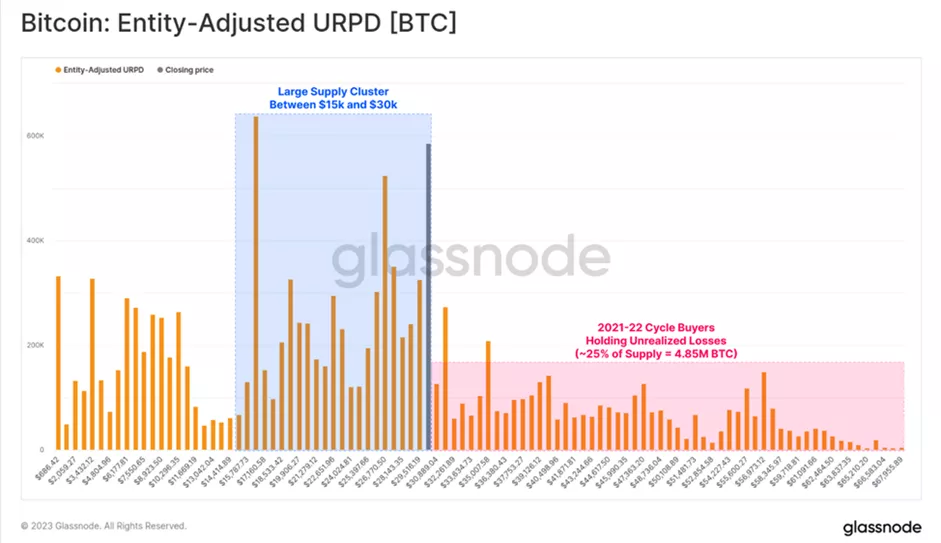
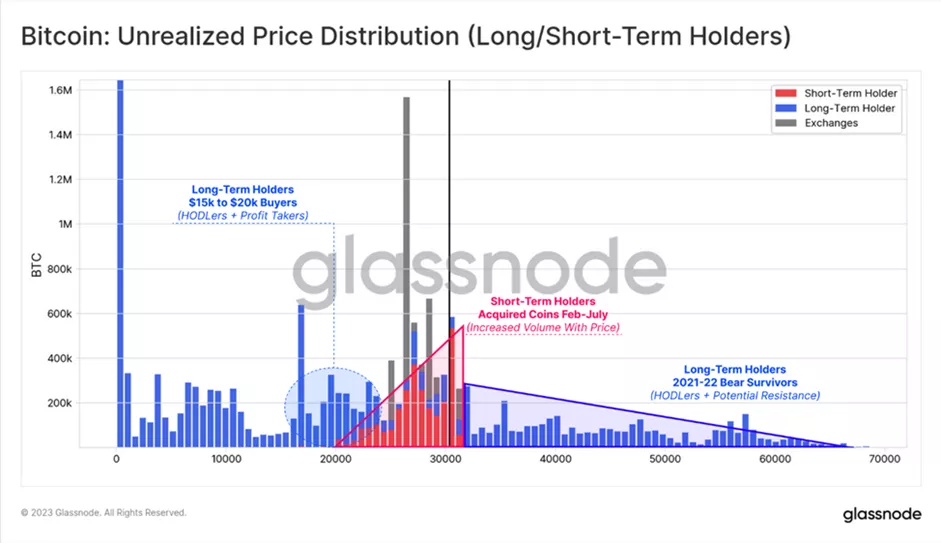
Only a quarter of the available supply was bought by investors above $30,000 during the 2021-2022 cycle. A substantial portion of hodlers’ activity occurred in purchases in the range of $15 000 to $25 000. In the corridor from $20 000 to $30 000, accumulation has been rising since February 2023, despite heightened regulatory pressure in the United States.
«Such a distribution of supply points to a ‘hard bottom’. In other words, there is a relatively solid ‘foundation’ for investments below $30 000», — the experts noted.
Active buying during the recent correction to $25,000 led to a reduction in ‘unprofitable’ coins to 4.79 million BTC — the lows of July 2021, 2020, April and March 2016. The number of ‘profitable’ bitcoins rose by 2.47 million BTC (equivalent to 12.7% of total supply).

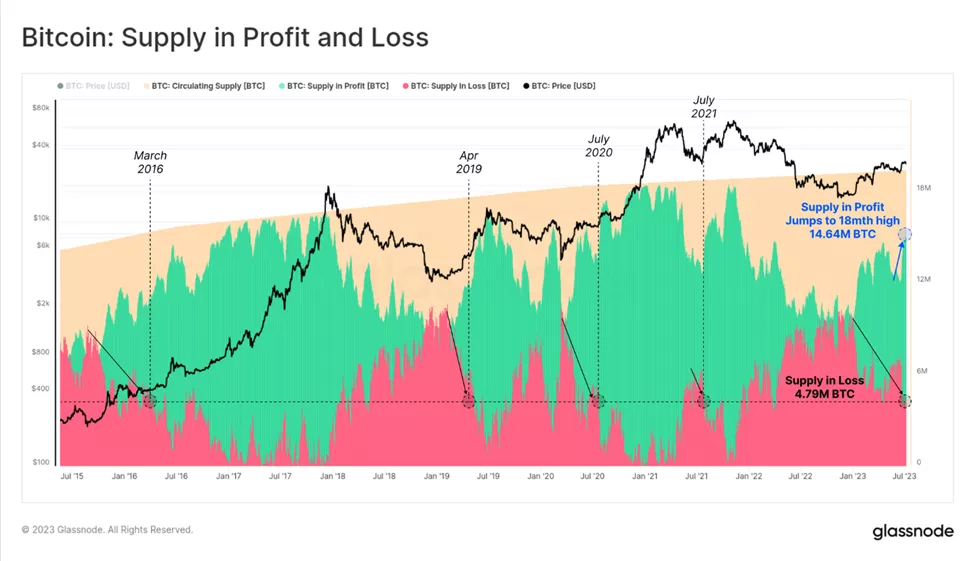
With current consolidation near the midpoint at around $30,000, about 75% of bitcoins are held with paper profit, 25% with loss. In fact, such a ratio has been observed in 2016 and 2019. In half of all trading days the ratio of positive to negative financial outcomes was higher, and in the other 50% lower.
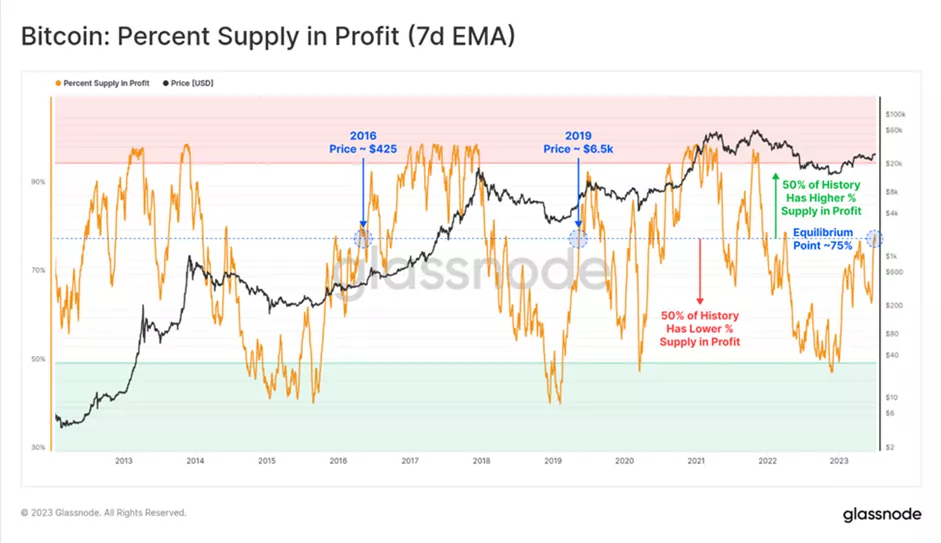
Historically the market has needed time to digest this equilibrium point and re-consolidate around it, the experts explained. Many describe this phase as a period of ‘reaccumulation’. It often coincides with the approach of halving.
«Previous periods led to trading in a sideways range (and volatility) for several months. […] It remains to be seen whether, this time, a similarly long and unstable process will be required to overcome its [equilibrium point], — the experts concluded.
Earlier in Nansen came to the conclusion, that for the onset of Bitcoin’s bull market regulatory clarity in the US and a sustained decline in core inflation are required.
Analysts at Standard Chartered have forecast the price of the first cryptocurrency to rise above $50,000 this year and $120,000 by the end of 2024.