




The price of the first cryptocurrency dipped below $100,000 for the first time since June. The rest of the market followed suit.


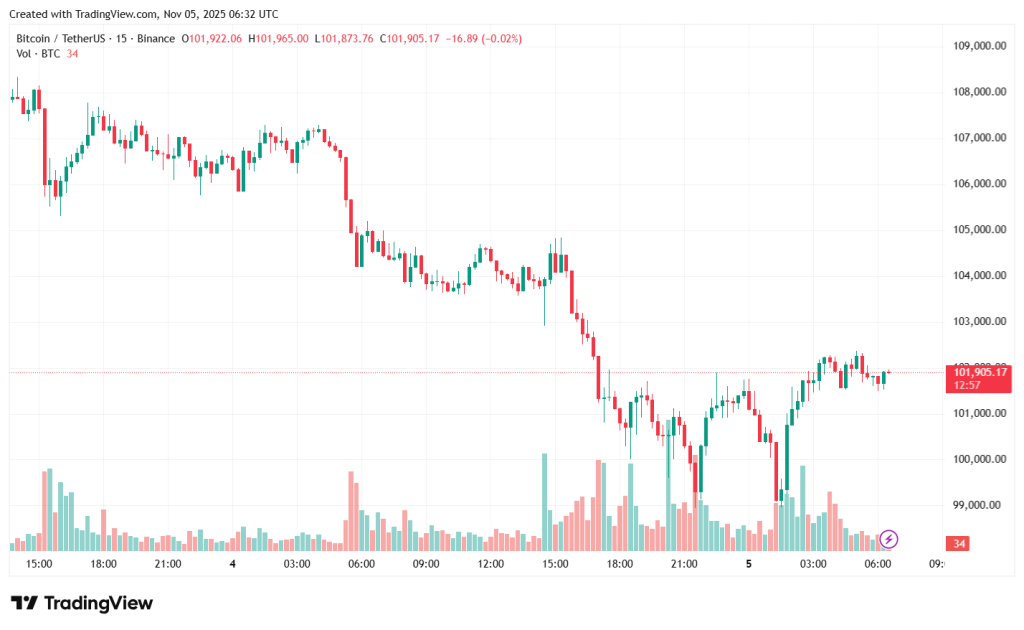
Ether approached $3000.
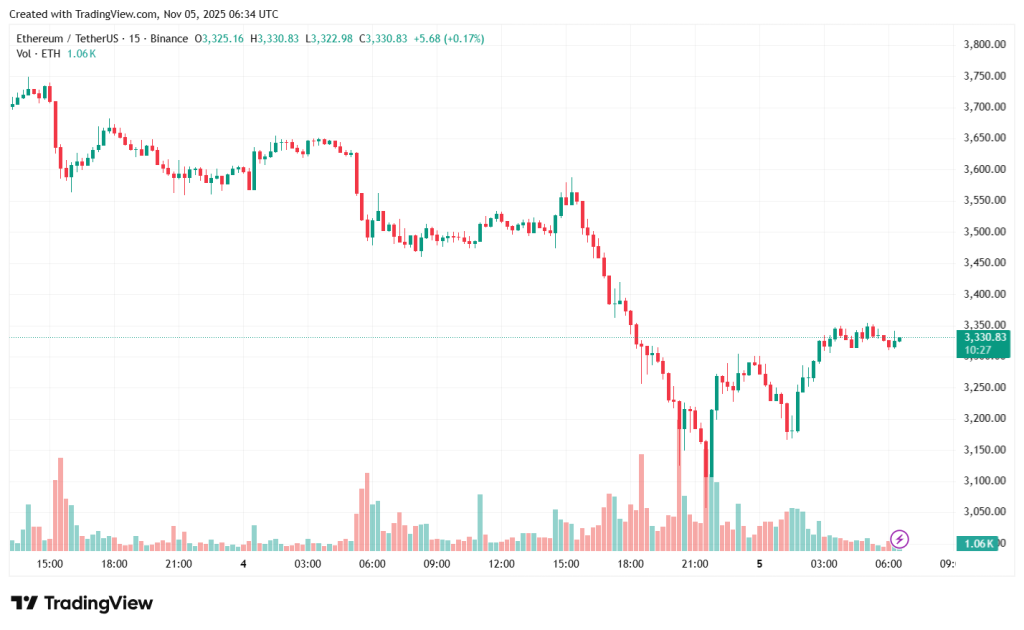
At the time of writing, bitcoin trades around ~$101,900, and the second-largest cryptocurrency — ether — around ~$3300.
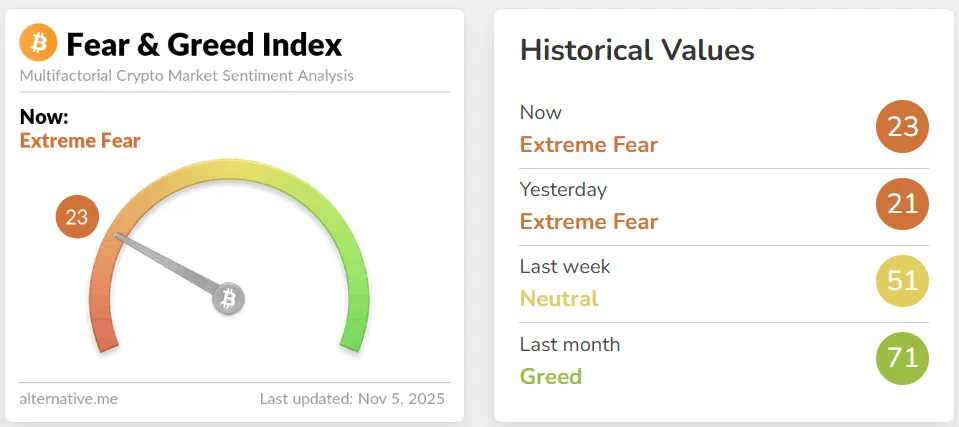
Fear and Greed Index fell to 23 — “extreme fear”.


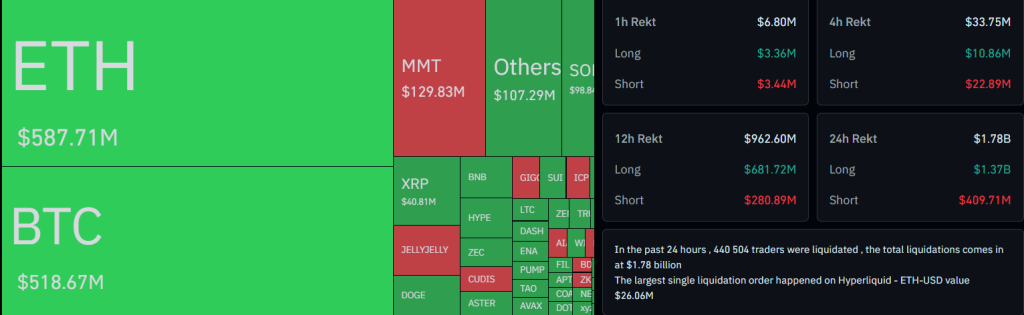
Total liquidations topped $1.78bn in 24 hours. Longs accounted for $1.37bn, shorts for $409.71m. Notably, forced closes in ether exceeded those in bitcoin.


Over the past two days, whales bought 323,523 ETH amid the price decline, Lookonchain said.
Despite the recent $ETH drop, many whales have been buying the dip — accumulating 323,523 $ETH($1.12B) over the past 2 days. pic.twitter.com/KOA1Z4VAab
— Lookonchain (@lookonchain) November 5, 2025
The total purchase amounted to $1.12bn.
Heading lower?
CryptoQuant analysts see room for further declines. If the price of digital gold fails to hold around $100,000, they forecast a drop to $72,000 within one to two months.
Head of research Julio Moreno linked the correction to weak buying activity after the large 10 October liquidation.
“Since then, spot demand for bitcoin has been declining. In the US, investors have also reduced activity, as evidenced by outflows from ETFs and a negative premium to the price on Coinbase,” he noted.
Jerry O’Shea, head of research at Hashdex, said cryptocurrencies are being pressured by broader risk aversion across global markets. Among the factors he cited concerns around the Fed’s rate and conditions in credit markets. He added that selling by long-term holders is weighing on price — a predictable phenomenon in such conditions.
O’Shea stressed that $100,000 is a psychological level; a break below it does not weaken bitcoin’s long-term potential.
“The trend of inflows into ETFs and corporate adoption this year remains very strong. Traditional financial institutions continue to build infrastructure for digital assets,” he said.
According to him, these structural factors could drive digital gold to a new all-time high in the coming months.
Selling at a loss
Short-term bitcoin holders (STH) continue to sell at a loss, adding to price pressure, analyst Darkfost said.
STHs Under Pressure as Loss-Selling Intensifies
“When price attempts to recover and reaches the STH realized price, we see immediate profit-taking or break-even exits. These reactions create overhead resistance and make it harder for price to break higher.” – By @Darkfost_Coc pic.twitter.com/6nkxjLQq8C
— CryptoQuant.com (@cryptoquant_com) November 4, 2025
Over the past day alone, about 30,300 BTC belonging to STHs flowed to exchanges, he said — a sign of capitulation among recent buyers.
Pressure may intensify as the STH-SOPR metric hovers around 1. This means short-term holders are selling coins at roughly their purchase price — a sign of uncertainty.
He also pointed to the formation of strong resistance. Each attempt to reclaim the STH realized price (now about $112,500) triggers immediate profit-taking or break-even exits, hindering further gains.
Darkfost concluded that short-term investors doubt further upside, using any bounce to sell — a cautious market stance.
Volatility spike
Overall bitcoin reserves on centralized exchanges continue to fall, but Binance shows the opposite trend. According to analyst ShayanMarkets, this divergence may precede a spike in volatility.
Binance Reserves Climb While Global Exchange Balances Drop
“If this rising Binance reserve trend continues while total exchange reserves drop, it may point toward a pre-distribution or rebalancing phase before another accumulation-driven rally begins.” – By @ShayanBTC7 pic.twitter.com/xFtFF6bEga
— CryptoQuant.com (@cryptoquant_com) November 3, 2025
Outflows from trading platforms indicate long-term accumulation and easing sell pressure. Participants are moving assets to non-custodial wallets, a bullish signal.
At the same time, bitcoin reserves on Binance have risen in recent weeks. This points to growing short-term liquidity on the platform, possibly due to higher trading activity or institutional hedging.
Historically, inflows to the dominant exchange during consolidation have often preceded rising volatility. That is how market makers prepare for the next major price move.
If the trend continues, it may signal a redistribution or rebalancing phase before a new rally, the specialist concluded.
In November, Capriole founder Charles Edwards said that institutional demand for digital gold had declined.