


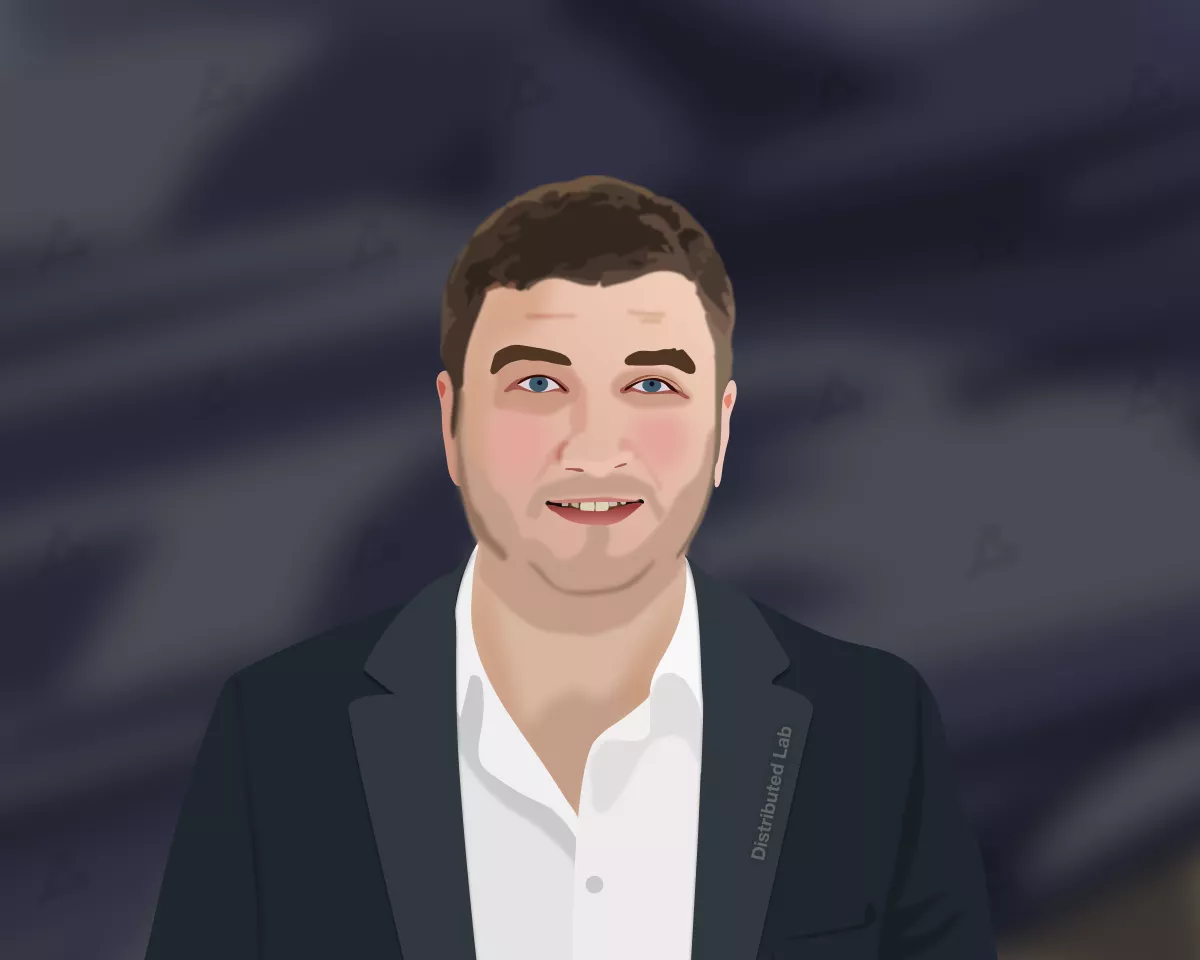
First to Buckle Up: Distributed Lab Founder on the Metaverses of the Future
Although the word “metaverse” appeared at the end of the last century, it did not enter the mainstream until 2021.
Billions of people heard it from Mark Zuckerberg, who set out to build a metaverse and even renamed Facebook for it. In this pursuit he is not alone — his arch rivals the Winklevoss twins are already preparing to offer their own alternative to Meta’s developments.
In the crypto industry, interest in the topic has been sparked by the growth of the GameFi sector — people around the world quit their jobs and immerse themselves in gaming virtual worlds to farm money.
In a futuristic interview with ForkLog editor-in-chief Nikita Shteringard, Distributed Lab founder Pavel Kravchenko explained what awaits us in the metaverses of the future, the barriers on the path to their creation, and the risks associated with them. (Spoiler: none of this can be avoided, so you should start preparing and sorting it out now).
ForkLog: Hello, Pasha! In your social networks lately you dedicate a lot of attention to metaverses. Zuckerberg has also stoked interest in the topic. What social and monetary concepts will appear in the metaverses? And will cryptocurrencies play their role?
Pavel Kravchenko: Hello! I think all possibilities will appear — some we already guess, but others may take us by surprise. For expanding horizons for the future (probably far ahead) I recommend reading ‘Surface Detail’ by Iain Banks [Surface Detail, Iain Banks — editor’s note here and below]. As soon as consciousness can be transferred into a virtual world — and I believe this will happen — there will be both heaven and hell in it.
What about the near future — 10-20 years — I think we will see a metaverse filled with worlds with different social orders, between which characters can move. But for money. Obviously, the money would be issued on the blockchain of the specific world. Will there be a single mandatory currency for the metaverse — not sure. I hope not.
What about the role of blockchain. If a company created a game, there is little sense to go on a public blockchain today, because you would have to pump someone else’s token. Why not fork a suitable blockchain and launch the game on it? This is how market leaders — the same Axie Infinity — do it.
On one hand, forks don’t bother the main blockchain much, but cross-chain bridges between them are easier to build, so there is a practical win for the ecosystem. This is one reason why Polkadot bets on such a future, but requires using its own currency for certain operations — a kind of mandatory currency for the metaverse. Again, I repeat, I hope such a concept won’t prevail, and we will see a financial Internet where there is no mandatory currency (pay what you want).
ForkLog: Now ownership in virtual worlds is “lands”, “palaces”, “characters” and other gaming artifacts. NFTs. How else and in what forms will private property permeate metaverses?
Pavel Kravchenko: Reputation. I think for players the stake will be not only property that can be exchanged for money (and then for food and a new hardware model), but reputation accumulated over years. If you consider that games can erase it, effectively abandoning the character to oblivion, that’s a good way to keep players in the chosen world model.
For example, a character may lose in a virtual casino and go to farm worlds “for food” for a year. But this will still be better than quitting and spending five years developing a new character from scratch. In the real world there are human rights and all that.
I think virtual worlds will write entirely different rules (for now, no one watches them).
ForkLog: By the way, about rules. Some political figures have already gathered to defend our avatars. How quickly do you think regulation will penetrate virtual worlds? Will there be legislation regulating what an avatar can do and what it cannot?
Pavel Kravchenko: Where there are people, there are media, where there is media, there is “public opinion,” and, therefore, manipulation. Sooner or later someone will be more influential for the game as a whole (as in the real world). They will set the rules. And given current statements — I think this is still PR.
ForkLog: Last 10 years there has been a trend of moving from the Web to centralized apps. Why will this change and trend revert toward open source? The network effect of some apps is hard to break; most decentralized solutions have not yet achieved any significant audience — the same social networks.
Pavel Kravchenko: Every technology, when it becomes available to the masses, starts to develop rapidly. Roughly speaking, ‘availability’ is determined by whether a single person can do something new in a few years. To make this possible you need bricks of the right size — standard protocols, libraries, modules — so you don’t build the building from atoms but write a game in assembly. Once the source code of stable bricks becomes public, thousands start creating.
Currently it’s the time when one enthusiast can create a game or platform by themselves. In 20 years, technology will allow one person to create a VR world alone. Corporations are always a step ahead because they can hire thousands of people and buy licenses for leading software. But the source of inspiration for a project is usually created by a few, so when tools become available, one person’s strength becomes comparable to corporate strength.
ForkLog: What do you think in this context about the prospects of reincarnating browser games because of the ban in many app stores?
Pavel Kravchenko: I think it’s quite possible. The capabilities of browsers have advanced far beyond what they were 10 years ago. Yes, platforms will ban them; for them it’s a loss of revenue. But banning won’t last long.
ForkLog: And how much money is actually needed to launch a browser game? Projects are raising millions now, but there are doubts that these are fair valuations.
Pavel Kravchenko: $100,000 for the first version will be more than enough.
ForkLog: It is already clear that NFT will play a role in the birth of metaverses, but there are questions. Building a game on NFT and achieving a sustainable internal economy are different things, you yourself wrote about this recently.
Pavel Kravchenko: NFT and play-to-earn don’t need explaining anymore. It’s clear that if the game creator disappears or the game closes, all NFTs are basically useless (like chips of a bankrupt casino).
There are three barriers on the path to creating metaverses:
- The internal economy must be engaging (that’s the easiest). This is a matter of a year or two.
- Items from one world must be usable in others, and ideally create unexpected combinations of properties — different magic. For this, worlds will have to agree on a shared DNA. This is a matter of 10+ years.
- Creating games that cannot be shut down, where every player in them will effectively support full nodes — the complete state of the game at any moment. This is the level of a Ready Player One metaverse. This is a horizon of ~20 years.
Someday, fortunately or unfortunately, we will reach the level of the metaverse from Surface Detail.
ForkLog: There is opinion, that play-to-earn and play-to-win models end up breaking in-game balance because the drive toward value is very unstable. Do you agree?
Pavel Kravchenko: Hard to say. All games are about dopamine and immersing the player in another world. But the ways to reach these goals can be different.
Undoubtedly, in games with multiplayer and open worlds not tied to “progression,” private property and reputation will be in demand.
ForkLog: What consequences for society and the real world does a virtual world carry? Will it become a permanent “place of residence” for those deprived if AI takes their jobs?
Pavel Kravchenko: An interesting question. Technically, millions of jobs have already disappeared because there is no need for so many postal workers, drivers, miners and many other professions. But they were not replaced by AI; ordinary automation did. And no one talks about the deprived — everyone is happy with increased comfort. Even in a world where all physical work is done by robots, there will be things to do — as people provide services to people.
And the idea that the virtual world will become a permanent workplace for the majority is 100% certain, just as the Internet became one. In a virtual world (or in augmented reality) changes can be implemented much faster. And this will also allow moving all work into 3D, which will greatly improve the quality of education, design across all fields, and, of course, entertainment.
Subscribe to ForkLog news on Telegram: ForkLog Feed — all the news feed, ForkLog — the most important news, infographics and opinions.
Рассылки ForkLog: держите руку на пульсе биткоин-индустрии!