



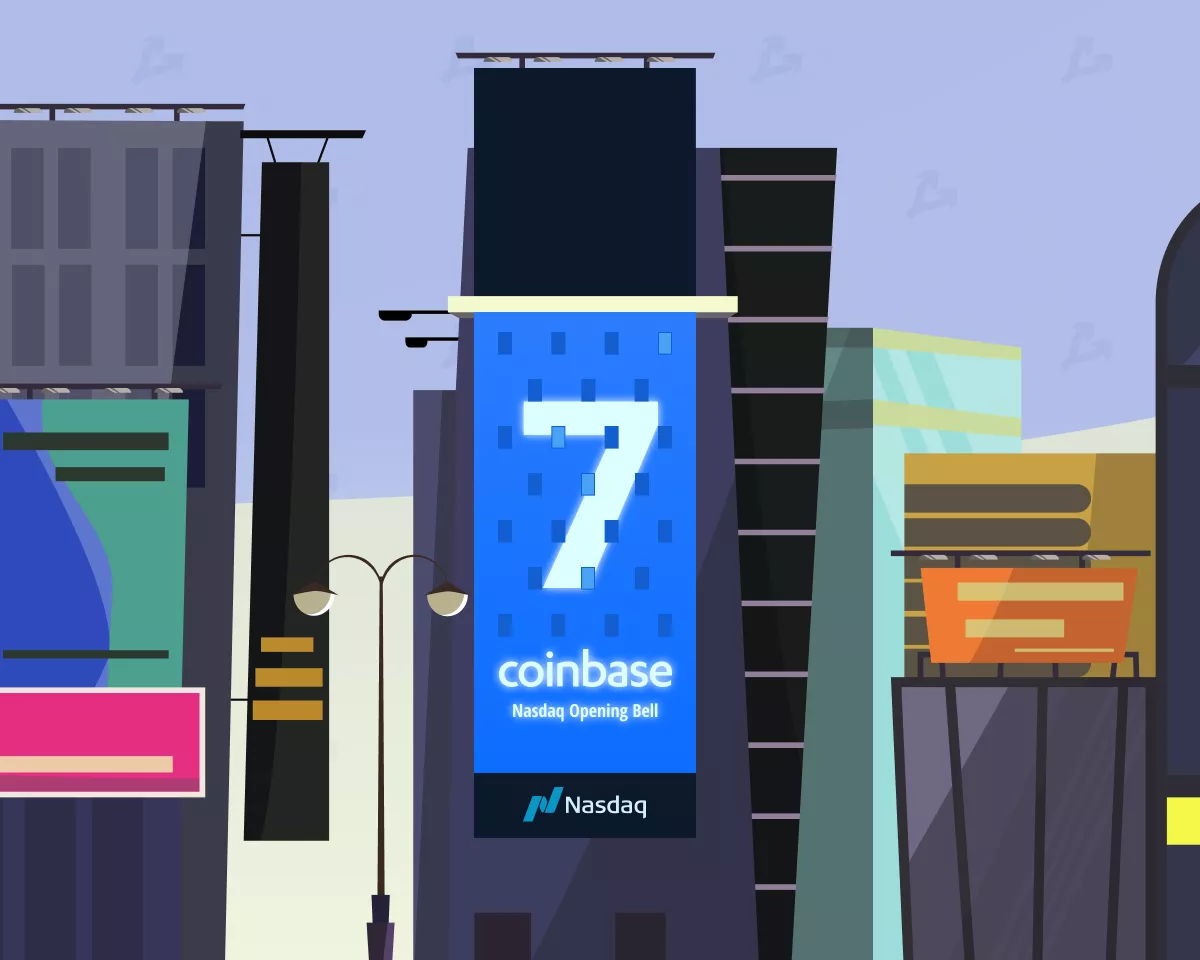
There is particular interest among many players in the cryptocurrency industry — both newcomers and veterans — in tapping the buoyant stock market, spurred by the successful experience of Coinbase.
In a hypothetical ranking of companies stuck at the starting gate, heavyweight industry players and little-known dark horses appear. Among the contenders for exchange tickers are trading platforms and alternative payment systems, miners and equipment manufacturers for coin mining, crypto-lending companies and blockchain startups.
Among them Kraken and Bakkt, BlockFi and Apifiny, Circle and Stronghold Digital Mining, Bullish and Bitfury‘s subsidiary, Chia Network and TokoCrypto.
In pursuit of the coveted goal, any means are good: a transparent direct listing, a noisy IPO, a canny SPAC, and even exotic ‘cocktails’ based on several standard options.
Five benefits of going public
The most sought-after and understandable path for companies and future shareholders remains the respectable IPO path. The main objective of the primary offering is obvious — to attract investment for the development of an existing operation or diversification of the business. The process is transparent — a private firm transforms into a public company traded on an exchange, where anyone through a broker may buy a portion of its securities.
In the life cycle of a company, the moment of going public is considered a milestone, for obtaining a stock ticker promises (at least in theory) benefits previously unavailable:
- Solid investments. IPO is an excellent way to attract millions on legal grounds and under favorable conditions. The funds raised through the IPO are directed toward upgrading the business, entering new markets, expanding the range of offerings, and pursuing acquisitions of rising but already formidable rivals.
- Legitimisation and entry into the top tier of business. This is especially important for most crypto companies. Going public is widely viewed by potential holders as legitimising a promising enterprise. Previously, investment in its capital could be made only through dubious channels, and investing was associated with an unacceptably high degree of risk. Now it is one of many ‘white’ firms of the first tier of modern business.
- Reputational bonuses. This is hard to overstate. A new player on the equity market begins public activity with a clean slate under the auspices of a reputable exchange. From now on all moves of the public company will be under the vigilant eye of regulators, and financial reporting will become transparent and controllable, boosting both reputation and investment attractiveness.
- A clear competitive edge. The presence of a ticker provides a solid lead over rivals. And the ability to offer publicly traded shares to employees is an excellent tool to persuade top specialists, previously employed by rivals, to switch sides. And, of course, listed securities traditionally serve as excellent collateral for any bank loan.
A powerful publicity push. Any IPO attracts heightened media attention, treating the upcoming event as a major news hook, with interest from experts and potential shareholders. A well-conceived roadshow ensures strong public-relations reach on an international scale.
Naturally, all this comes at a price, and the costs are no small matter. According to KPMG — a member of the Big Four — total costs collectively fluctuate from 7% to 10% of the funds raised, and for crypto companies the rates can be higher.
But the payoff is clear, as the impressive statistics show. From 1 January to 10 May 2021, 670 IPOs worldwide raised $140.3 billion — four times as much as in the previous year — Forbes citing Refinitiv.


How much does it cost to build a crypto-IPO
The cost structure for taking a company to the stock market looks like this:
- IPO underwriting commissions;
- costs of legal support for the process;
- fees for auditors, accountants, and financial advisers;
- SEC registration costs;
- FINRA registration fees;
- exchange listing fees;
- other expenses.
The most expensive part is the work of underwriters — investment banks underwriting the share issue. Commissions range from 3.5% to 7%, according to PwC, after analysing the financial statements of 829 companies that completed IPOs.
In percentage terms, going public is costlier for startups valued at under $100 million. The minimum fee applies only to firms valued at more than $1 billion. This is why many players in the crypto space are not rushing to IPO, but concentrating on successive rounds of financing, steadily driving up valuations.

Legal and auditing costs are represented by payments for audits, filing various registration forms (notably the S-1), communications between lawyers and financial advisers with the SEC and other regulatory bodies, and for comprehensive legal support. It is not possible to estimate precisely, but the figure runs into tens of thousands of dollars.
But SEC registration fees are easy to calculate. The rule is simple: for every $1m of shares offered in an IPO, pay $129.80. The rate is periodically adjusted — upward.
For FINRA — the non-profit body that develops rules for brokers and monitors their compliance — one must contribute $500 plus 0.015% of the value of the proposed issue. The total cannot exceed $225,500.
Breaches in the budget are hammered out by the listing fees of the major exchanges (NYSE and NASDAQ). The initial entry fee — from $50,000 to $295,000 — is paid once and depends on the number of offered securities. There is also an annual listing fee — from $43,000 to $159,000.

Costs depend not only on valuation and scale of expectations, but also on the sector to which the company belongs. Participants in the cryptocurrency industry are classified under the financial services segment, where costs are particularly high.
For a company with annual revenue up to $100 million, intending to sell $99 million worth of stock through the IPO, the process costs on average between $2 million and $16.5 million.

“Unicorns” with annual revenues above $1 billion, seeking to raise the same amount through an IPO, would theoretically have to shell out $44 million-$171.3 million.

Many set out, not all will reach
No fewer than fifteen representatives of the cryptocurrency industry are preparing to go public, exploring options and weighing possibilities. They are not deterred by the looming multi‑million-dollar costs. It seems that, in their valuation, the five publicity benefits are worth far more than the initial investment in a listed ticker.
There is no certainty that all participants in the IPO race will reach the coveted goal, even among hardened optimists. Yet the prospect of leaping from the underground to the mainstream entices both leaders and outsiders of this marathon in equal measure. Who among them will reach the intermediate milestone of listing and reap the benefits of going public earlier than the rest? More on that in our forthcoming features.
Subscribe to ForkLog news on Telegram: ForkLog Feed — the full news stream, ForkLog — the most important news, infographics and opinions.