




The Bitcoin market has crossed the midpoint in the transition of supply from long-term holders to short-term holders. A similar pattern, albeit slower, was seen in 2017—about six months before the bull market peak, said Glassnode co-founders.
Just published this week’s mark
e in the middle of a supply transition from long term holders to short term holders. However, this time it’s going much faster than in 2017. pic.twitter.com/J8vGmoTGcY— Yann & Jan (@Negentropic_) February 14, 2021
Experts released the third installment of Bitcoin Uncharted, in which they grounded their view on the service’s data.
According to analysts, the rally in altcoins, a decline in Bitcoin’s dominance index, the growth in the number of followers of crypto analysts on Twitter, and visits to sites such as CoinMarketCap, point to rising retail investor interest.
An additional factor cited by the experts was comments by Elon Musk regarding cryptocurrencies.
From March through December, institutional investors participated in the Bitcoin accumulation phase. Flows from crypto trading platforms to OTC venues supported this. Early in 2021 these flows weakened, although withdrawals from centralized exchanges accelerated, signaling the late-stage bull-market levels of 2017.


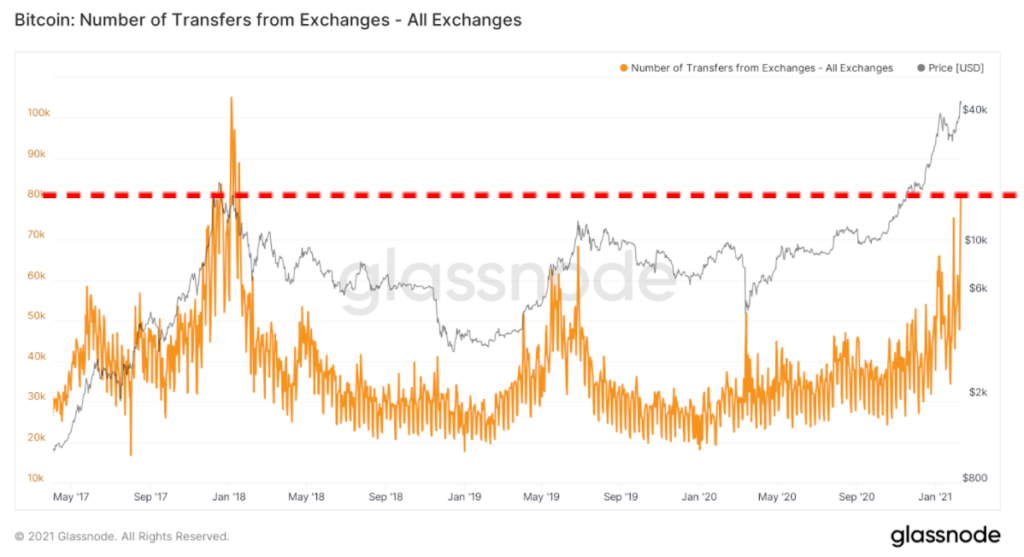
Dynamics of Bitcoin transfer counts from centralized exchanges and the price of the first cryptocurrency. Data: Glassnode.
Coupled with the rise in the number of new Bitcoin addresses, the sharp declines in centralized exchange balances led analysts to conclude that coins were being accumulated by other market participants.


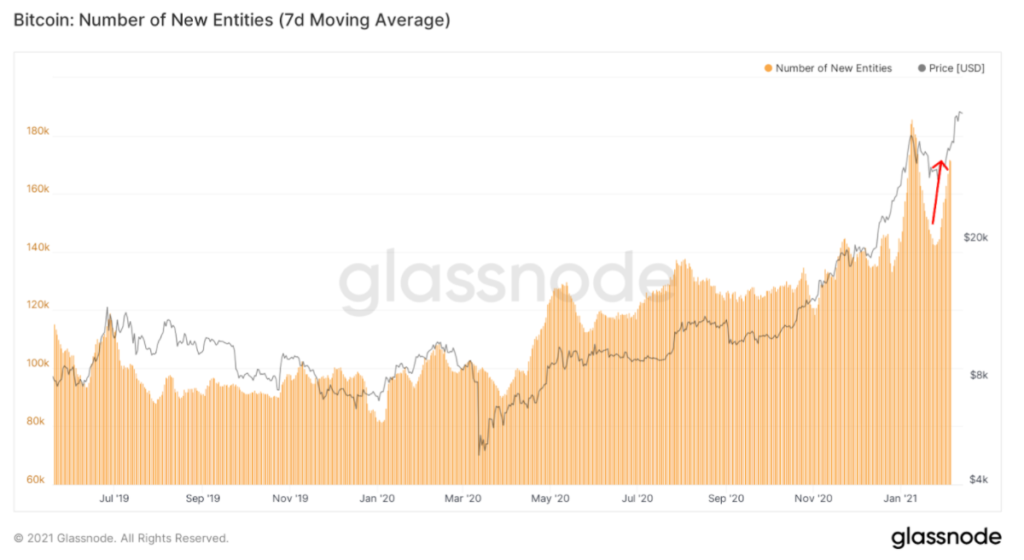
Dynamics of the seven-day moving average of the number of new Bitcoin addresses and the price of the first cryptocurrency. Data: Glassnode.
Researchers noted a shift in demand from institutional investors toward the derivatives market, which may indicate a growing appetite for risk.


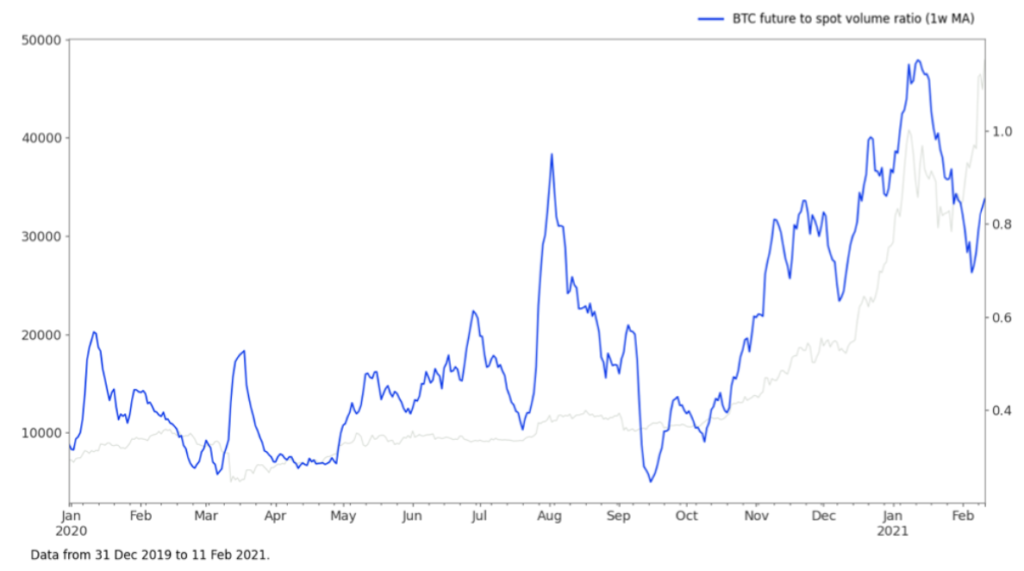
Dynamics of the ratio of Bitcoin futures trading volumes to the price of the first cryptocurrency on the spot market. Data: Glassnode.
The co-founders of Glassnode suggested returning to the earlier Bitcoin Uncharted issues. In them, they demonstrated the link between shrinking centralized exchange balances and, consequently, a reduction in available supply and the start of a bullish cycle.
The situation formed by long-term holders has led to price gains that attract retail investors aiming at short-term speculation, the experts explained.


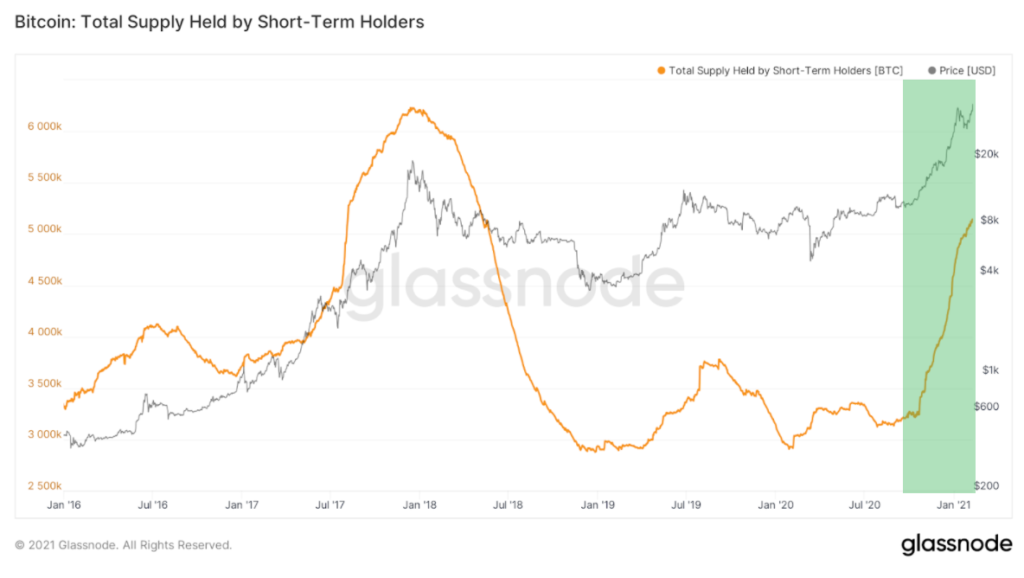
Dynamics of the volume of coins in the hands of short-term investors and the price of the first cryptocurrency. Data: Glassnode.
As soon as short-term investors accumulate a certain amount of freely circulating coins, they become a key market driver. Unlike long-term holders, who react less to price fluctuations due to buying at lower levels, short-term investors are far more sensitive to price volatility, the analysts noted.


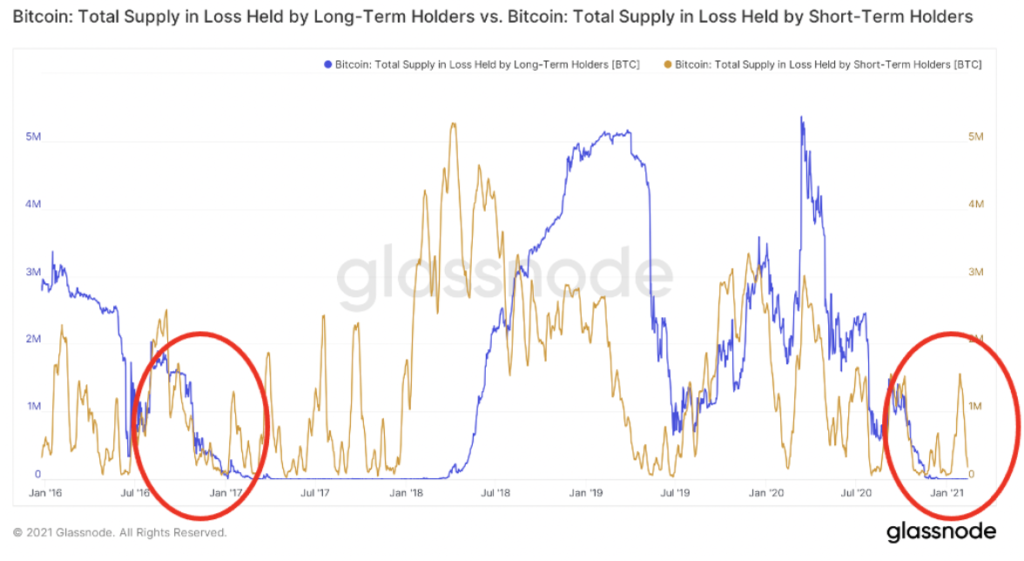
Dynamics of the volume of Bitcoins ‘in profit’, held by short-term and long-term investors. Data: Glassnode.
Experts advised tracking the number of coins in profit held by short-term investors. In their view, this metric helps forecast the onset of mass short-term sell-offs. The observed effect intensifies in the later stages of the bull market, they added.


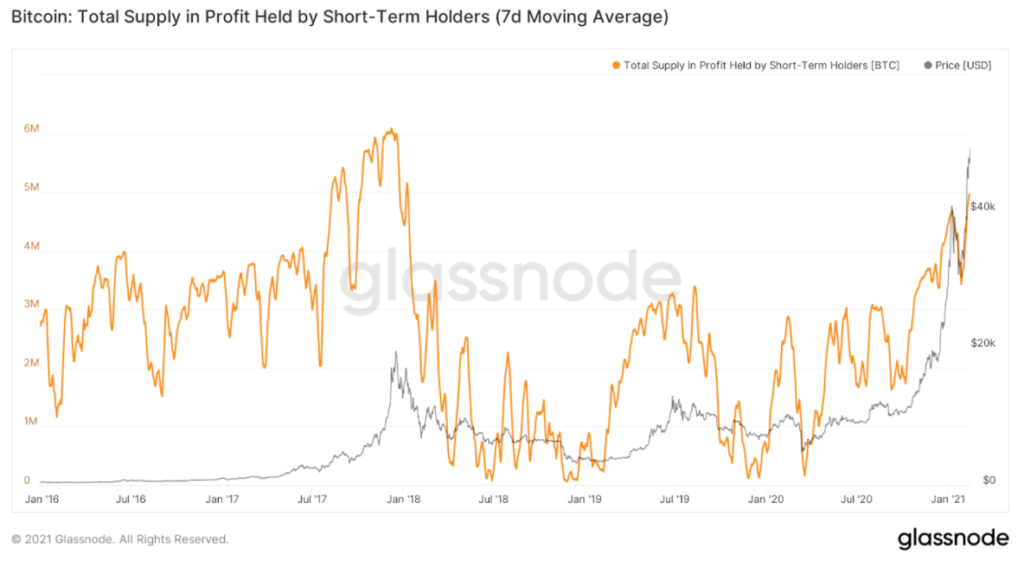
Dynamics of the volume of Bitcoin in the “profit,” held by short-term investors and the price of the first cryptocurrency. Data: Glassnode.
As the price rises to a certain level, both “old” and “new” players begin transferring some coins to centralized exchanges to lock in profits.


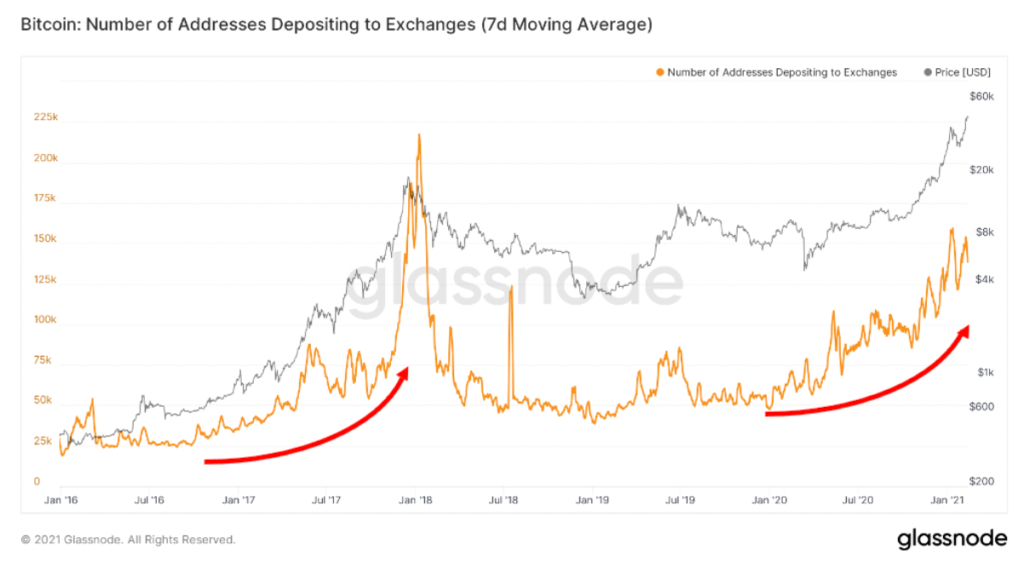
Dynamics of the number of Bitcoin addresses sending coins to centralized exchanges, and the price of the first cryptocurrency. Data: Glassnode.
As noted, on 26 January Glassnode analysts, based on two on-chain metrics predicted the end of the correction and the formation of a new bullish price impulse for Bitcoin.
In early December, Raphael Schulze-Kraft, chief technical officer of the analytics service, suggested that the price of Bitcoin could exceed $200,000.
Subscribe to ForkLog’s channel on YouTube!