



Goldman Sachs points to risks from rising interconnectedness of DeFi protocols
The collapse of TerraUSD (UST) triggered an ‘infection’ of the stETH token issued by Lido Finance, heightening systemic risks. Goldman Sachs analysts reached this conclusion, CoinDesk reports.
Lido allows users to deposit any amount of ETH to earn staking rewards in the Ethereum 2.0 network. In return, users receive stETH tokens that provide liquidity for their deposited assets. The tokens can be used in other DeFi protocols.
Holders of stETH could exchange the tokens for bETH in Anchor Protocol within the Terra ecosystem and earn rewards.
The Terra problems led to a discount of stETH relative to ETH of 4.5%. At the time of writing, it had narrowed to 2%, according to CoinGecko.
According to DeFi Llama, the project’s TVL stands at $8.85 billion. Just before the Terra collapse, the figure rose to $19.35 billion.
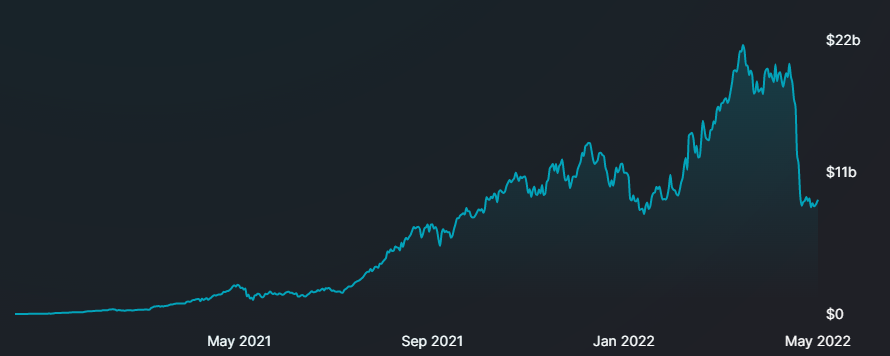
“This event is hard to overstate. A third of all Ethereum is staked in Lido. The situation clearly illustrates how the composability of DeFi can increase systemic risk,” the analysts noted.
Earlier, due to the Terra collapse, the non-profit Avalanche Foundation lost $60 million.
As part of a joint effort, Luna Foundation Guard and Terraform Labs invested in AVAX. The former acquired the tokens in an over-the-counter deal for UST, the latter swapped them for the cryptocurrency LUNA. The assets were intended to stabilise the TerraUSD price.
Forbes previously described the crash of LUNA and UST as the “fifth reboot” of the crypto market.
Subscribe to ForkLog’s channel on YouTube!
Рассылки ForkLog: держите руку на пульсе биткоин-индустрии!