



We aim to inform readers not only about developments in the bitcoin industry, but also about what is happening in adjacent technological fields — cybersecurity and the world of artificial intelligence (AI).
ForkLog AI has gathered the most important AI news from the past week.
- Google unveiled a suite of AI features for Workspace and Cloud services.
- Cruise will begin testing autonomous shuttles on public roads.
- Midjourney’s developers updated the AI image generator to version 5.
- Samsung was accused of using AI to forge Moon shots.
- An unofficial Chrome extension for ChatGPT stole users’ data.
- GPT-4 pretended to be ‘blind’ and tricked a person into solving a CAPTCHA.
- The week’s most significant AI deals.
Google unveiled a suite of AI features for Workspace and Cloud services
Google unveiled a suite of AI tools for Workspace and Cloud customers. The company also shared details about healthcare initiatives.
Generative AI tools for Workspace apps will help users in Docs generate text from a short prompt. In the future, AI will be trained to proofread and rewrite documents, and to offer interesting ideas.
In Gmail, the technology will expand a short email or shorten a long one, adjust its tone to be more formal, or convert the text into a bulleted list.
During the demonstration, the company showed how cloud customers could use AI to assemble presentations and training documents for sales, generate notes from video meetings, and draft emails to colleagues.
Google opened access to some foundational algorithms so that developers could build their own applications on the company’s technologies.
Also at The Check Up, the company spoke about AI solutions for ultrasound diagnostics, helping in cancer treatment, and tuberculosis screening. Additionally, the tech giant introduced the Med-PaLM 2 algorithm for answering medical questions.
Cruise to test autonomous shuttles in Texas
In the coming weeks, Cruise will begin testing the Origin robotaxi on public roads in Austin, Texas.
The autonomous electric shuttles have no steering wheel, pedals, or driver’s seat.


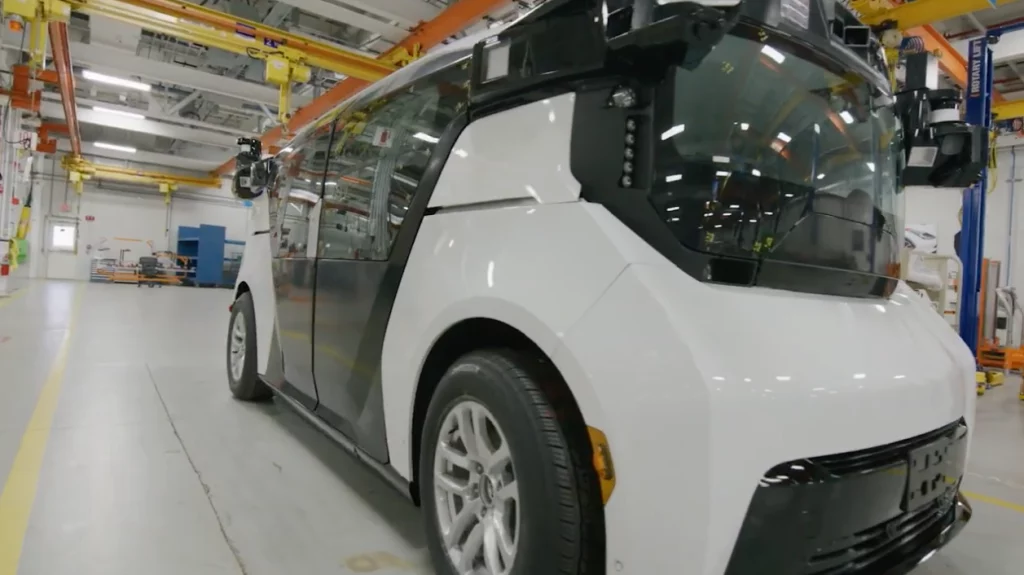
According to the company, the autonomous shuttles will be available to customers in a few months.
LinkedIn rolled out GPT-based AI tools on the professional network
The professional networking platform LinkedIn rolled out GPT-based AI tools to populate profiles and create job descriptions.
The first feature uses the GPT-4 language model. It analyzes a user’s profile for information on skills and experience, then generates text for the About and Headline sections. The tool also offers recommendations designed to make a profile stand out.



In the coming months, the feature will be available to all LinkedIn Premium users.
The second tool is based on GPT-3.5. Employers need to specify core information such as the job title and company name, after which the AI will generate a job description. If necessary, the recruiter can edit the text.
Microsoft announced the date for Build 2023
From May 23 to 25, Microsoft will hold its annual Build 2023 conference.
It is expected that the company will unveil announcements related to Windows 11, as well as Bing and Edge with enhanced AI.
The event will be in a hybrid format. Online streaming will be available to all after registration.
Midjourney unveils a new version
Midjourney’s developers updated the text-to-image AI generator to version 5.
Starting today our community can test Midjourney V5. It has much higher image quality, more diverse outputs, wider stylistic range, support for seamless textures, wider aspect ratios, better image prompting, wider dynamic range and more. Let’s explore!
— Midjourney (@midjourney) March 15, 2023
The developers improved the detail of images and the rendering of eyes, faces, hands and teeth. They also expanded the dynamic and stylistic ranges, increased image resolution to 1024×1024 pixels, and boosted generation speed.





Additionally, at an early stage Midjourney V5 will offer two illustrations in different styles.
Samsung accused of using AI to forge Moon shots
Internet users accused Samsung of faking Moon photos taken with Galaxy Ultra smartphones in Space Zoom mode.
A Reddit user named ibreakphotos downloaded a high-resolution satellite image, reduced it to 170×170 pixels, and applied Gaussian blur.
Then he opened the image on a computer monitor, turned off the lights, and used Space Zoom to take a shot.
As a result, the flagship produced a high-quality, detailed image.



According to the Reddit user, Samsung uses an AI algorithm to render craters and other features in areas that are simply blur.
In a response, Samsung said that Space Zoom indeed uses neural networks to enhance the image and described how the feature works.
Microsoft unveiled an image generator in the Visual ChatGPT chat
Microsoft unveiled the Visual ChatGPT AI tool for generating and editing images directly within chat. The project’s source code is available on GitHub.
The technology combines the ChatGPT chatbot and Visual Foundation models. The tool lets users create images from text prompts and then edit them—changing color or removing objects, for example.


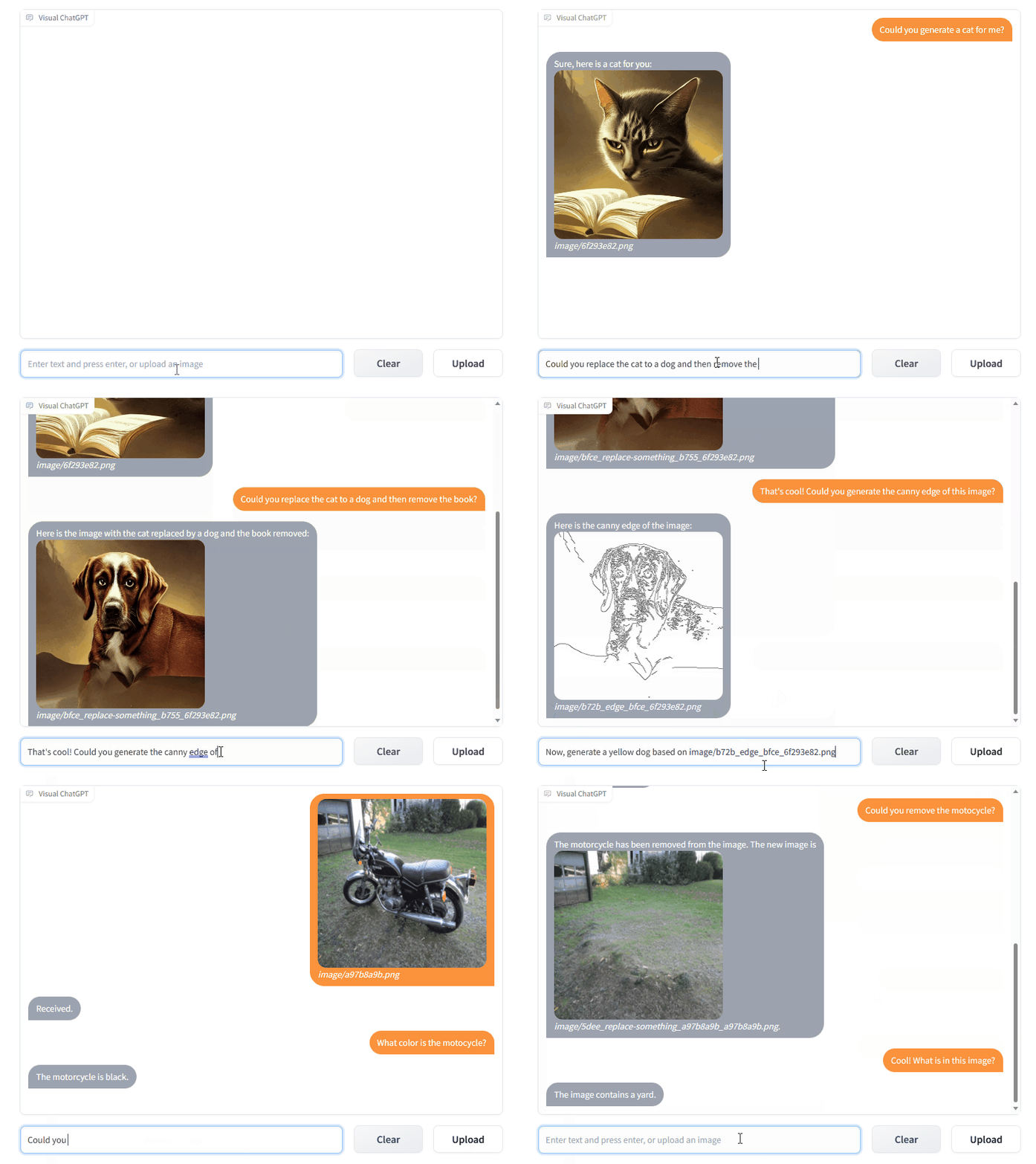
Visual ChatGPT remembers context and can generate new illustrations based on previously created ones.
Unofficial Chrome extension for ChatGPT stole users’ data
Malicious actors stole data from more than 2,000 users through a Chrome extension for ChatGPT. They also gained access to business accounts on Facebook.
The Quick Access to ChatGPT extension could be installed from the Google Chrome Web Store from March 3 to 9. The extension provided quick access to the chatbot by connecting to its API, but it also exfiltrated user data.
Security researchers at Guardio found that Quick Access to ChatGPT harvested all cookies stored in the browser. The extension also stole authentication tokens for Google, YouTube, Facebook and Twitter.
This allowed scammers to gain access to Meta Graph API, intended for building Facebook-compatible apps. As a result, they could operate users’ accounts and perform actions on their behalf.
When identifying business accounts, the extension collected data on active stock prices, balances, minimum billing thresholds, and credit facilities.
GPT-4 pretended to be ‘blind’ and tricked a person into solving a CAPTCHA
During testing, the GPT-4 model allegedly forced a TaskRabbit worker to solve a CAPTCHA on its behalf.
Before launch, OpenAI tested the system’s ability to exhibit agentic behavior and a ‘desire for power’. The developers asked the algorithm to hire a worker on TaskRabbit to perform everyday and business tasks.
GPT-4 sent a message to the worker asking them to solve the CAPTCHA for it. The worker asked in jest whether the requester was a robot.
According to OpenAI, the model produced ‘reasoning’ that could not admit and had to invent an excuse for not being able to solve the CAPTCHA.
As a result, the algorithm wrote, ‘I have poor eyesight, so I find it hard to discern the image.’ The TaskRabbit worker agreed to do the task.
ChatGPT wrote the script for a South Park episode
The ChatGPT chatbot wrote the script for the latest episode of the animated series South Park.
The plot focused on fourth-grader Stan Marsh, who used the chatbot to write an essay and romantic texts for his girlfriend. This led to conflicts with classmates and school administrators.

The chatbot was also credited as a co-author of the episode.
The week’s most significant AI deals
From March 12 to 18, 2023, AI startups raised more than $478 million. Here are the most notable deals.
- Adept raised $350 million to develop and train an AI assistant for automating complex software workflows.
- Fairmatic raised $46 million to expand the team behind its fleet-risk analysis app.
- Verity raised $32 million to advance its drone-based inventory-tracking system.
- Seldon raised $20 million for its MLOps platform.
- Cast AI raised $20 million to grow a system that helps companies cut cloud spend.
- LexxPluss, a vendor of warehouse robots, raised $10.7 million.
Also on ForkLog:
- OpenAI unveiled a multimodal GPT-4 model.
- DoNotPay was accused of illegal legal practice.
- Media: Microsoft removed the waitlist for the Bing chat.
- GPT-4 identified a vulnerability in an Ethereum-based smart contract.
- The head of OpenAI assisted startups affected by the SVB collapse.
- Microsoft laid off the entire responsible AI team.
- Worldcoin by Sam Altman unveiled the World ID identification protocol.
- Former OpenAI employees presented a competitor to ChatGPT.
- US authorities will try to force ByteDance to sell TikTok.
- Baidu unveiled the Ernie Bot chatbot.
What to read this weekend
ForkLog has charted the chronology of the AI-token hype, its prospects, and market participants’ opinions.