



High Inflation in the US Alarms Bitcoin Traders
Weak CPI data led to reduced risks in bitcoin derivatives, with open interest falling by $1.25 billion.
Weak data on the CPI has led to a reduction in risks in bitcoin derivatives. Open interest (OI) on major crypto exchanges fell by nearly $1.25 billion, noted CryptoQuant contributor Amr Taha.
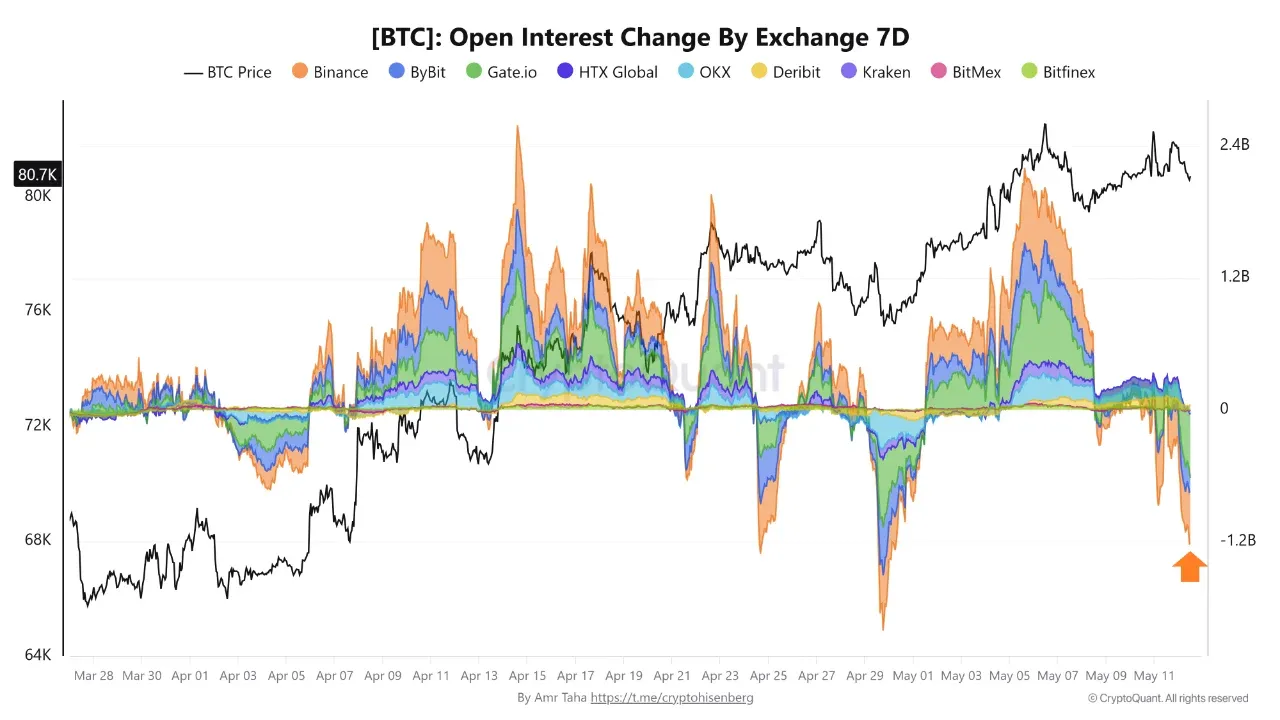
According to the analyst, heightened inflation forced investors to close positions, avoid opening new ones, and reduce leverage.
The decline was observed simultaneously on several major derivatives trading platforms — Binance, Gate.io, Bybit, and OKX. This indicates a broader reduction in short-term risks in the bitcoin futures market, Taha believes.
“Inflation exceeding expectations can pressure risk assets as it undermines the narrative of a softer monetary policy and pushes traders towards a cautious strategy,” explained the expert.
The analyst clarified that in the current context, the drop in OI might reflect a short-term reaction from traders rather than a clear long-term bearish signal:
“When a significant drop in open interest occurs across several crypto exchanges following a macroeconomic catalyst, it often indicates a rapid adaptation of traders to new risk conditions.”
State of the Crypto Market
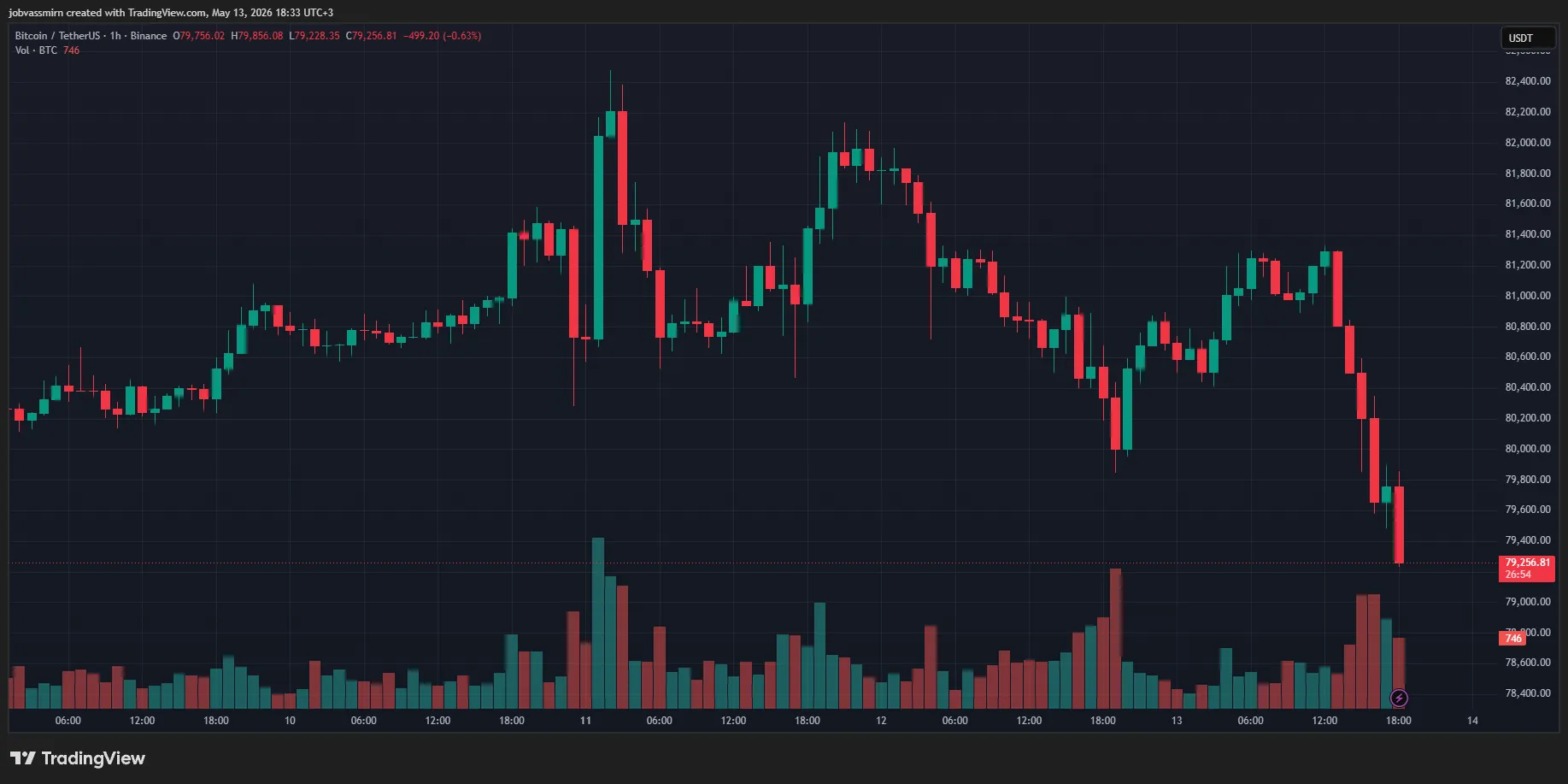
Following the release of CPI data, bitcoin fell from $81,000 to the current $79,000 — a 2.5% drop.
On May 13, the US also published the Core Producer Price Index (Core PPI). The annual figure, like inflation, was above forecasts — 5.2% against the expected 4.3%.
In March, the Core PPI was 4%. The latest figure is the highest since 2022.
The index reflects changes in prices for goods and services, excluding volatile categories like food and energy.
Along with another negative macro factor, CryptoQuant noted the rise in unrealized profits of bitcoin traders. The average figure reached 17.7%.
Bitcoin traders’ unrealized profit margins hit 17.7%, the highest since June 2025.
The last time margins reached these levels while Bitcoin tested the 200-day MA was March 2022, just before the downtrend resumed. pic.twitter.com/Zgfe9jFTiv
— CryptoQuant.com (@cryptoquant_com) May 13, 2026
“The last time margins reached such levels was in March 2022, when bitcoin tested the 200-day moving average just before the downtrend resumed,” analysts warned.
Back in March, MN Trading founder Michaël van de Poppe believed that bitcoin had no obvious reasons for a decline. According to him, a false notion of forming a “bearish flag” and moving to $50,000 by the end of the year had taken hold in the market.
Рассылки ForkLog: держите руку на пульсе биткоин-индустрии!