



Latin America is the seventh-largest crypto economy in the world, accounting for 7.3% of the market. According to Chainalysis, residents of the region often use digital assets as a store of value amid currency depreciation and as a “weapon against authoritarianism”.
Statistics in figures
In Latin America, centralized exchanges (CEX) are preferred, and institutional activity is significantly lower compared with other regions, the experts noted.


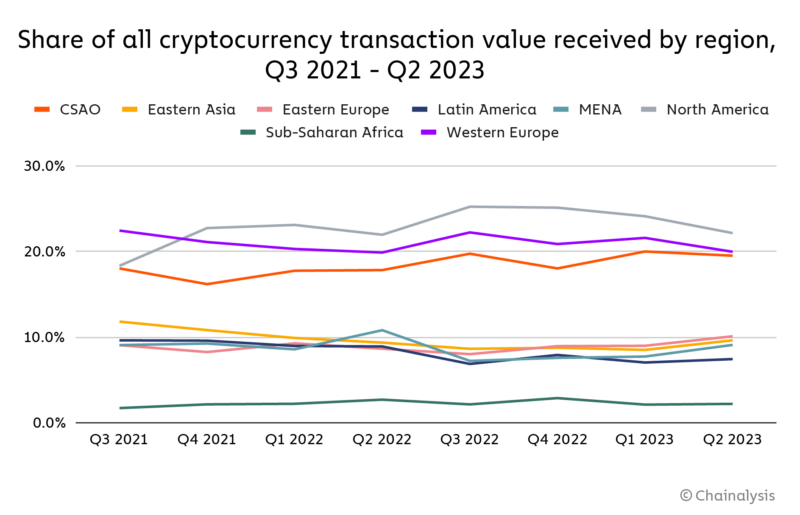
Although the region’s share of the global crypto economy is not the largest, three of its countries are in the top-20 of the global crypto adoption index: Brazil (9), Argentina (15) and Mexico (16).
“Crypto assets have become an important part of daily life in many Latin American countries, especially those that have faced currency depreciation,” the researchers added.
There are significant differences in how digital assets are used across jurisdictions in the region. For example, 92.5% of transactions in Venezuela are concentrated on CEX.

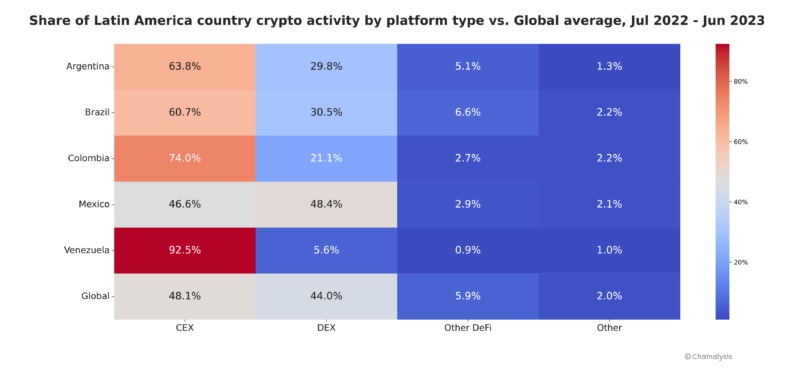
In Colombia, Argentina and Brazil, the share is 74%, 63%, and 60% respectively. Only in Mexico is the balance between the use of centralized and decentralized exchanges nearly equal.
The global share of CEX is 48.1%, and DEX — 44%.
According to Chainalysis, Mexico is the second country in the world by volume of cross-border crypto transactions. Annually, assets totaling about $61 billion are transferred there, largely from the United States.
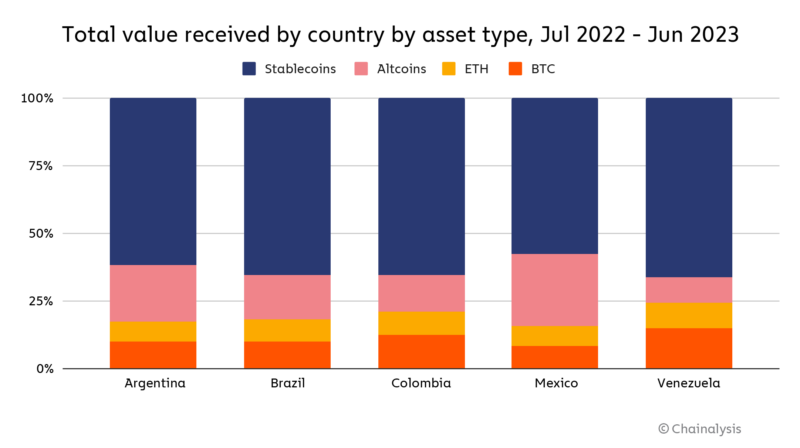
Almost in all Latin American countries the dominant form of cryptocurrency is stablecoins.

A Tool for the People
Argentina has faced economic problems for decades, including currency depreciation, the researchers noted. The value of the Argentine peso over the year has fallen by about 51.6%.
Martel Siward, head of AML compliance for the local exchange Lemon Cash, said that cryptocurrency can save ordinary citizens from inflation, which is the main factor behind the adoption of this new money class in Argentina.

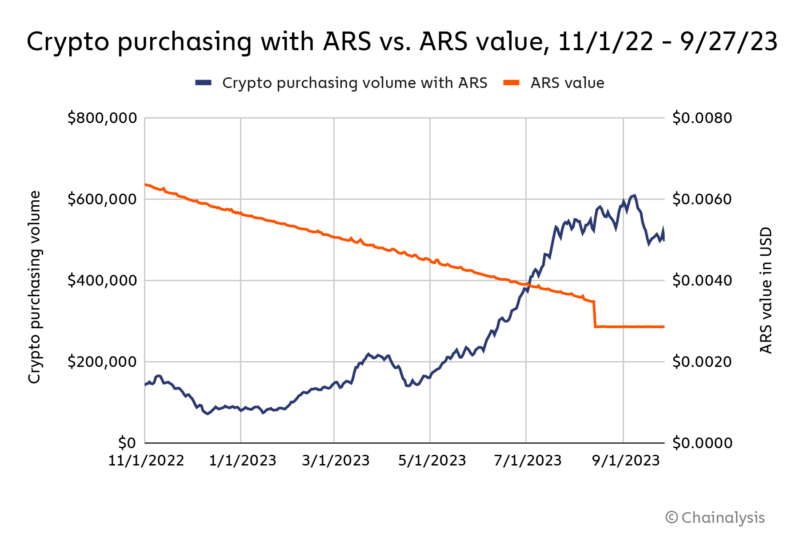
“We have really high inflation, and there are many restrictions on purchasing foreign currency. This makes digital assets a valuable option for saving funds,” he clarified.
Siward noted that stablecoins are especially popular and provide a new way to satisfy local demand for the US dollar. Many Argentines receive salaries in USDC or USDT, the expert added.
Venezuela also faces economic difficulties, but the situation is complicated by the authoritarian regime of Nicolás Maduro, Chainalysis said.
According to Leopoldo López, founder of the opposition party Voluntad Popular, who left the country in 2020 due to political persecution, Venezuela witnessed “one of the worst hyperinflation rates in history — more than 1,000,000%”.

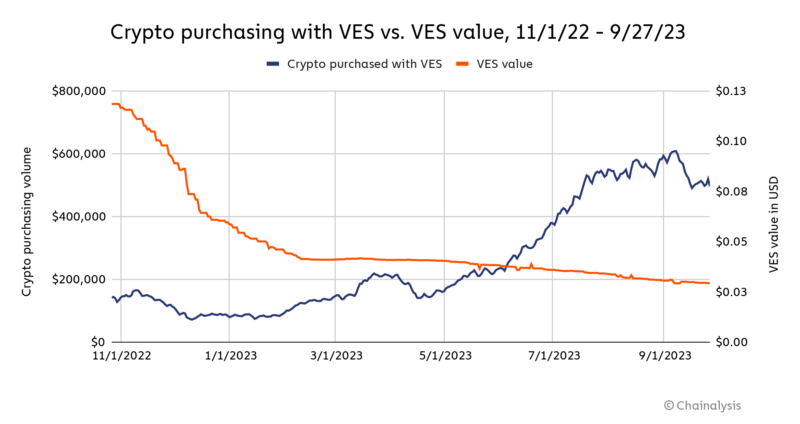
Stablecoins help locals cope with this problem, López emphasized. He added that cryptocurrencies also play an important role in enabling international transfers to the country.
Moreover, during the COVID-19 pandemic in 2020, digital assets helped raise funds for doctors and nurses. At that time, the interim government devised a plan that allowed receiving financial support from other countries.
“The task was to make a direct money transfer without interference from the dictatorship — which fully controls the banks and the financial system. This program directly helped 65,000 doctors and nurses, and indirectly hundreds of thousands of other people,” the founder of the opposition party explained.
According to a September ConsenSys report, 99% of Nigerians are aware of the existence of digital assets — the African country has overtaken the United States, with a 95% figure.