




The 2024 surge in bitcoin and meme tokens has stirred expectations and upbeat forecasts. As the original cryptocurrency sets fresh all-time highs, investors are asking: how long will the crypto market rise this time?
Oleg Cash Coin set out to answer.
Analysts’ forecasts
Many are familiar with the fortunes of early crypto holders who managed to stay the course with both sanity and capital intact. Not everyone, however, has witnessed even one bull cycle, let alone two or three.
A bull market is a period when prices trend higher for an extended stretch. There is no precise definition; its duration is identified only in hindsight. As with bear phases, the depth and length of the decline are clear only in retrospect.


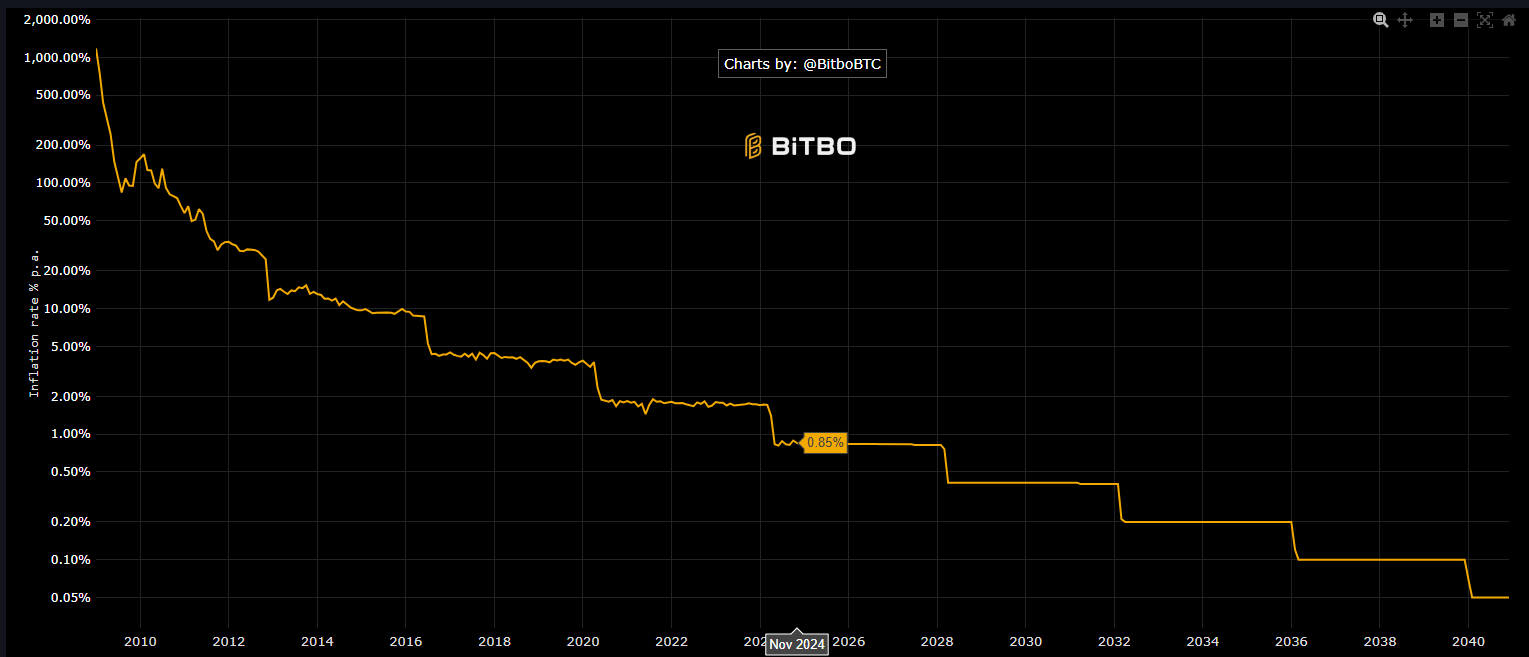
Unlike equities, crypto has tended to follow four-year growth cycles since 2012, anchored to bitcoin’s halvings. This pattern has created a recognisable rhythm. Even though miner-driven issuance of the digital gold now amounts to mere tenths of a percent per year, the statistics still matter.
According to Copper, the current phase should last roughly 750 days, peaking in March 2025. Analysts at CryptoRank concluded that the market will post its strongest readings in October 2025.
After the 2012 halving, about 1,470 days separated the peaks, while the span between the 2017 low and high was roughly 840 days. Following the 2016 halving, the peak-to-peak gap was about 1,450 days, and the trough-to-peak stretch exceeded 1,050 days.
Statistically, the current cycle’s top sits about 1,450 days from the prior high—aligning with CryptoRank’s October 2025 view. The distance from the cycle bottom to a prospective peak points to March–April 2025, in line with Copper’s call. Either way, the data indicate the cycle concludes by the end of next year.
Traditional business cycles
Strikingly, crypto’s phases map onto the three-to-four-year business cycles proposed by the British statistician Joseph Kitchin in 1920. He attributed them to fluctuations in global gold stocks.
The shortest cycle in economic theory arises from mismatches between demand and output—akin to Satoshi Nakamoto’s mechanism of steadily reducing issuance.
In 2024, bitcoin’s inflation is roughly ten times lower than a decade ago, and miners are seeking new income streams via DeFi and trading strategies, much like professional traders or investors.
As a result, the influence of Kitchin’s short cycle—where production dynamics matter greatly for price formation—appears to be waning. The next cycle, with a 7–11 year period, is likely to take over.

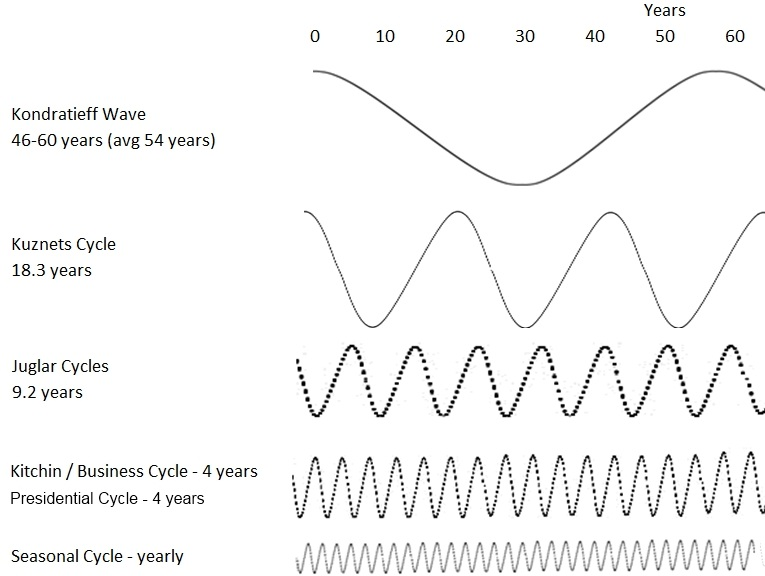
The cycle first described in 1862 by the French statistician Clément Juglar factors in not only demand and output swings but also the need to invest in infrastructure, which lengthens the interval between peaks.
The next cycle (15–25 years), known as Simon Kuznets’s rhythms, tracks mass adoption and demographic trends, broadly matching the influx of younger users into crypto.
By 2024, bitcoin found itself at a point where short cycles (three to four years) are losing sway and longer waves (7–11 and 15–25 years) begin to dominate. This phase is marked by large-scale infrastructure investment, capital equipment renewal and mass adoption.
Lastly, the classic cycle named after the Soviet economist Nikolai Kondratiev spans about 50 years and culminates in foundational shifts in the global order. One could suppose that cryptocurrencies will be that profound change in the economy’s fabric.
New rules
The post-halving period, when a new business cycle begins, is a constructive time for infrastructure investment. In 2024 it coincided with a broader trend towards fundamental changes in the world economy.
In subsequent phases, the crypto market could evolve into a more resilient asset class, with much lower volatility. Consider a macro metric such as money supply (M2): bitcoin has been reacting to shifts in this gauge without the eye-watering spikes seen before.

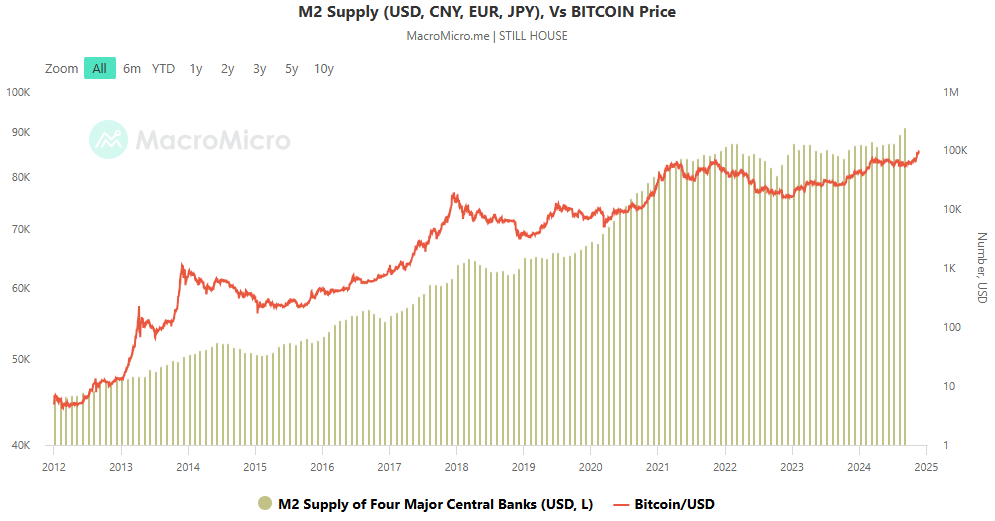
Given the global, decentralised nature of the digital gold, and the expectation that cyclicality will persist at least at longer wavelengths, it is reasonably safe to forecast broad market development over the next five to seven years.
Possible changes in economic policy after Donald Trump’s return to the White House should also be considered. The newly elected U.S. president’s fiscal plans could keep the Fed policy rate high, which would in itself pressure budgets and create a “natural” increase in the M2 measure worldwide.
Another factor distinguishing this cycle is rising official interest in cryptocurrencies and a greater willingness by states to engage: for example, El Salvador, Bhutan and Argentina.
Bitcoin now rests on a sturdier foundation than ever, drawing not only individuals but also major financial institutions and even entire countries. Only a handful of assets worldwide, including gold and U.S. Treasuries, can boast similar acceptance.