


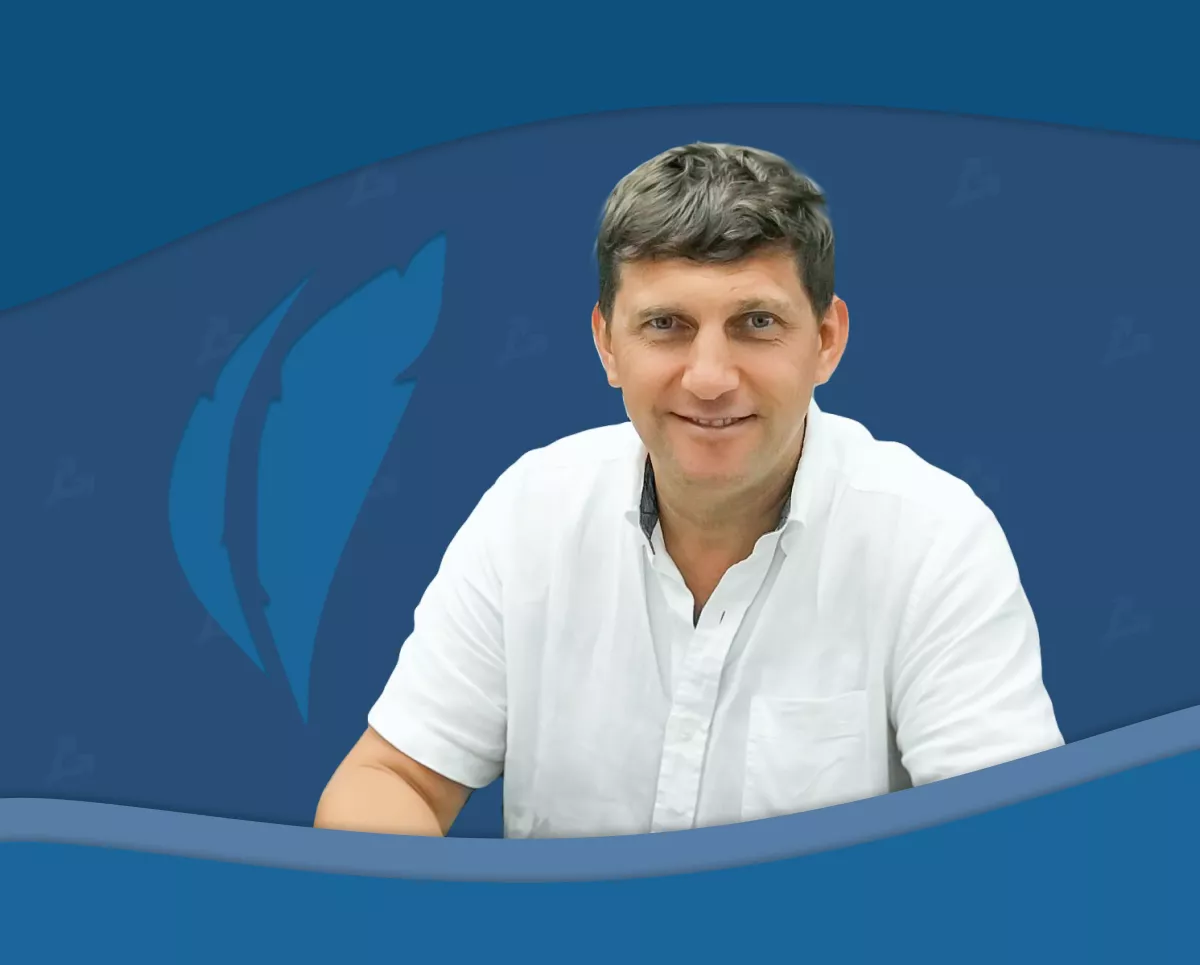
How to buy property in Thailand with cryptocurrency — interview with VillaCarte founder
Digital assets are increasingly featuring in major real estate deals. In June 2021, an anonymous buyer paid $22.5 million in cryptocurrency for a Miami penthouse, and a month later the French DJ David Guetta listed for sale Bitcoin or Ethereum apartments worth $14 million.
In August we spoke with Vadim Buhkalov, founder of VillaCarte, which sells resort real estate for Bitcoin, Ethereum and Tether. He told ForkLog about the specifics of deals with digital assets, Thailand’s cryptocurrency regulation, and the advantages of investing in local property.
ForkLog: Tell us about VillaCarte. Why did you decide to sell real estate in Thailand?
Vadim Buhkalov: In 2012 I first went to Asia and spent a holiday on Phuket Island. That is where the idea for the business was born — to help investors find property for leisure, living and business.
I launched the website bizphhuket.net, and later renamed it to VillaCarte.com. Rental inquiries began arriving immediately, though the initial transactions were fairly modest.
Two years later, a family arrived on the island and made one of the largest purchases at the time. That deal inspired the team and prompted a shift in our approach to doing business.
ForkLog: What exactly did you change?
Vadim Buhkalov: We analysed the company’s activity and found that we spent 80% of our time and effort working with economy-class properties, while 80% of our revenue came from deals on villas and luxury apartments.
We then focused on the premium segment, and within a year sold two villas worth a total of $2 million. I remember this deal well: the buyer became a close friend of mine.
The VillaCarte business, overall, is built on long-term relationships. All clients become our friends!
From 2014 we focused more on sales than on rentals. Time has shown this was the right decision: in 2017-2019 we posted profits that helped the business weather the downturn caused by the coronavirus pandemic.
ForkLog: By the way, how did the pandemic affect the company and the business?
Vadim Buhkalov: Up to 2020, VillaCarte employed 30 people, but due to the nationwide lockdown we had to cut 17 staff and reduce marketing spend.
The situation is stabilising now: a new tourist season is starting and we are once again actively expanding the team.
Additionally, since July 1 Phuket operates the ‘Tourist Sandbox’: vaccinated tourists are exempt from the 14-day quarantine. Under this program more than 33,000 tourists посетили Phuket and brought the country’s economy $66.6 million.
ForkLog: What is happening in the Thai real estate market after the nationwide lockdown?
Vadim Buhkalov: Prices on Phuket property have not fallen; nonetheless, you can buy a villa or apartment below market value. Typically, these are one-off listings: owners discount the price for personal reasons.
ForkLog: Describe the process of buying property with cryptocurrency. Do clients have to fly to Thailand?
Vadim Buhkalov: No, they can close deals remotely. We provide clients with a property catalog, then show it via Zoom or Skype, sending photos and video.
The client selects an apartment, and we proceed with the transaction. It comprises several stages:
- Drafting the contract. The client sends VillaCarte a scanned passport, and we send them the contract and an invoice for the first payment.
- Making the deposit. The client signs the contract and makes the payment in cryptocurrency. The payment goes to VillaCarte’s wallet, which is controlled by the regulated Thai crypto exchange Bitkub.
- Converting the cryptocurrency. We exchange the cryptocurrency on the exchange for Thai baht and transfer the funds to a bank account. After that we transfer the money on the client’s behalf to the developer or seller.
- Title deed. If the property is purchased at the construction stage, after the handover we arrange the title deed. The developer processes it within 3-6 months after completion. On the secondary market, the Thai land department immediately processes the title deed.
ForkLog: How many people have bought property with cryptocurrency? From which countries are they?
Vadim Buhkalov: We have closed over 100 deals paid in cryptocurrency. Among them are the sale of villas for $1 million and dozens of apartments from $100,000.
Our main clients are citizens of the CIS. We know their mentality and needs, because we are from there. It is they who most often pay with cryptocurrencies.
Europeans, Americans and Chinese have different mindsets and, accordingly, different priorities. However, we also work with them and close deals.
ForkLog: Why do residents of Russia, Ukraine, Belarus and Kazakhstan invest in Thai real estate?
Vadim Buhkalov: Primarily, to diversify risk and mitigate the impact of economic factors on financial assets.
It is also a source of passive income. Phuket is a world-famous resort, demand for housing is always present, and property prices rise annually.
Finally, it’s simply a house by the sea. Many people have such a dream, and we help make it a reality.
ForkLog: Have cryptocurrencies simplified closing deals, or perhaps added extra hurdles?
Vadim Buhkalov: In Thailand, cryptocurrencies are simply another method of payment. Moreover, faster and easier.
Thai property buyers can close deals remotely: they need to provide a scanned copy or photograph of their passport, an email, and a physical postal address for sending documents.
ForkLog: What is more popular — Bitcoin, Ethereum, or Tether?
Vadim Buhkalov: Tether. Paying with stablecoins minimizes the impact of crypto-market volatility on the transaction amount.
But the choice remains with the investor. We accept any liquid cryptocurrencies.
ForkLog: How do Thai authorities view cryptocurrencies? Are there companies in the country that work with digital assets?
Vadim Buhkalov: Regulators actively cooperate with representatives of the crypto industry.
In 2018, the authorities adopted rules regulating cryptocurrency transactions. launched the world’s first blockchain platform for issuing government savings bonds.
There are four groups of companies that work with cryptocurrencies:
- Direct investors such as the Brooker Group;
- Bitcoin miners — Jasmine Telecom Systems;
- Financial advisers and asset managers. These include Kasikorn Bank, Siam Commercial Bank, Xspring Capital and JTS;
- Companies that provide services for cryptocurrencies, for example Ananda Development, AssetWise and Major Cineplex Group.
In addition, there are two regulated crypto exchanges in the kingdom: Bitkub and Satang Pro. Citizens of any country living in Thailand may register on them.
ForkLog: How do you assess the prospects for the crypto industry in Thailand?
Vadim Buhkalov: Naturally optimistic. The aforementioned companies already use digital assets in real business.
Thailand is open to new ideas, whether Bitcoin, foreign investment or technology.
Follow ForkLog news on Facebook!
Рассылки ForkLog: держите руку на пульсе биткоин-индустрии!