




Terra tightens its grip in the DeFi segment, widening the gap over BNB Chain. Despite market correction and the native asset LUNA, the ecosystem’s TVL remains at around $15 billion.
Terra’s secret to success lies not only in the stability of UST, its central pillar, but also in a host of interesting decentralised applications.
This article examines the capabilities of Spectrum Protocol’s yield optimizer and the ‘optimistic strategy’ using the Anchor and ApolloDAO platforms.
- Spectrum Protocol is integrated with a number of protocols in the Terra ecosystem. The project offers high yields thanks to auto-compounding, restaking, and rewards in the native SPEC token.
- The use of collateralised UST loans on Anchor opens up broad scope for a variety of high-yield strategies.
- With Ape Board, you can conveniently track your asset portfolio in Terra and other DeFi ecosystems.
Spectrum Protocol
The project is positioned as the “first and innovative yield optimiser in the Terra ecosystem”. The platform interacts with major projects such as Mirror, Anchor and Pylon, offering higher yields through auto-compounding and restaking.
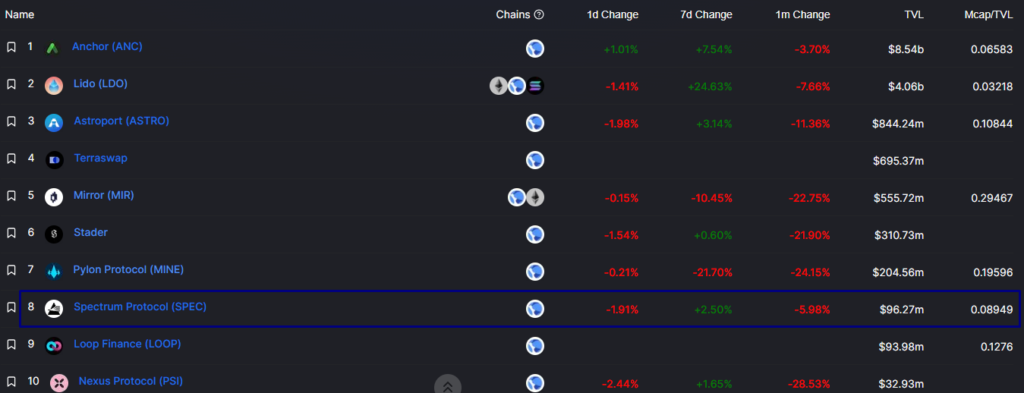
Spectrum Protocol ranks among the top ten in the DeFi Llama ranking, where projects are ordered by TVL.


In the project’s Vaults section you can see various vaults and their annual yields, accounting for compound interest (APY).


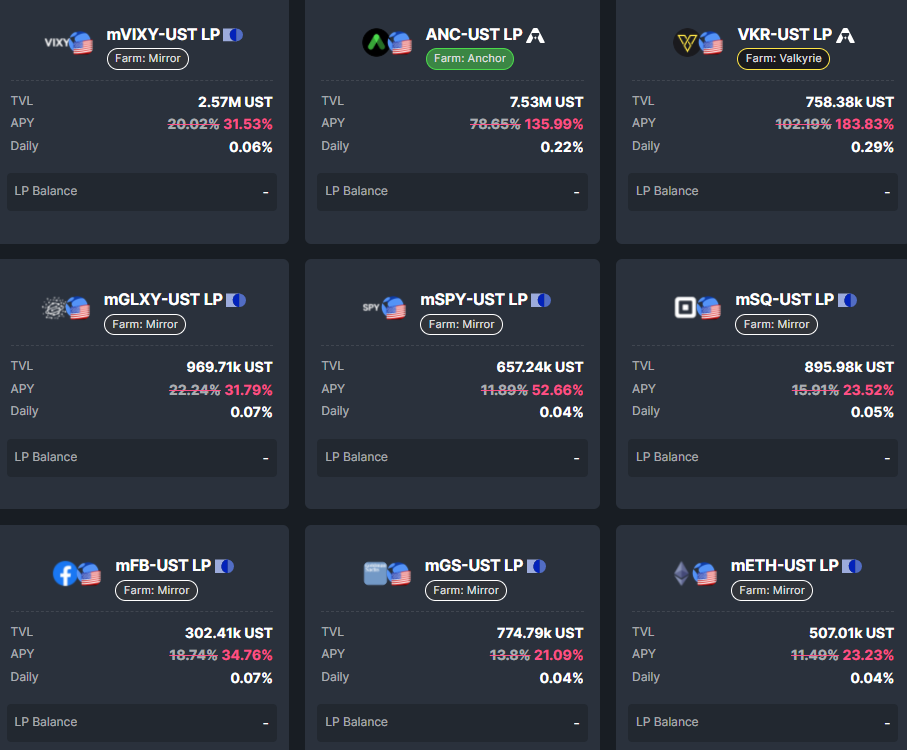
In the screenshot, the APY of the ANC-UST LP vault stands at 135.99%. This is well above Anchor’s ‘standard’ deposit yield (~19.5%). Moreover, thanks to the presence of a stablecoin, the volatility of the asset pair in the vault should be lower than the overall range of a single ANC token.
As an example for the previous material, farming positions mARKK-UST LP and mSPY-UST LP were opened. At the time of writing, the annual yields of these pools (APR) are 14.5% and 12.09%, respectively.


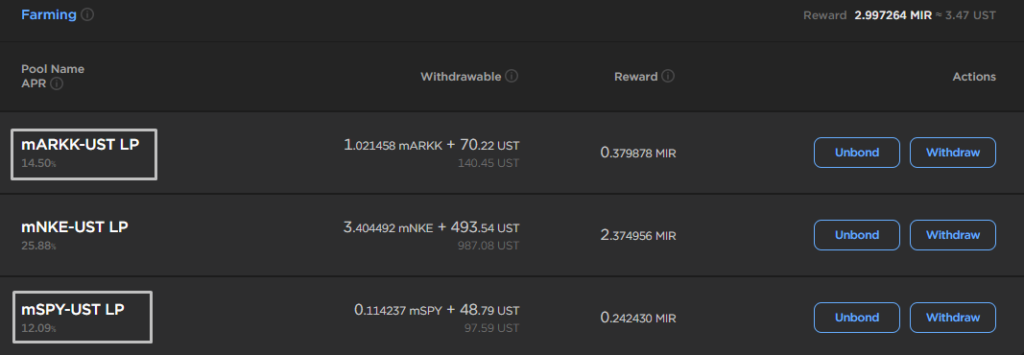
These pools are also listed on Spectrum Protocol, but their yields are significantly higher thanks to auto-compounding strategies and reinvestment of staking rewards.
For example, the APY of the mARKK-UST LP vault stands at 21.2% versus Mirror’s 14.5% standard. Therefore, to maximise returns on invested capital, it would be prudent to move assets from one protocol to the other.
Clicking on the corresponding vault in the Vaults section of Spectrum Protocol opens a window with information.


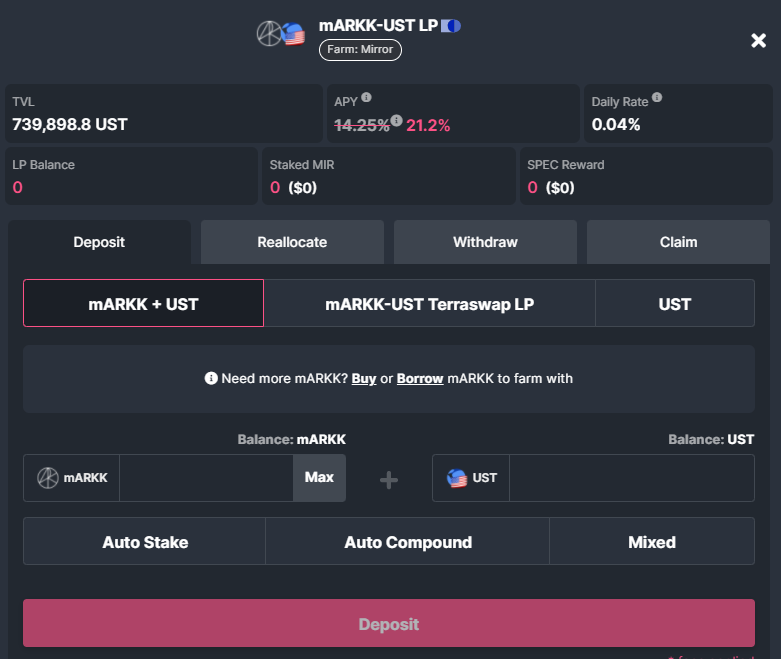
Besides the TVL and APY parameters, there are three options for depositing funds:
- mARKK+UST — you can invest synthetic ARKK shares and the UST stablecoin in equal proportions;
- mARKK-UST Terraswap LP — assets of the corresponding liquidity pool on the Terraswap platform;
- UST — the ability to deposit the Terra ecosystem’s algorithmic stablecoin, which is then automatically converted into the required assets.
To withdraw funds from Mirror Protocol, go to the Farming sub-section of My Page and click Withdraw. The following window will appear:


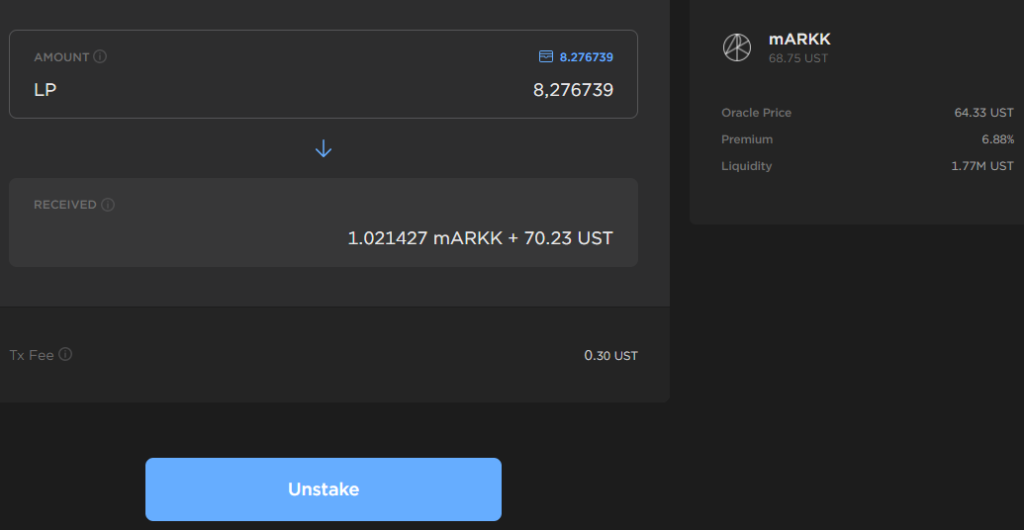
After clicking Unstake and confirming the transaction in the wallet, you will receive mARKK and UST tokens.
Now you can deposit assets into the mARKK-UST vault, but first you should click Connect Wallet in the top-right corner of the Spectrum Protocol site.
The screenshot below shows the tokens appearing in your balance. It also presents options for maximising yield:
- Auto Stake — automatic reinvestment of staking rewards (APY here is 21.06%);
- Auto Compound — auto-compounding strategy with an APY of 21.2%;
- Mixed — a combination of the first two options with the ability to adjust the balance between them (set to “50% to 50%” yields 21.13% per year).


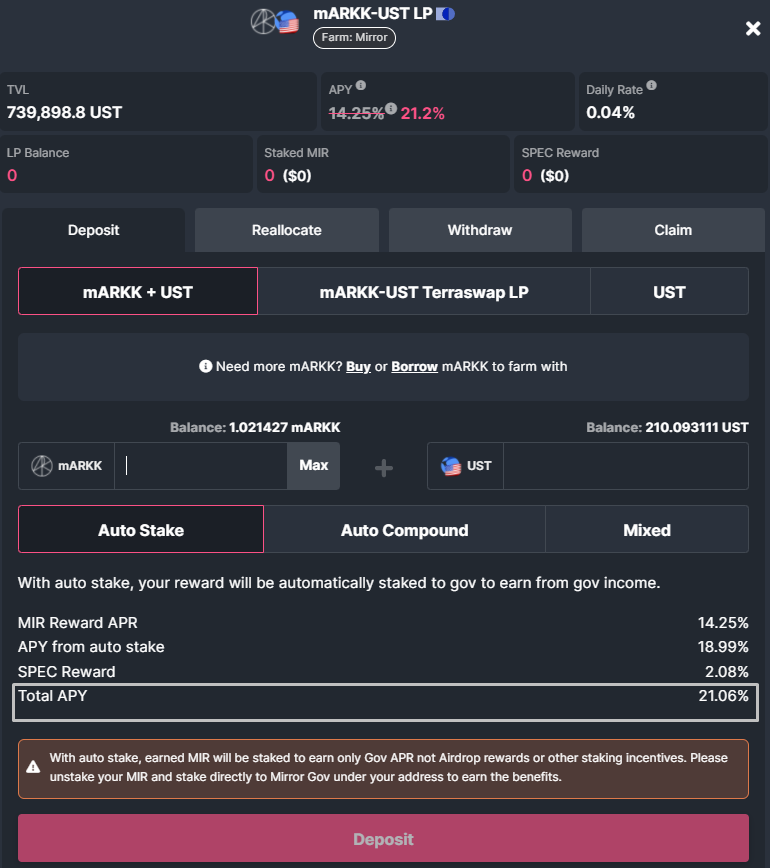
In all of the above options, returns are generated from three components:
- rewards in the native MIR tokens of the Mirror Protocol;
- increases in yield due to reinvestment;
- rewards in SPEC tokens of Spectrum Protocol.
The auto-compounding option yields a little higher, so we choose it. In the deposit fields, click Max, then Deposit and confirm the transaction. In our case the fee was 0.35 UST.
At the top of the Vaults page, the following fields will appear:
- My Total Value — the value of funds contributed by the user and accrued rewards;
- Total Rewards — the value (in UST) of accrued rewards.


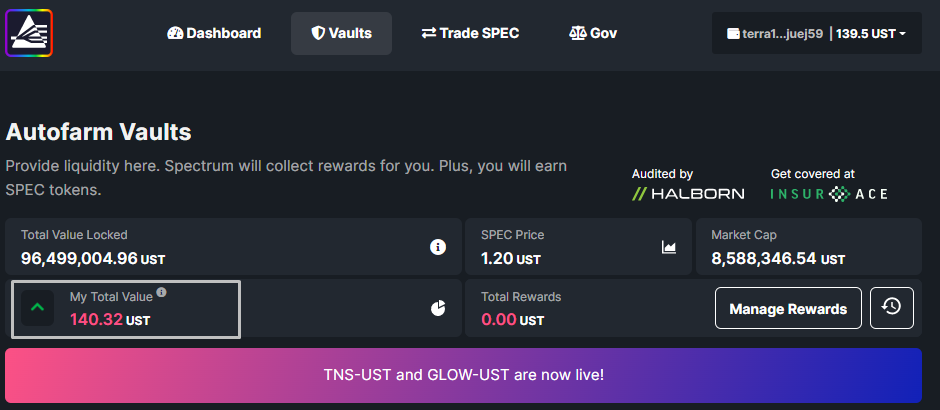
The Manage Rewards option allows you to claim accrued rewards and also stake the accrued SPEC tokens.
Staking and staking options are presented in the Gov section. For example, with a 180-day lock, SPEC’s annual yield would be 51.89%.


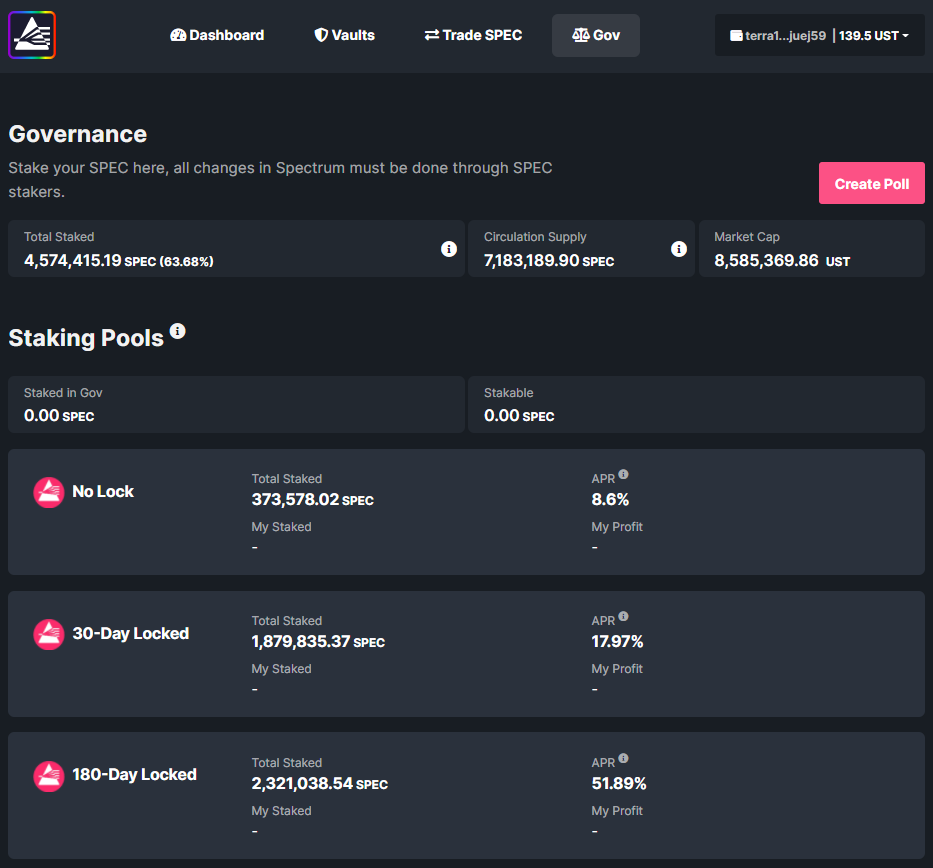
Staking in Spectrum Protocol involves holding a highly volatile asset. It is therefore prudent to monitor the price chart of SPEC.


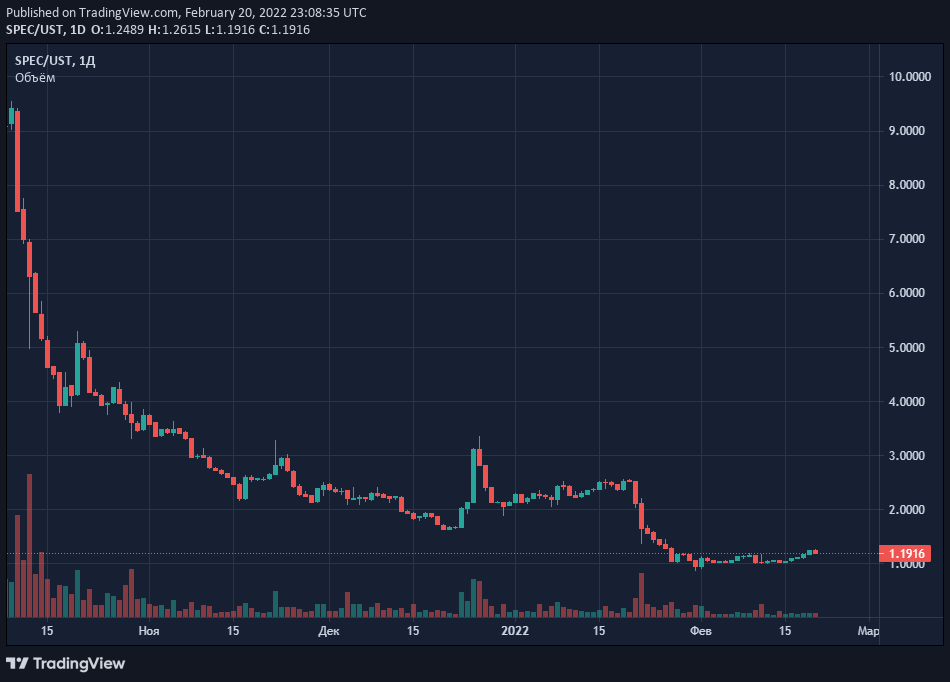
In less than a year the asset has fallen by nearly 88%. However, given the depth and duration of the price drop, SPEC may remain in a flat range or recover slightly in the future. Much depends on the level of turbulence in the cryptocurrency markets.
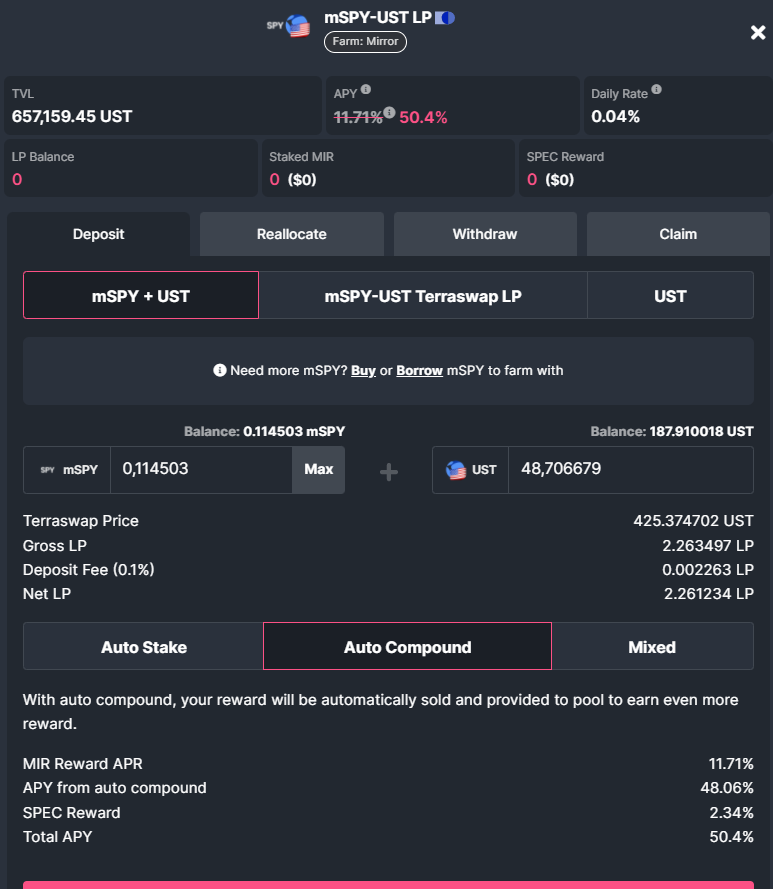
A similar set of steps can be applied to the farming pool mSPY-UST LP on Mirror. This would lift the APY from 11.7% to 50.4%.


An Optimistic Strategy Using Anchor and ApolloDAO
This strategy was proposed by user Rebel DeFi. It is based on the optimistic assumption that demand for UST and Terra ecosystem services will push LUNA’s price higher in 2022.

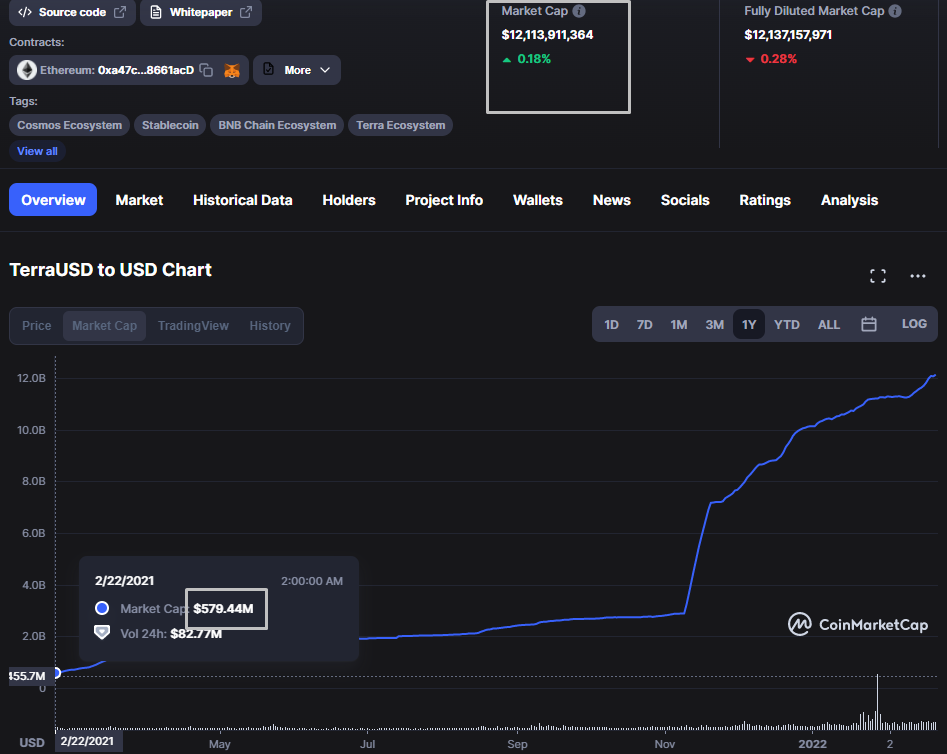
Over the year TerraUSD’s market capitalization grew more than twentyfold — from $579.44 million to $12.13 billion (as of February 21, 2022).


Over the same period, the corresponding figure for LUNA grew 6.4x — from $3.01 billion to $19.3 billion.


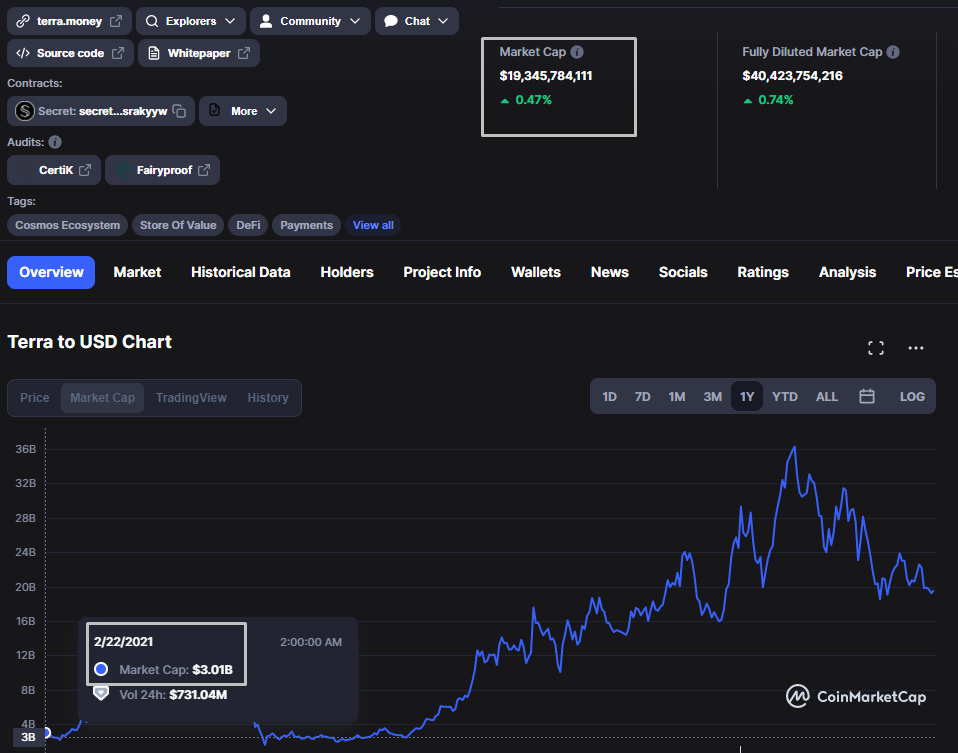
The correlation between these indicators is evident. Consequently, steady or rising demand for UST is likely to positively affect LUNA’s price. On the other hand, the market may continue to fall for an extended period under the Fed’s policy and geopolitical instability.
In the Rebel DeFi strategy, the Anchor and ApolloDAO services are used, as discussed in the previous material.
To begin, acquire LUNA tokens — they will be required as collateral.
We will use for our example 1000 UST to buy 20.31 LUNA on the exchange Terraswap.


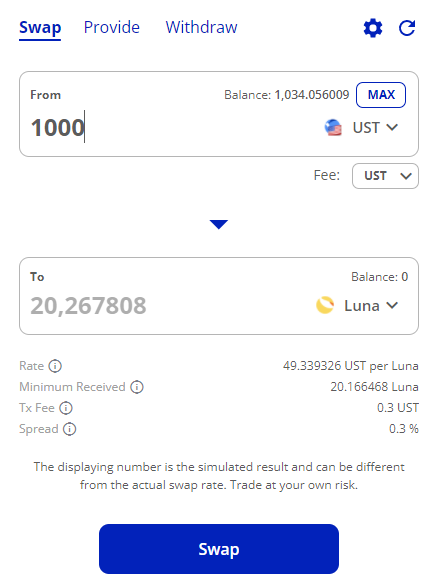
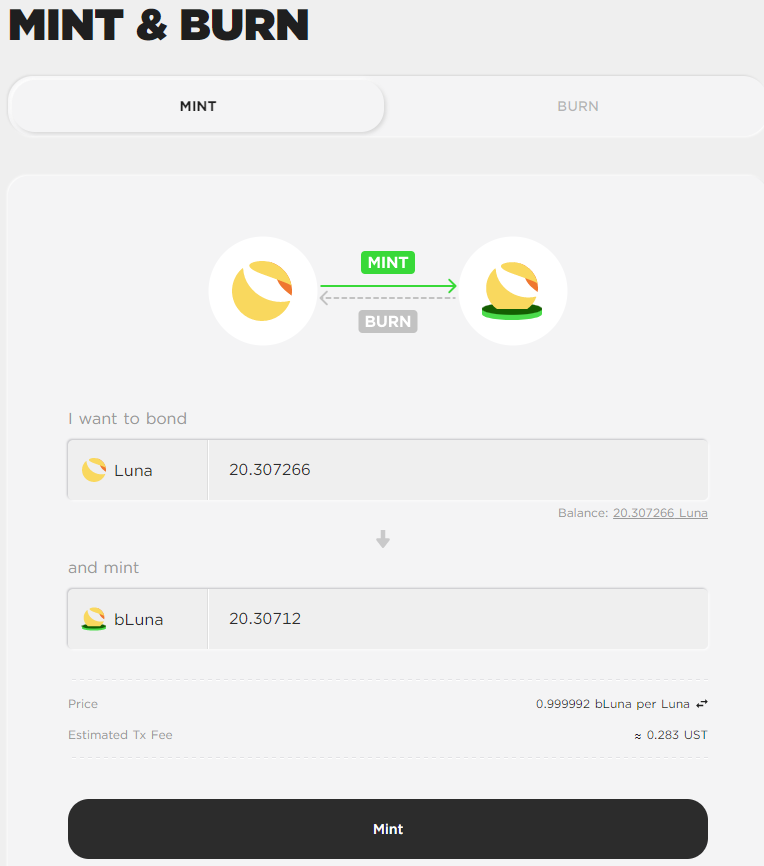
Convert the acquired LUNA into bLUNA in the bAsset section of the Anchor platform.


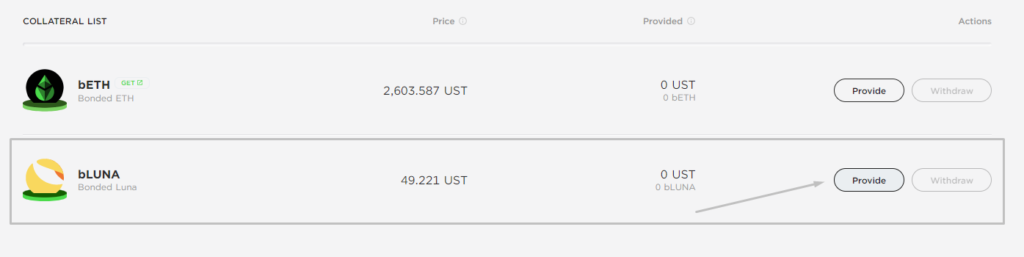
The obtained bLUNA should be deposited as collateral on the Borrow page using the Provide function.


Next, you need to issue UST with an LTV of 30%. To do this, click Borrow at the top of the page and set the slider to the corresponding value.


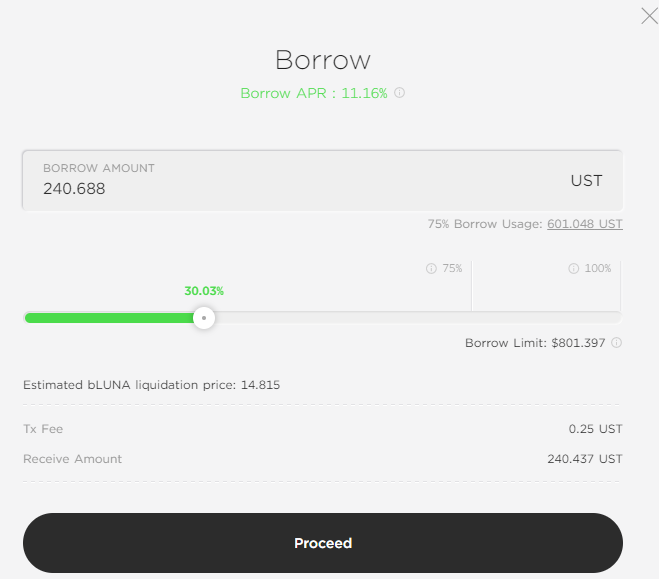
In our case, this yields 240 UST from a maximum borrow of $801,397.
Rebel DeFi suggests dividing the borrowed amount into three parts. The first part — 80 UST in our case — is used to repurchase LUNA, then convert it to bLUNA and increase the collateral size.
We repeat the above algorithm but now with 80 UST: buy 1.62 LUNA, convert them to bLUNA, and deposit into Anchor.


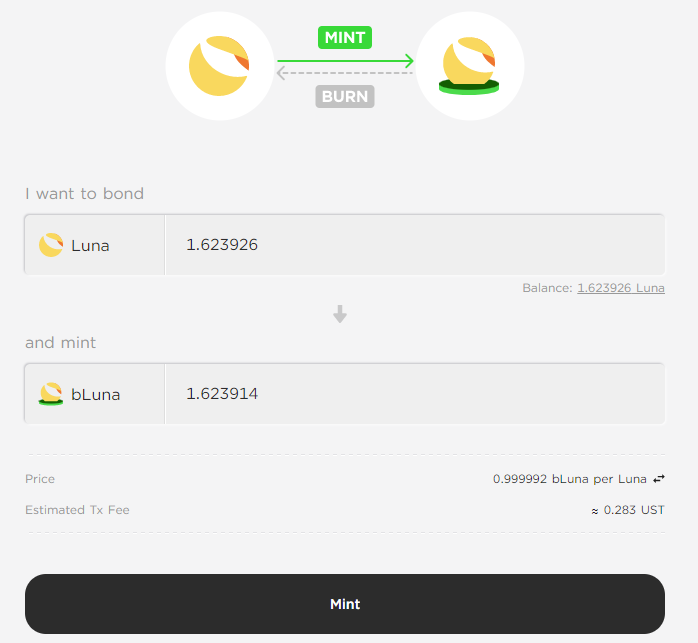
As a result, the collateral size increases from 20.3 bLUNA to 21.92 bLUNA, and the LTV falls to 27.93%.


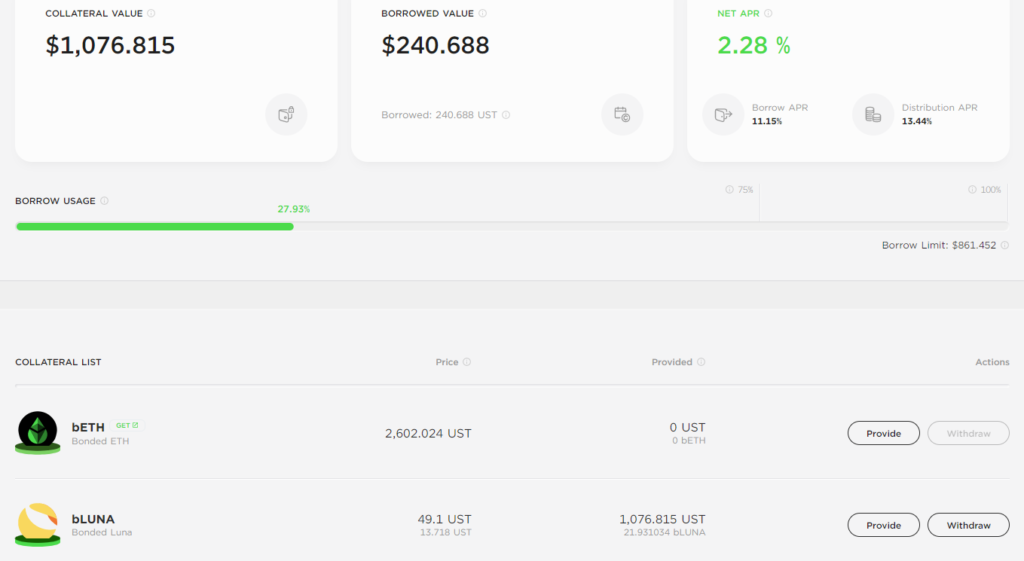
In other words, you have more bLUNA at your disposal, whose value should rise under the optimistic scenario. Additionally, the position’s safety increases thanks to a few percentage points lower LTV.
In the top-right corner of the screenshot you can see that Net APR is positive — 2.28% (Distribution APR > Borrow APR). This means the protocol effectively pays borrowers with native ANC tokens.
As noted, we split the borrowed 240 UST into three parts. We have 160 UST left, because one third of the funds was used for a repurchase of LUNA.
We can now deposit the second third into Anchor at 19.46% (as of 21.02.2022).


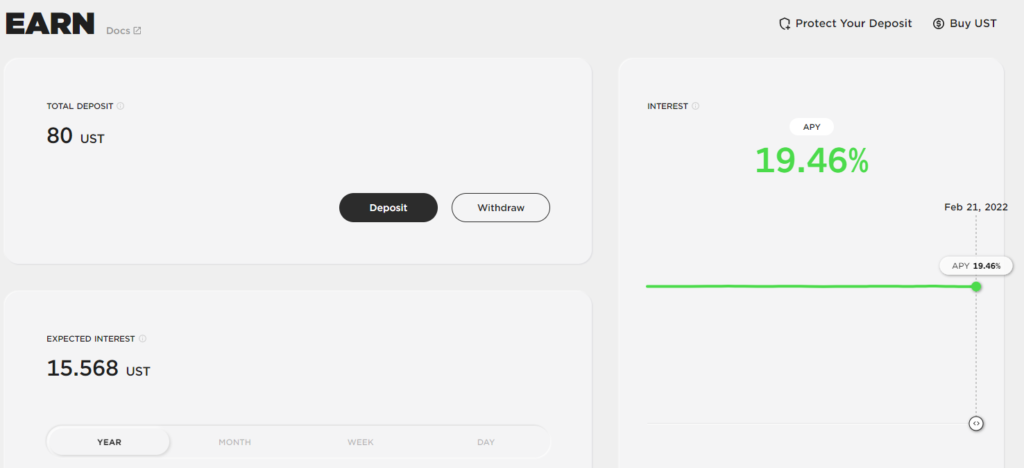
The deposited funds can be withdrawn at any time. For example, if the ANC price falls, you can reduce the LTV by repaying part of the debt.
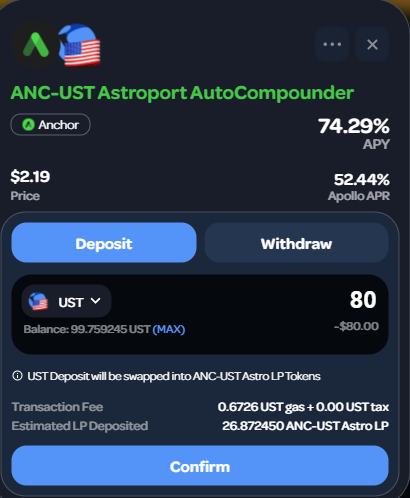
And so, 80 UST remain (excluding some stablecoins required to cover transaction fees). These funds can be placed at a much higher rate on the ApolloDAO platform.
We select the ANC-UST Astro vault, whose yield exceeds 120% (74.29% base APY and 52.44% ApolloDAO rewards).


In summary:
- Funds are allocated to the native Terra token (LUNA), whose value should rise on the back of ecosystem development, price stability and high demand for UST;
- There is a reserve in Anchor in case the value of bLUNA falls;
- If LUNA’s price rises, you can generate more UST to buy additional bLUNA;
- Part of the funds are deployed in ApolloDAO’s high-yield vault (alternatively you could choose a high-APY pool on Spectrum Protocol).
Ape Board makes it easy to track asset portfolios in Terra and other DeFi ecosystems — Ape Board — the DeBank analogue. To start, paste your Terra wallet address into the Address field and click Go.


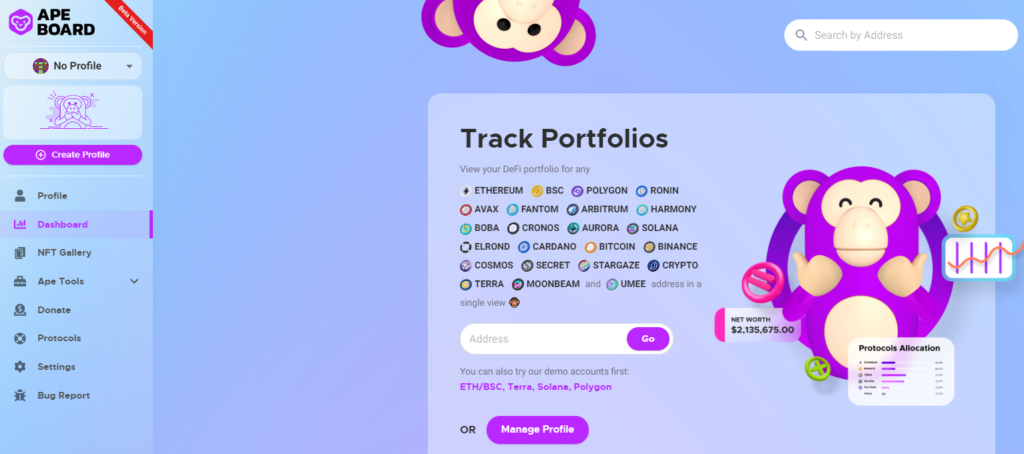
After that, the service calculates total asset value, unclaimed farming and staking rewards, the overall user debt, and presents data by protocol.
Conclusions
Despite rapid growth, the DeFi segment remains in its early stages. The ecosystem landscape is constantly evolving, with new projects emerging and leaders shifting.
When investing in DeFi, it is crucial to remain mindful of multiple risks — potential hacks, smart contract bugs, token price declines, and liquidations due to collateral depreciation.
Inflation in many coins is so high that even the most inviting APY figures are unlikely to offset declines in pool asset values.
When interacting with decentralised applications, it is prudent to focus on relatively liquid tokens whose prices are not near historical highs. This implies using pools with not the highest APR/APY figures.
Whatever the allure of a strategy, one should always thoroughly study its specifics, examine tokenomics and other important aspects.
Subscribe to ForkLog’s YouTube channel at YouTube!