



If you do not trade or have only just started investing in crypto, you probably want a simple exchanger with a good rate. Aggregators help you choose such a service: they collect reviews of trading platforms, check their reliability and rank them by the most favourable rate.
Here is how to use BestChange, one of the most popular aggregator sites, which entered the market before Bitcoin’s white paper — on June 19th 2007.
What a monitor is and how it works
An aggregator (exchanger monitor) is a catalogue of vetted services for swapping cryptocurrencies, electronic money and cash.
“When searching for exchangers on Google, you risk running into scammers. Aggregators solve this problem: they list only reliable platforms and track their performance,” comment BestChange representatives.
It is worth remembering that fraudsters spoof aggregator websites themselves. In a recent article, Web3 researcher Vladimir Menaskop described a phishing link to BestChange in Google.
The team responds promptly to such incidents but urges users to observe basic online safety: avoid advertising links, type site addresses manually and add them to bookmarks.
“BestChange is the leader in its segment, attracting 70% of monitoring users. Our competitors are not only other aggregators but also exchanges, P2P platforms and Telegram bots. All these platforms have their advantages and disadvantages. However, BestChange offers the most balanced solution in terms of security, profitability, speed and simplicity of exchange,” the service’s representatives claim.
BestChange is operated by Agretis LLC, with an office in Dubai (UAE). To be listed on the aggregator, an exchanger must meet the following conditions:
- operate actively for more than six months. The service may approve younger platforms on the recommendation of a major exchange/P2P platform or under the surety of a reliable exchange point;
- hold reserves of more than $10,000;
- offer clear exchange terms;
- provide Russian-language customer support that replies within an hour during business hours.
After listing, the BestChange team monitors user comments and the exchanger’s performance.
Important: the aggregator does not guarantee transactions; it only helps users decide whether to proceed by providing customer reviews and information on rates, reserves and the exchanger’s age.
How to exchange cryptocurrency with BestChange
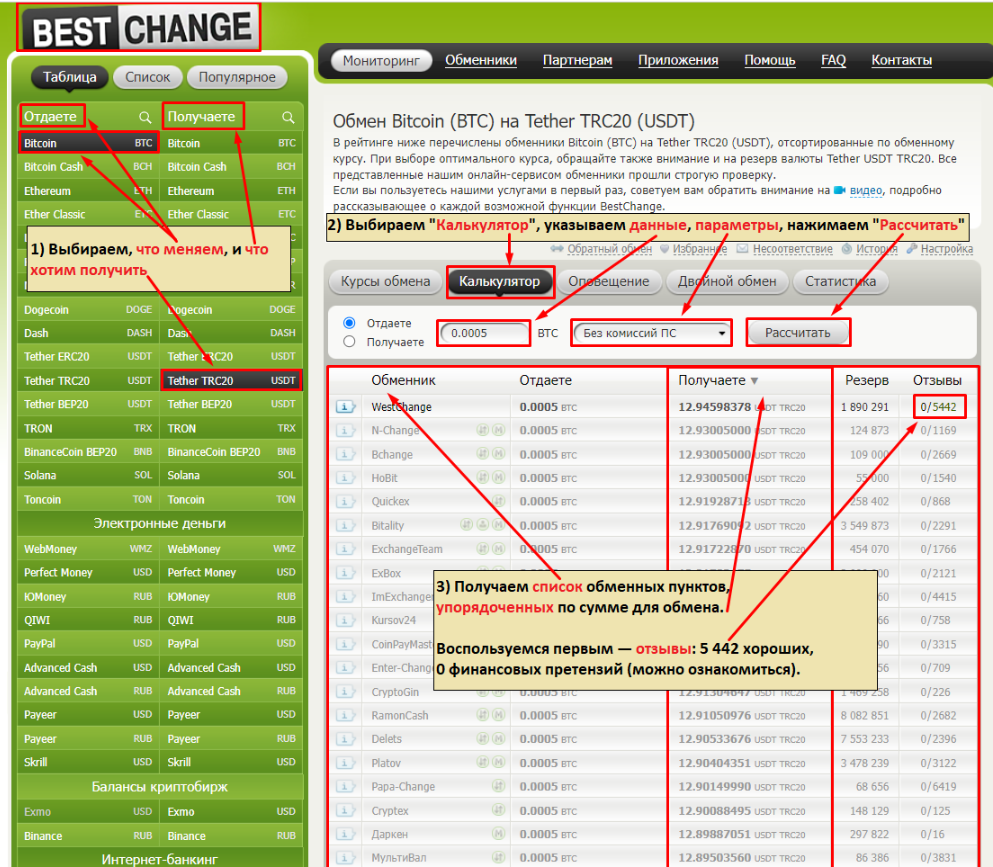
Exchanging crypto online via the aggregator follows this sequence:
- Select a currency pair. Click the currency names on the side panel in the ‘Give’ and ‘Get’ columns.
- Choose an exchanger. The aggregator will offer a list ranked by rate. Before proceeding, check the latest reviews to ensure customers have not faced issues with that exchange point.
- Make the swap. Go to the service and follow the steps. When done, leave a review to help others choose an exchanger.


BestChange also lists offline exchangers for cash deals. In such transactions the rate is not fixed because of the long delay between creating an order and handing over funds.
“The client receives all the information with exchange details so that, if necessary (for example, if exchange rates on exchanges change), they can calculate the exact amount to be received themselves,” the BestChange team comments.
The aggregator also supports a ‘Double exchange’ function for users who cannot find a suitable pair. The service selects an optimal route via a transit currency. For example, if you want to sell bitcoin for cash Moldovan leu, BestChange will suggest a BTC/USDT pair at the best rate and then USDT/MDL.
Putting BestChange to the test
We tested a crypto-to-fiat swap and sold Tether (USDT) for hryvnias.
On the BestChange homepage we chose Tether (BEP20) in the ‘Give’ column and Monobank in the ‘Get’ column.
The service offered more than 40 exchangers. We clicked ‘Calculator’, selected the ‘Give’ option and entered 100 USDT — filtering out exchangers that do not process Tether below that amount.

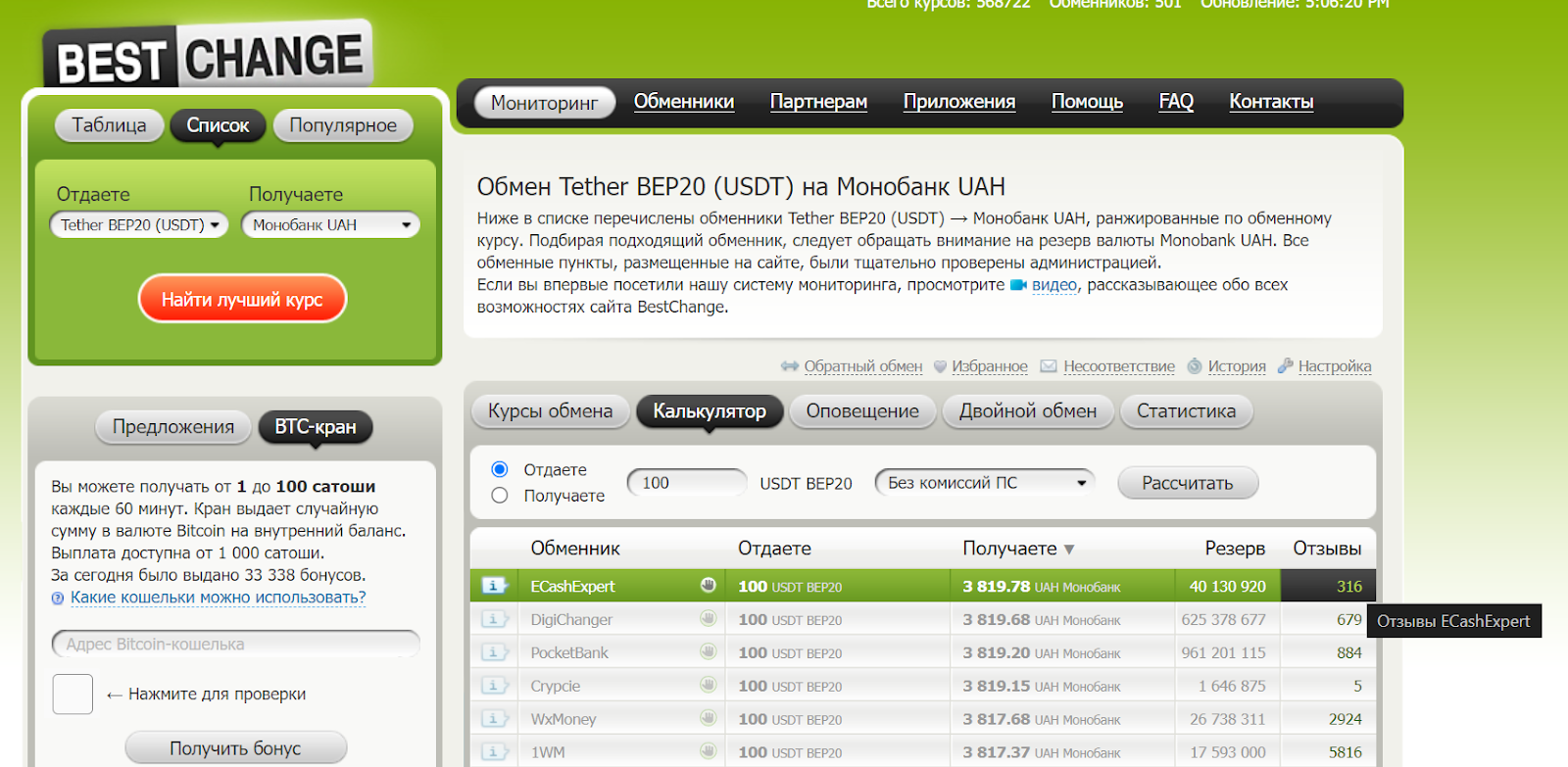
The first service, with the best rate, suited us. We opened the ‘Reviews’ section, checked the key information and saw no red flags.

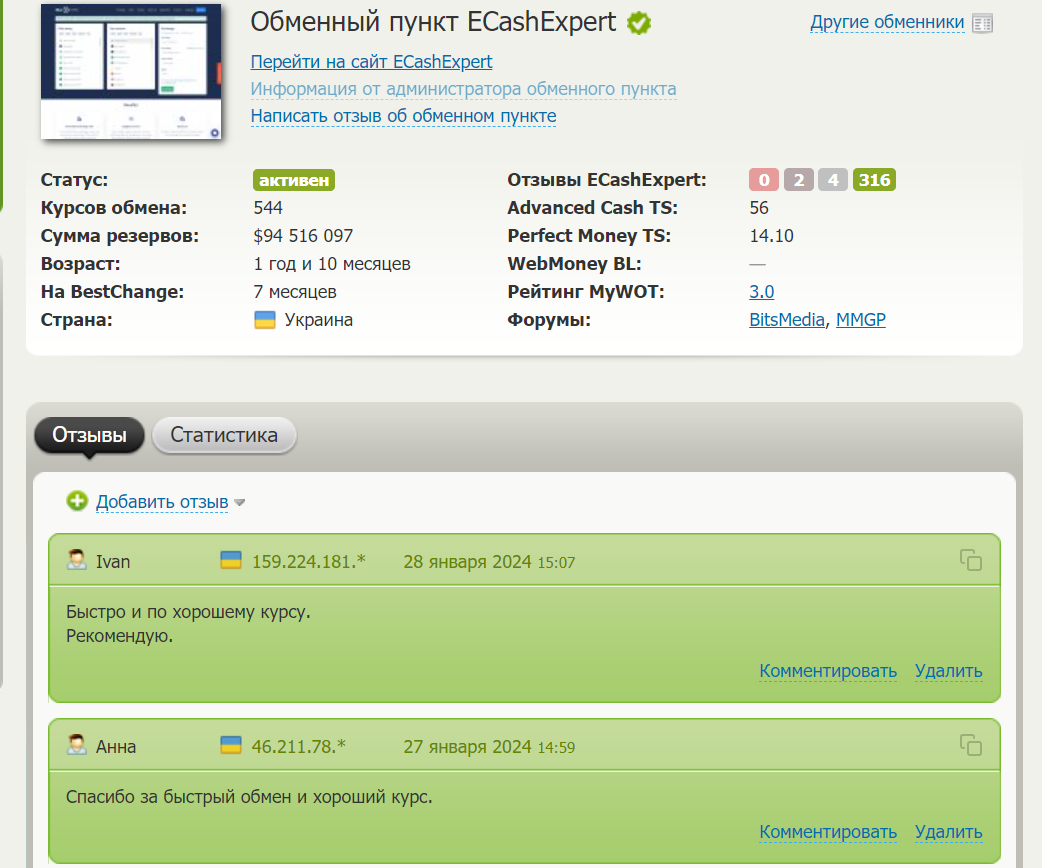
We went to the exchanger’s website — it automatically pre-filled the pair. We entered an email address, the bank-card number and the amount. We accepted the exchange terms and the AML check rules, then clicked “Continue”.

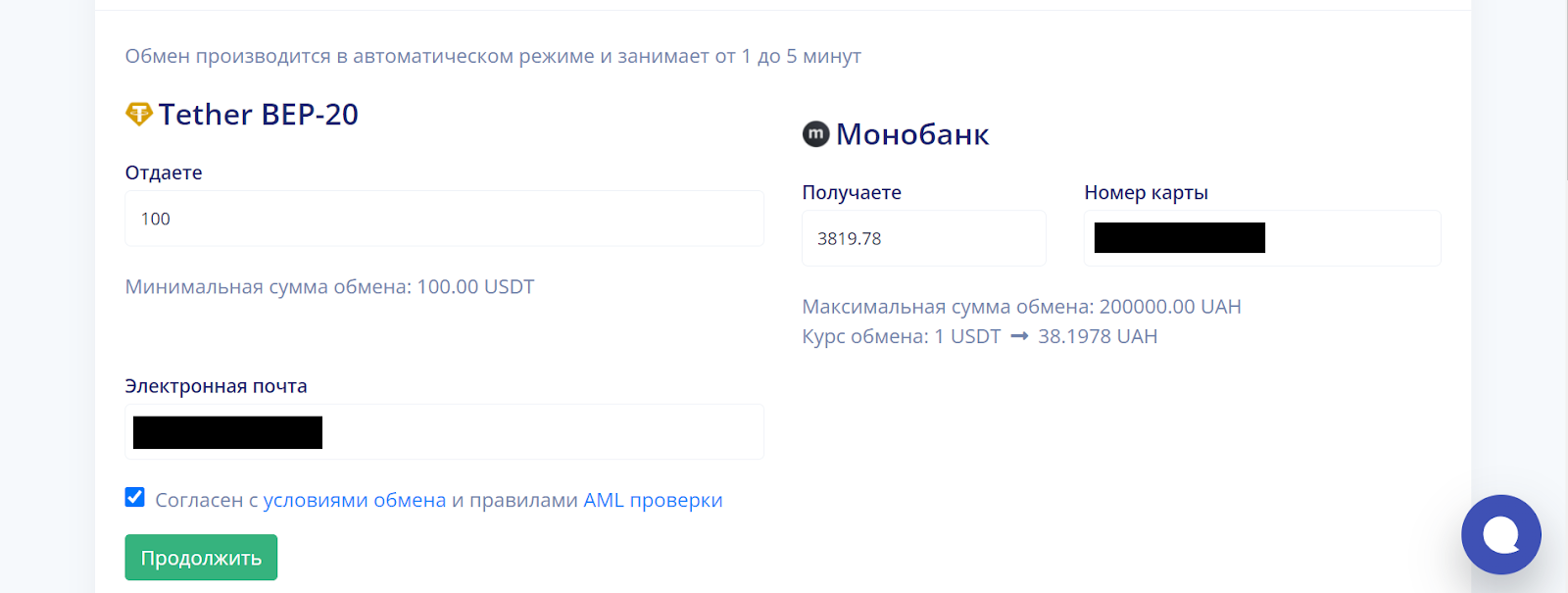
We checked the details, the amount to be received, and clicked “Create order”.
The exchanger provided a USDT deposit address and 30 minutes to pay. We scanned the QR code and sent the funds. The service automatically detected their arrival.
After confirmation in the blockchain, the exchanger notified us of the transfer to the bank card. The hryvnias arrived within three minutes.

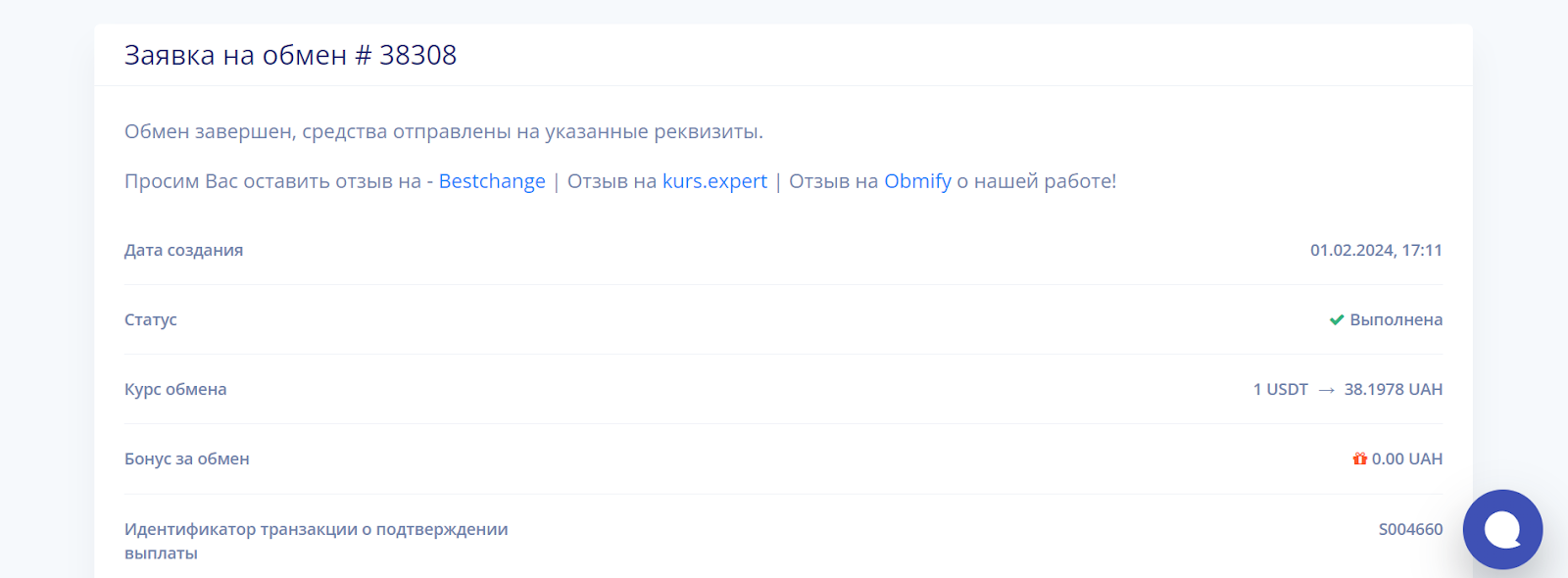
Buying crypto for fiat works the same way. The only difference is that instead of a card number you enter a wallet address, then pay via Visa/Mastercard or another payment system.
If everything went smoothly, you can leave a positive review on BestChange; otherwise leave a comment or a financial claim.
Conclusions
An exchanger aggregator is a starting point for anyone seeking a simple, quick and safe way to sell assets at the market rate.
Clients of such services do not need to grapple with complex exchange interfaces or endure lengthy KYC procedures that all major trading platforms have introduced.
Users can also keep funds in non-custodial wallets and turn to exchangers only when making trades.