




Bitcoin mixers are among the most popular privacy tools. Yet even after a successful mix, many users make choices that undo their anonymisation.
In this piece, together with the team at Mixer.Money, we examine common mistakes and how to avoid them.
Why privacy matters
Without privacy tools, any sender or recipient of your transactions can see your wallet balance. They can also trace flows: where funds came from and to whom you sent them.
Ignoring confidentiality creates direct risks to physical safety. News outlets regularly report cases of kidnapping and extortion involving well-known figures in the crypto industry. Criminals need not rely only on social media: even basic blockchain analysis can reveal holders of large sums, including those who try to stay out of the public eye.
Centralised exchanges may also freeze funds if they see links to suspicious addresses. Users often do not even realise they received “dirty” coins, yet internal checks can still lead to their accounts being blocked.
“You cannot know the full history of the cash you hold. If bitcoin is digital cash, an ordinary user likewise should not be expected to examine the entire chain of transactions after receiving coins. In practice, however, exchanges, due to regulatory demands or their own policies, often block accounts, and dealing with them can drag on for months, if not years,” Mixer.Money notes.
The team adds that trading platforms often freeze funds merely for using anonymisation methods such as CoinJoin. It is therefore important to use solutions that conceal the very fact that a mixer was used.
For example, in the “Full anonymity” mode, Mixer.Money clients receive bitcoins that come from large exchanges, so the risk of encountering tainted assets is absent. Incoming coins are split into random parts and routed through different trading platforms. They return from other exchanges and other investors. In addition to “Full anonymity” there are two more modes:
- “Mixer” — provides basic anonymity, shielding against manual transaction analysis but not advanced on-chain analytics;
- “Exact payment” — lets you send funds to a third party via the mixer. The mode combines anonymisation with real settlement: the seller receives exchange-sourced funds within six hours and cannot trace their origin.
Common post-mixing mistakes
To maintain privacy on Bitcoin it is not enough to use anonymisation services; you must also practise good financial hygiene after mixing. The most common mistakes are:
- consolidating UTXO. For example, you have 0.5 BTC from an exchange and 0.5 BTC after a mixer. To pay 0.7 BTC, you spend both UTXOs in one transaction, linking anonymised coins to your identity. The mix is nullified. Keep KYC and no-KYC bitcoins in separate wallets and do not merge them;
- sending to old addresses. After mixing, you send bitcoins to an address used before the mixer. On-chain analysts link the “clean” coins to their old history. After mixing, use only new addresses. Create a wallet dedicated to anonymised coins;
- ignoring the network layer. If you use a service without Tor and connect from your home IP, that address becomes linked to the fact you used a mixer. Always connect via tools that protect your traffic.
“In short: before using a mixer, create a new wallet for depersonalised funds, set up Tor and prepare several receiving addresses. After mixing, do not merge UTXOs that came from different sources,” Mixer.Money concludes.
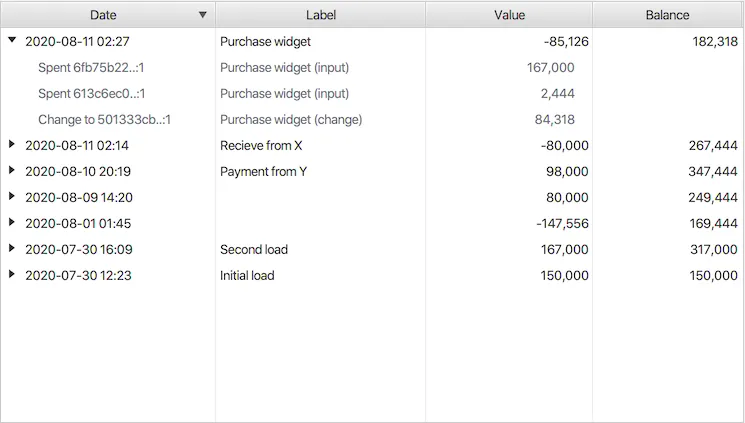
For managing UTXOs, desktop wallets such as Sparrow Wallet or Wasabi Wallet, which work with Ledger, Trezor and other hardware devices, are suitable. These apps let you label every transaction to stay organised and avoid unwanted mixing of funds.


Alternative ways to boost privacy
Some users try to break transaction links via chain-hopping — converting bitcoin into another cryptocurrency (for example, Monero) and then back. But the anonymity achieved depends heavily on the venue and method of exchange, so reliability is limited. Many services also scrutinise operations and accounts that regularly receive privacy coins.
Lightning Network is a second-layer network of payment channels that are not recorded on-chain — only channel openings and closures are visible. This affords greater privacy for small and/or frequent payments than on-chain transactions, but requires basic technical skills to set up and use a wallet.
In July 2024 developers unveiled the Silent Payments protocol. Its goal is to eliminate address reuse. The mechanism automatically generates a new public key for each incoming transaction, preserving a high level of privacy. However, at the time of writing the protocol is supported by only a limited number of wallets and services.
These tools can be combined with bitcoin mixers depending on the use case. For example, receive funds via Silent Payments, periodically pass them through a mixer such as Mixer.Money, and later send small amounts via Lightning Network. If you observe basic security rules, this offers a high level of privacy without sacrificing convenience.