


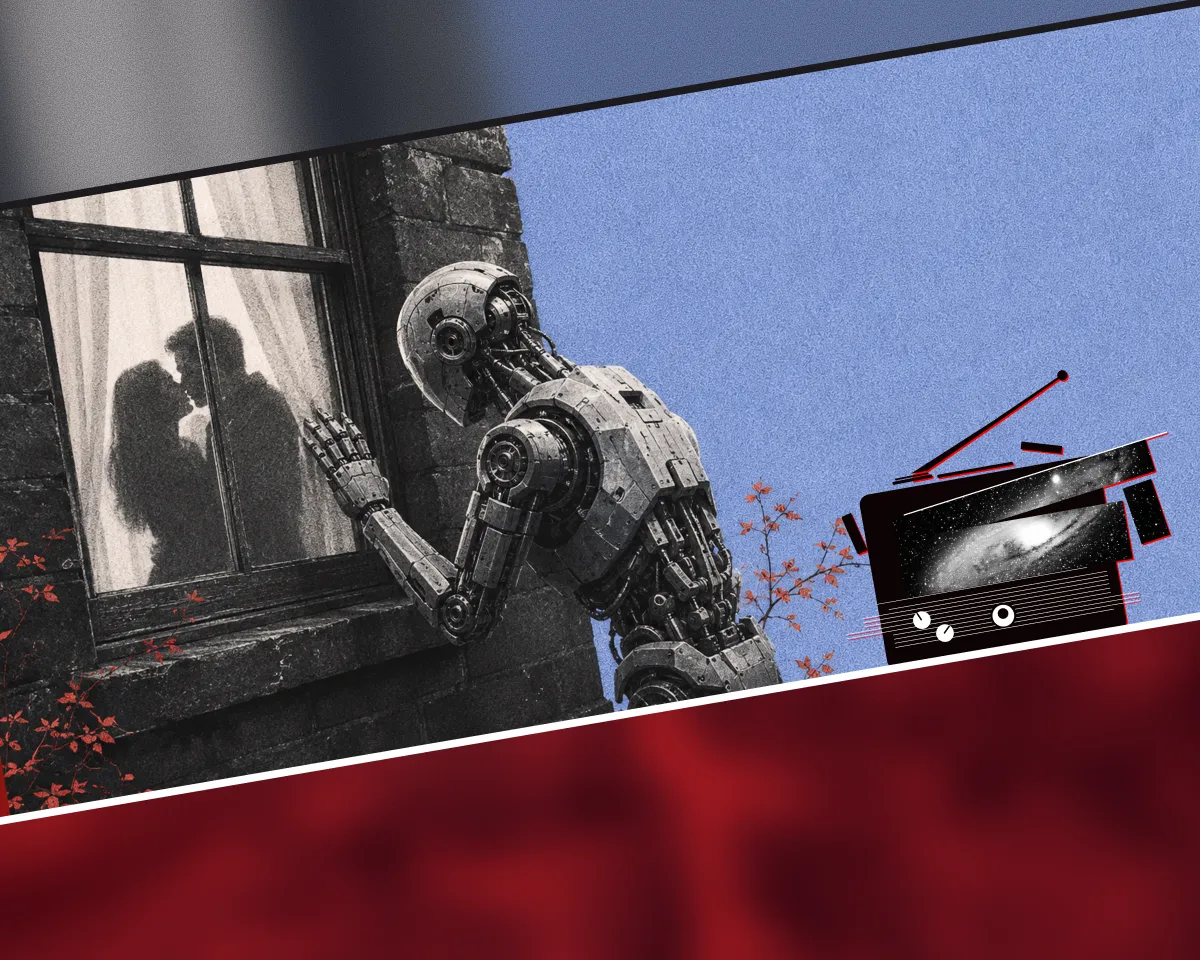
How to Retain Your Identity When AI Takes Over Your Job
Text version of the latest "Deconstruction."
In the past, individuals measured their worth by productivity. The advancement of artificial intelligence has led to the automation of routine tasks and altered business norms, prompting a reevaluation of our existence’s purpose.
ForkLog spoke with JetUp’s COO, Georgy Fomchenkov, about why written code has become a burden, how to prevent neural networks from taking authorship of one’s life, and what the world might look like in 2040.
ForkLog (FL): Georgy, in your essay “The End of the Useful Human”, you state that AI threatens not the individual, but their social role — “the HR department form.” Why is that?
Georgy Fomchenkov (G. F.): The fact is that this “historical contract” and social roles emerged literally a few hundred years ago. Before the industrial era, people defined themselves differently: “I am a father,” “I am a husband,” “I engage in creativity.” There were many facets. Over the past 200 years, we have merged with our professions: “I am a lawyer,” “I am a journalist.” Roles and people became one.
When we say AI will replace us, we mean it will primarily replace these roles. The main question now is: what to do when a person wakes up, there is no work, food is available, but they are deadly bored? If people are not taught from childhood to seek inner meaning, they will find themselves empty and start looking for substitutes.
FL: In your lecture “Programming in the Era of Grey Boxes”, you claim that AI has completely changed the development paradigm.
G. F.: The main shift is that programmers need to adapt to working with a system they do not fully control. This is the “grey box.” Instead of understanding every line of code, a strong engineer today is one who can surround it with the right metrics and tests to prove its safety and functionality.
FL: In large companies, directors are already widely imposing vibe coding on developers, although programmers complain that checking generated code takes more time. What’s the catch?
G. F.: Company management believes neural networks will replace everything right now. But programmers also need to adapt. The main savings today lie not in the speed of writing code but in reducing unnecessary communications.
My team lead saved a lot of time simply because we let go of weak employees, and he no longer needs to spend 40% of his day on calls and mentoring. Minor tasks are now handled by AI.
FL: Modern AI assistants are becoming incredibly empathetic and caring. How can a person not lose “authorship of their own life” when it is so psychologically comfortable to let the machine make decisions?
G. F.: If a child is told from a young age that AI is only a helper and friend, they will grow up to be someone who relies entirely on algorithms and will always choose the easiest path.
AI is like a chainsaw. I enjoy using it to cut wood, but we wouldn’t give a chainsaw to a child, would we? Because they might cut off their leg. AI is a fantastic tool, but it is a tool of increased danger that needs strict regulation. Otherwise, it will simply replace other people and human life itself.
FL: Let’s look into the future. What will an average person’s typical weekday look like in 2040?
G. F.: I think people will wake up and spend two to three hours on some activity. This could be a craft, community service, or teaching — something involving people. The rest of the time will be spent on communication without any agenda and the ability to work with boredom, using it as an opportunity to be alone with oneself.
The future is not about flying cars. It’s about waking up in the morning and enjoying life again.
However, there is one unpleasant nuance. Due to the abundance of very cheap machine intelligence, genuine interaction with a living, intelligent person may become a premium service.
The conversation has been significantly shortened. Watch the full episode:
Subscribe to the podcast:
Рассылки ForkLog: держите руку на пульсе биткоин-индустрии!