



A frenzy has gripped the crypto community over ERC-404, a new standard that has yet to be ratified by the Ethereum community.
The hype erupted in early February with the launch of PANDORA. The experimental token’s price surpassed $20,000 before peaking near $32,000. Interest soon faded and the coin fell to $13,000.
Despite sceptics and volatility, the standard—sharing a name with the internet’s most recognisable error code—is gathering momentum: its market capitalisation is approaching $200m. New coins and even competing technologies are emerging.
ForkLog examined the new standard’s mechanics, prospects and risks.
- ERC-404 “creatively” blends the popular ERC-20 and ERC-721 standards to “create NFTs with native fractionalisation and liquidity”.
- PANDORA and similar tokens are highly volatile.
- Many community members highlight risks inherent in ERC-404 and other untested hybrid standards.
What are ERC-404 tokens?
ERC-404 is an experimental token standard devised by the Pandora team. It combines characteristics of ERC-20 and ERC-721, blurring the line between fungible tokens and NFTs.
“Such hybridisation is aimed at achieving both liquidity and token-native fractionalisation,” noted Datawallet analysts.
ERC-20 is Ethereum’s most popular token standard, used across the ecosystem’s core use cases. ERC-721’s distinguishing feature is non-fungibility.
A quick refresher on existing tokens:
— ERC20: fungible tokens, high supply, no token is unique.
— ERC721: non fungible tokens (aka NFT), normally low supply, each token has a unique id.
— ERC1155: semi fungible tokens, there can be multiple tokens with the same token id.— cygaar (@0xCygaar) February 8, 2024
“ERC-404 seeks to integrate these functions into a single framework. This integration opens new token use cases and adds flexibility, particularly in DeFi and NFTs,” the Datawallet experts explained.
Mocaverse adviser cygaar described the new standard in plain terms across several X posts:
Let’s say we have an ERC721 NFT contract called Fantastic Figs.
When you mint a Fig, your balance goes from 0 to 1. When you transfer your Fig to someone else, your balance goes to 0. You can’t trade fractional parts of each NFT, it has to be whole tokens.
Very straightforward. pic.twitter.com/brgbWHsNVm
— cygaar (@0xCygaar) February 8, 2024
“Suppose you have an ERC-721 NFT contract called ‘Fantastic Fig’. When you mint a fig, your balance increases from 0 to 1. When you transfer a fig to someone else, your balance becomes zero. You cannot trade fractional parts of each NFT; these must be whole tokens.”
Now let’s pretend our Figs are an ERC404 token.
The fig contract now has a base unit like an ERC20 token. For this example, let’s assume a base unit of 100 (in reality it’ll be something like 10^18).
Now if I mint a Fig NFT, my balance will be 100 instead of 1.
— cygaar (@0xCygaar) February 8, 2024
“Now let’s imagine our fig is an ERC-404 token. The contract now has a base unit like an ERC-20 token. For this example, assume a base unit of 100 (in reality it will be something like 10^18). Now, if I mint a fig NFT, my balance will be 100 instead of 1.”
So far, not that different from before. But this is where it gets interesting.
You can actually trade fractions of your NFT around.
I can transfer 20 Fig NFT fractions to someone else. My balance will now be 80. However, because my balance is less than 100, I will lose the NFT. pic.twitter.com/t2p33XQqMc
— cygaar (@0xCygaar) February 8, 2024
“So far, that’s not much different from the previous way. But here it gets interesting. You can actually trade pieces of your NFT. I can transfer 20 fig-NFT pieces to someone else. My balance will now be 80. But because my balance is less than 100, I will lose the NFT.”
In order to own an NFT, you need to have at least 1 base unit (100 in our case) fractions.
You can calculate the NFT balance of an address by doing floor(balanceOf[address] / baseUnits).
If we had 138 fractions, we’d have 1 NFT. 199 fractions is also 1 NFT. 200 units = 2 NFTs.
— cygaar (@0xCygaar) February 8, 2024
“To own an NFT, you must hold at least one base unit (100 in our case). […] With 138 pieces, we would have 1 NFT. 199 pieces is also 1 NFT. 200 pieces = 2 NFTs.”
Any time an NFT or fractions are traded, the ERC404 contract will check to burn or mint NFTs.
Because there are multiple different balances and ownerships stored in ERC404, each transfer ends up being around 125k gas, which is more than double a standard NFT transfer.
— cygaar (@0xCygaar) February 8, 2024
“Each time NFTs or fractions are traded, the ERC-404 contract checks whether to burn or mint non-fungible tokens. Because ERC-404 stores multiple balances and ownerships, each transfer ends up costing 125,000 gas, more than twice a standard NFT transfer.”
On February 9th, amid the frenzy around the new assets, Ethereum gas fees hit an eight-month high. The average reached 70 Gwei (~$60 for a standard transaction) that day, with a peak of 377 Gwei.
Activity was driven by heavy trading volumes generated by Pandora, DeFrogs and several other ERC-404 projects on decentralised exchanges.
Let’s talk about what this standard brings to the table.
There is a nice aspect of built in fractionalization. You can essentially trade this as both an ERC20 and ERC721 which is novel (large wicks are full NFT trades).
I respect anyone willing to experiment in this space. pic.twitter.com/gVee71mJME
— cygaar (@0xCygaar) February 8, 2024
“You can, in essence, trade this as ERC-20 and ERC-21, which is innovative,” emphasised cygaar.
According to William Peaster of Bankless, ERC-404 “creatively mixes” familiar standards to “create NFTs with native fractionalisation and liquidity”.
“We’ve seen NFT fractionalisation protocols in which you can lock non-fungible tokens and effectively issue shares against that collateral. In turn, ERC-404 is intended for fractionalisation in NFT projects that implement this standard. This opens new avenues for NFT experimentation and trading.”
Thus, the basic ERC-404 design links an ERC-20 token and an ERC-721 asset.
“ERC-20 represents the ERC-721 token and vice versa. Although both standards are isolated, they intersect at the point of transaction. For example, an ERC-404 token mints ERC-721, and the ERC-20 token is tied to the NFT. This means the holder of an ERC-721 token also owns an equivalent amount of ERC-20 assets,” noted CoinGecko analyst Joel Agbo.
A key component is the mint-and-burn mechanism that ensures ERC-721 non-fungibility. The ERC-20 represents an NFT only when it amounts to a whole token. If a whole token is sent in parts, the NFT is burned. When two complementary fractions (say, 0.3 and 0.7) are combined, an NFT is minted—developers say it is a new token.
“For some ERC-404 projects, a new NFT is created randomly and can have variable attributes. So instead of the original NFT, a rarer token may be minted, or the opposite,” Agbo stressed.
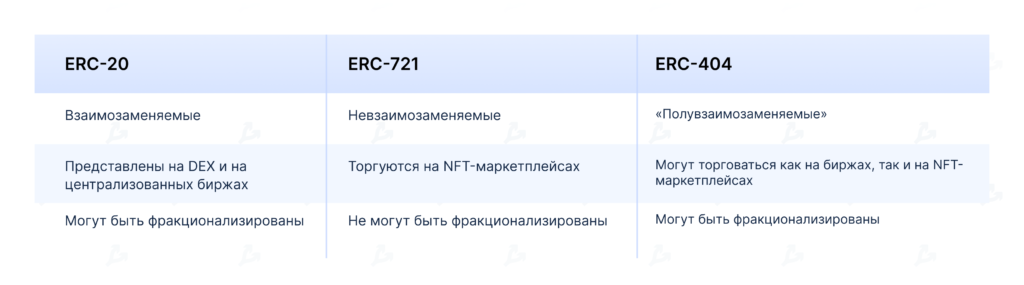
The table below compares the three standards:


What is Pandora?
Pandora is the first crypto project built on ERC-404. The latter was unveiled on February 2nd.
Development of the “ERC404” token standard is complete.
Moving on to testing ?
— Pandora (@Pandora_ERC404) February 2, 2024
The supply of PANDORA totals 10,000 coins and, accordingly, 10,000 “NFT replicants”. On its first day on Uniswap, trading volume topped $10m within hours.
Anonymous developers ctrl and Acme are behind the experimental standard. They said the team is “working around the clock” to register an EIP:
“It is a long process, there is lots of politics […] It usually takes a couple of weeks.”
In their words, securing approval for such an initiative is “one of the most bureaucratic things imaginable”.
“If you buy one full PANDORA token on an exchange, one ‘NFT replicant’ will appear in your wallet. If you sell one PANDORA token, the associated NFT is burned,” explained William Peaster.
He added that each time a user’s wallet mints a “NFT replicant”, it has a “unique rarity”. The most common tokens are green; the rarest are red.
“Accordingly, you can swap PANDORA tokens to ‘reroll’ the rarities of the replicants you receive,” the Bankless analyst emphasised.
Because ERC-404 is experimental and not yet endorsed by the Ethereum community, many platforms have not added support. PANDORA already trades on a number of DEX such as Uniswap and on NFT marketplaces like Blur and OpenSea.


Roughly ~5,500 Pandora NFTs have been issued, and the number of coin holders was just over 1,400 as of February 18th.


The Pandora team recently presented the “ERC404 V2.1” update.
Many of you guys have been asking about optimization for ERC404 and how we plan on scaling and improving on the standard, so we thought we’d share some preliminary test results!
The following is still in development, so the numbers on release may look a little bit different -… pic.twitter.com/dfr2A0CrUr
— Pandora (@Pandora_ERC404) February 13, 2024
The upgrade promises meaningful gas optimisation when interacting with the tokens.
When PANDORA crossed $30,000, its market capitalisation exceeded $300m. At the time of writing (February 18th), these figures are $12,098 and $120.7m, respectively. The floor price of a “NFT replicant” is 5.9 ETH.
What other “404 projects” exist?
DeFrogs
DeFrogs is among the first tokens issued on ERC-404. The project positions itself as an improved version of Pandora’s implementation.


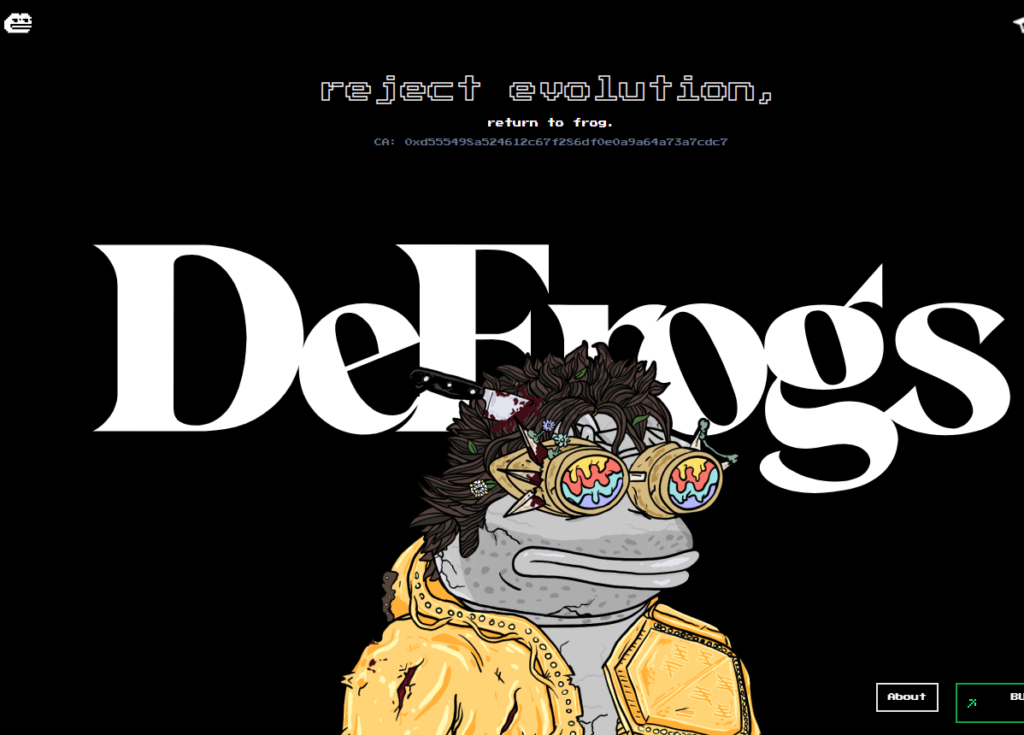
DeFrogs supply is also capped at 10,000 tokens featuring cartoon frogs.
The coins first traded on Uniswap, with 80% of the supply seeded to the liquidity pool.
At the time of writing (February 18th) the collection’s floor price is 1.35 ETH. On February 9th the token’s price hit a $3,930 high.
EtherRock404
The EtherRock NFT collection comprises 100 images of rocks and tokens tradable on exchanges.


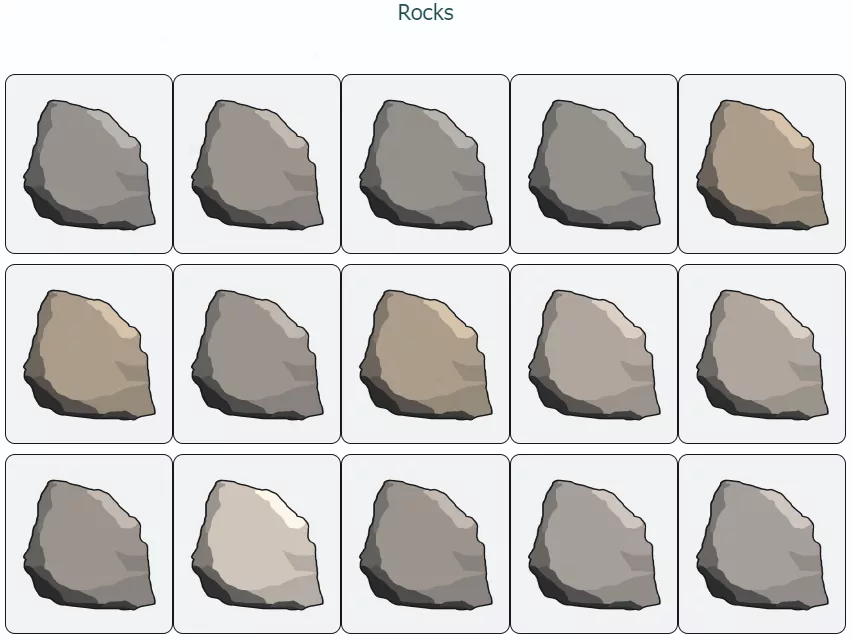
The project’s token began trading on February 7th on Uniswap under the ticker ROCK.
EtherRock404
Ticker: $ROCK
Max Supply: 100
CA: 0xB5C457dDB4cE3312a6C5a2b056a1652bd542a208
?
— EtherRock404 ? (@EtherRock404) February 7, 2024
On February 8th a price peak was recorded at $71,195. At the time of writing (February 18th) the token trades at $2,643.
The developers describe their creation as a project with “zero value”, whose sole purpose is buying and selling tokens. With each purchase of EtherRock404, a corresponding NFT is minted.
A critical view
As noted earlier, interacting with ERC-404 tokens is considerably more expensive than with standard NFTs.
Solidity developer and auditor Quit pointed to the “very expensive maintenance” of the function that mimics ERC721Enumerable, which lists all tokens owned by an account.
According to him, an NFT transfer from the Azuki collection costs around 45,000 Gwei, whereas transferring a PANDORA token exceeds 100,000 Gwei.
“[In ERC-404] a transaction burns/mints NFTs in accordance with changes in the sender/recipient balances. When recording an asset, we need the list of non-fungible tokens owned by the sender,” Quit explained of the high gas use.
According to the GitHub page, ERC-404 is experimental and the two combined standards “are not intended to be mixed”. The developers nevertheless seek to combine them “as robustly as possible while minimising trade-offs”.
After a detailed review, Quit highlighted the risk of an exploit. By his analysis, NFTs using ERC-404 could be stolen by holders of ERC-404 fungible tokens.
This would be feasible if an NFT were deposited into a lending protocol not correctly configured for the new standard.
“I fully expect to see this exploit at some point if ERC-404 remains popular. […] The lesson is that we should not overload existing function signatures with new, hidden and unintuitive mechanics,” said Quit.
As noted, ERC-404 has not been approved by the Ethereum Foundation or the community, and the official EIP page was unavailable at the time of writing.
An unknown user who made about $1.1m on PANDORA on February 11th lost more than $100,000 on a new token using the experimental standard.
On February 13th a risk-seeking trader bought the ERC-404 token No for 10 ETH, paying a 42.88 ETH ($113,672) fee. However, during execution an error occurred and the trader lost all funds.
According to HAPI experts, the issue may have been caused by either a code-level bug or the token’s fraudulent nature.
“Over the 45 days of its existence the contract executed only six successful transactions out of 602. There is no information about this contract on Etherscan — it has not been verified,” they told ForkLog.
On February 14th the developers of MINER, built on the experimental ERC-X standard, reported an exploit of their smart contract that resulted in losses.
They said a number of other contracts faced a similar attack, notably DN-404. The latter was created with the involvement of the aforementioned developer Quit. The new standard is positioned as an iteration of the ERC-404 idea without the discovered vulnerabilities.
The MINER team strongly urged users not to buy the token until the problem is fixed. Following the attack, the coin’s price plunged 60%.
An internal investigation found a double-accounting bug in the internal transfer function. It allowed the attacker to repeatedly send tokens to themselves, doubling the balance on each iteration. The coins were then sold on Uniswap.
MINER is a collection of 100,000 avatars tied to the first tokens created on the experimental ERC-X standard. It combines characteristics of ERC-20, ERC-404, ERC-721, ERC-721A, ERC-721Psi, ERC-1155 and ERC-1155Delta.
On February 18th the MINER team announced a relaunch and a tenfold reduction in supply—to 10,000 tokens.
2/ We have decided to change the total supply of $MINER to 10,000 tokens. Consequently, your token balance will automatically become 1/10th of what you previously held. However, the dollar value of your tokens will remain unchanged.
— Miner (@minerercx) February 18, 2024
“Innovation is important, but the risks of integrating unaudited and potentially imperfect systems into projects can pose a threat to the Ethereum ecosystem,” emphasised William Peaster.
Conclusions
Pandora is an intriguing implementation of an experimental standard. Its code is not without flaws, and interacting with ERC-404 tokens is expensive.
Even so, the developers have proposed a “native” approach to NFT fractionalisation at the smart-contract level—an innovation that has opened the door to further experiments.
Competing solutions aiming to address ERC-404’s shortcomings are already appearing. Expect new collections, a widening array of exotic standards, integrations and airdrops.
ERC-404 has not undergone an audit and is not recognised by the Ethereum community. Many shortcomings are likely yet to be found. Curious users should remember the risks when dabbling in “hot”, highly volatile tokens.