




IBM plans to create the world’s first large-scale fault-tolerant quantum computer, the IBM Quantum Starling, by 2029. This announcement was made in the company’s updated roadmap.


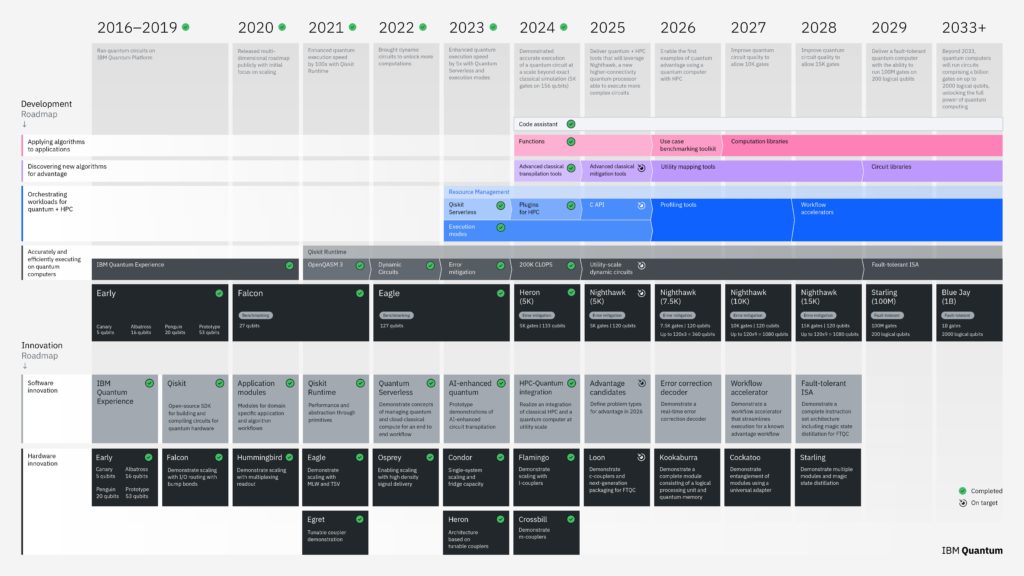
The technology will be capable of performing 100 million quantum operations using 200 error-resistant qubits. The computer will be housed at IBM’s data center in Poughkeepsie, New York.
IBM’s approach to fault tolerance is based on correcting erroneous computations. Quantum systems are extremely sensitive to noise and decoherence—environmental fluctuations that can disrupt qubit operations almost instantaneously.
Thus, the Quantum Starling is equipped with a real-time error correction decoder capable of operating on user-programmable gate arrays (FPGA) or application-specific integrated circuits (ASIC), allowing immediate response to errors before they escalate.
The company’s solution employs Bivariate Bicycle, a type of quantum code with low-density parity checks, which reduces the number of physical qubits needed for calculations by 90%.
Benefits and Threats
Professor David Bader of the New Jersey Institute of Technology views fault tolerance as the foundation for practical quantum computing and a potential threat to current cryptographic systems.
“Fault tolerance is really aimed at making these quantum computers less fragile and less error-prone. It’s a key technology needed to scale from a few qubits to the number we expect to need for real applications, which could be tens of thousands or millions of qubits,” he noted.
Rosa Di Felice, Technical Director of the IBM Center for Quantum Innovation at the University of Southern California, stated that the new processor “simplifies the complex computations needed to understand how molecules and materials behave.”
In her view, the advancement of this technology could lead to breakthroughs in accelerating chemical reactions, developing new drugs, and improving corrosion resistance.
Regarding concerns about the security of cryptographic algorithms, Bader stated that IBM’s development could pose a threat and emphasized the importance of blockchain developers transitioning to quantum-resistant encryption.
“A powerful quantum computer capable of running Shor’s algorithm will not appear for several years. Blockchains won’t suddenly break in 2029, but it’s something to watch,” the expert concluded.
Back in March 2025, Casa co-founder Jameson Lopp spoke out against recovering lost bitcoins using quantum computing and suggested they be destroyed.