




The introduction of restaking protocols EigenLayer and LRT has increased the share of ETH in staking to 26% of the total supply. Glassnode examined how this trend could affect Ethereum’s role as a monetary asset.
Analysts recorded a rise in the total number of coins staked to 31.4 million ETH (as of April 13).


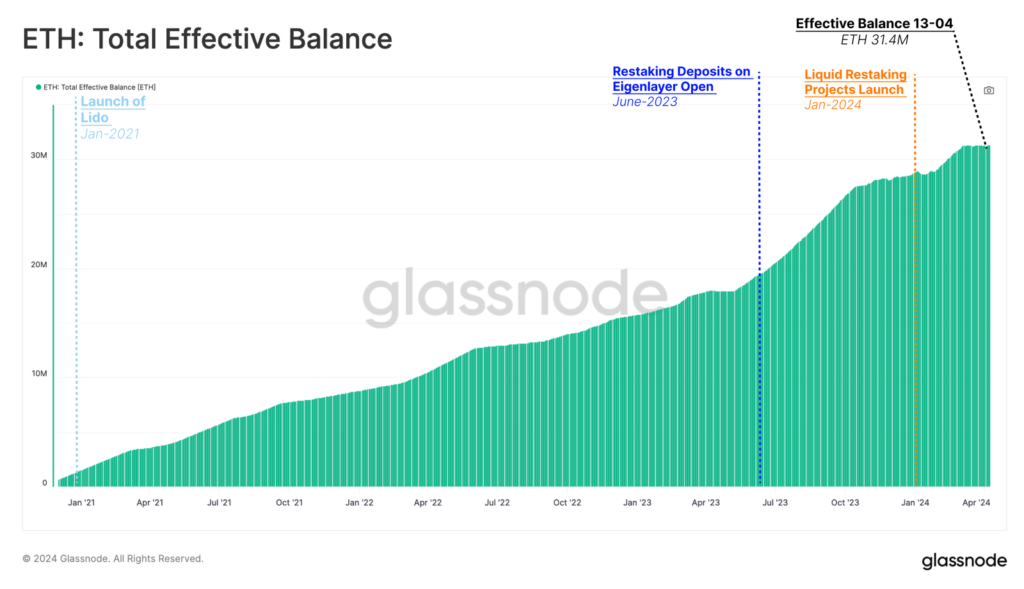
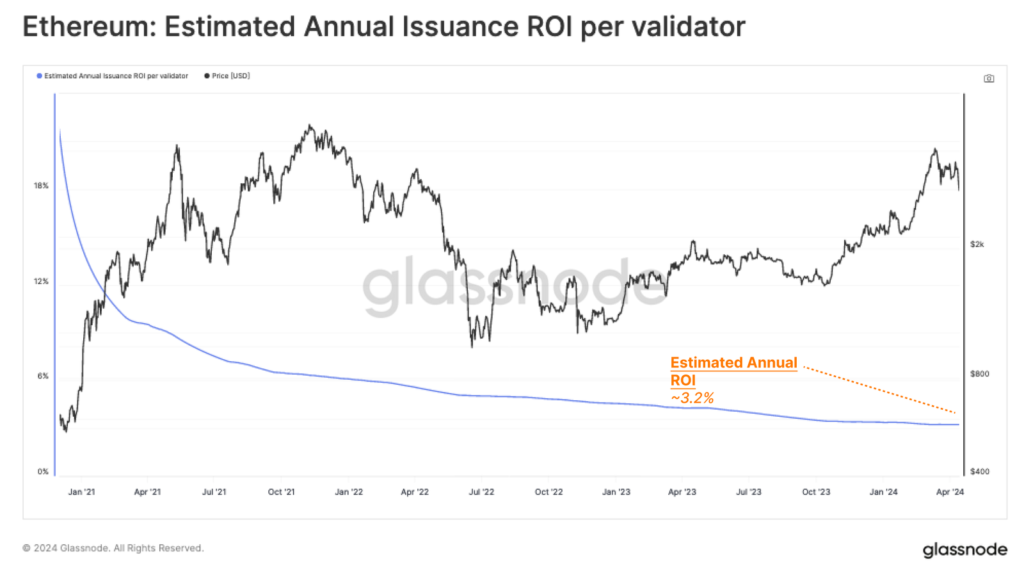
As a result of the metric increase, the reward rate for securing the network per validator has dropped to 3.2% annually.


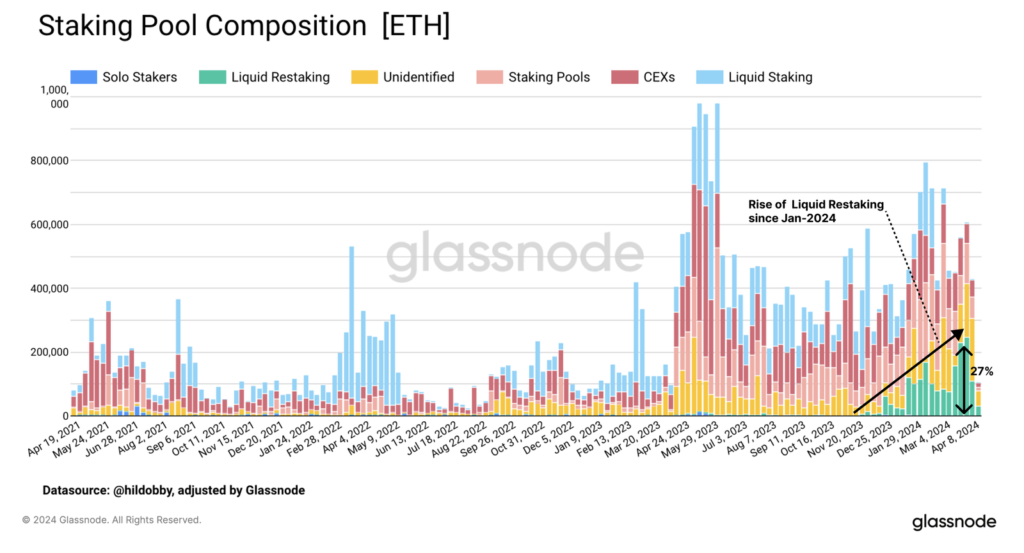
Innovations such as MEV, liquid staking, restaking, and liquid restaking have increased staking demands beyond the original intent, according to experts.
Liquid restaking protocols now account for 27% of coins sent to the deposit contract.


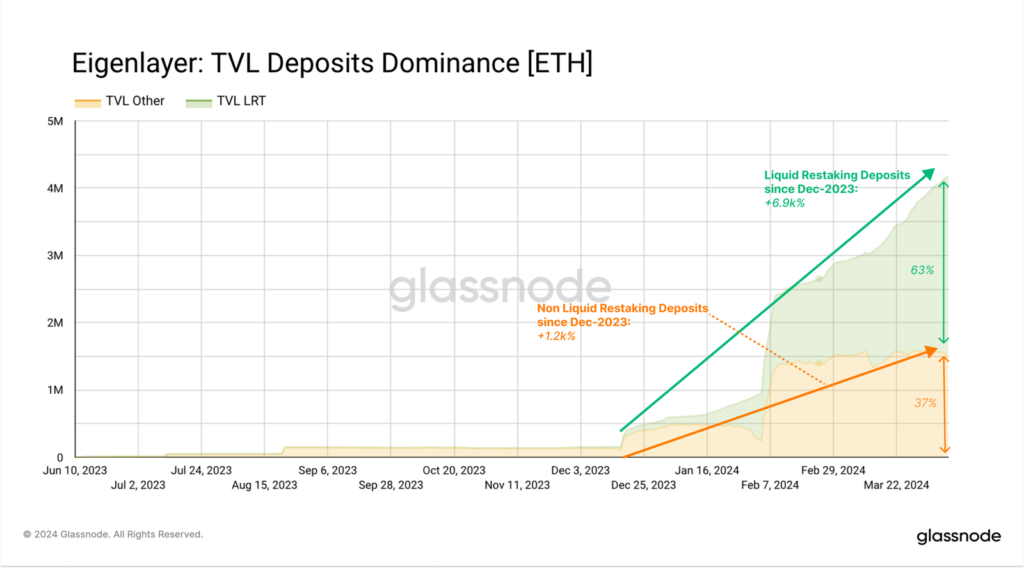
The TVL of EigenLayer has risen to 14.2 million ETH (~$13 billion). This high demand for restaking is also partly due to the anticipation of an airdrop, Glassnode noted.
Over 61.1% of this amount is in ETH. The remainder consists of LST like stETH from Lido (21.6% of the project’s total TVL).
According to DeFiLlama, the total value locked in EigenLayer is $12.6 billion, while Lido’s is $29.06 billion. The projects rank second and first, respectively.


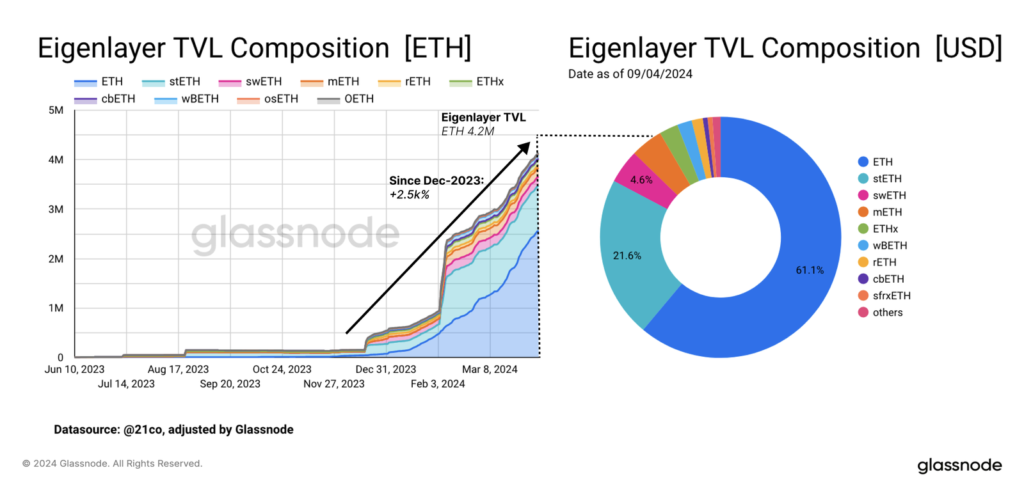
63% of the assets entering EigenLayer were redirected from LRT projects.


Researchers from the Ethereum Foundation expressed concerns about the growth rate of coins in staking.
Although more ETH leads to reduced rewards per validator, the total amount of rewards paid out could still contribute to inflation, provided a significant number of assets are locked.
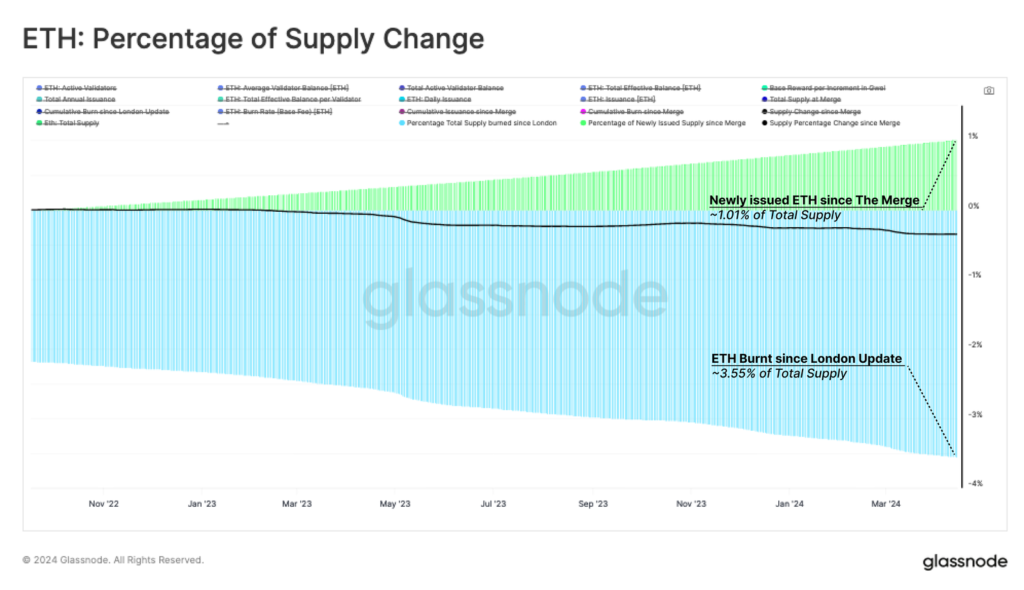
Following The Merge, the share of new coins in Ethereum’s total supply reached 1.01%. During this period, about 3.55% of ETH was removed from circulation.


As ETH in staking increases, inflation’s impact begins to affect fewer asset holders. In other words, wealth is transferred to participants who generate additional yield from securing the network.
Over time, this component of “real yield” may make holding ETH less attractive and undermine Ethereum’s function as a monetary asset within the Ethereum ecosystem, specialists indicated.
Instead, the role of “money” may shift to LST like stETH or even to LRT as a higher-yielding instrument. A side effect will be the excessive influence of such projects on Ethereum’s consensus and execution levels.
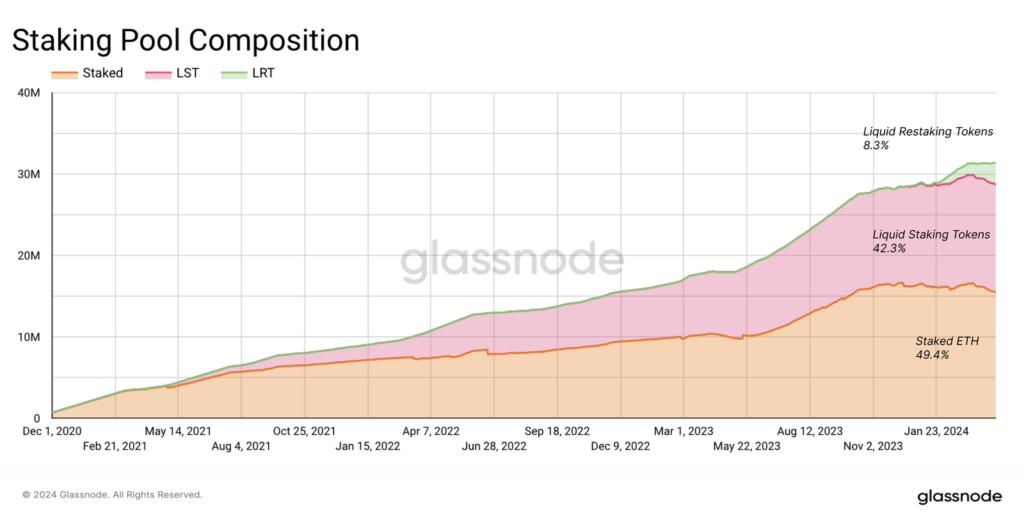
Currently, more than half of ETH in staking is associated with LST (42.3%) and LRT (8.3%).


The Ethereum Foundation proposed to limit and curb annual issuance to reduce the influx of new staking participants. The community criticized this initiative, specialists noted.
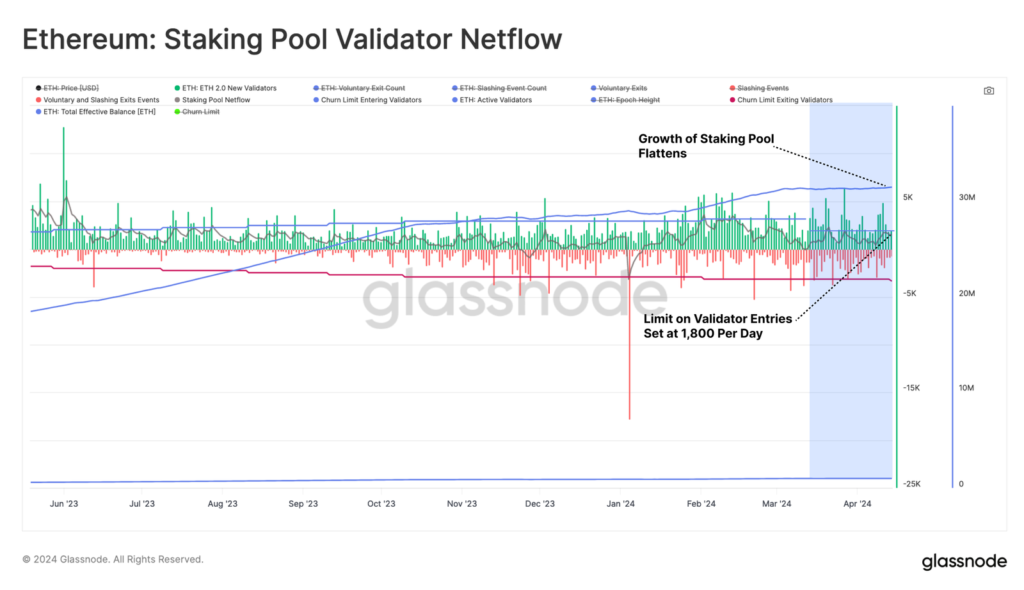
Experts reminded that Dencun set a fixed limit for new validators (eight per epoch of 6.4 minutes) to slow their growth rate.
Before the update, the inflow/outflow of validators from the staking pool was regulated by an exit limit. The innovation is another step towards specifying the growth rate of the total number of active validators. This will help reduce the side effect of slowing down node interaction.
On April 10, developers launched EigenLayer and its data availability layer EigenDA (in beta version) on the Ethereum mainnet.