


In Satoshi’s spirit: a review of SHKeeper, a non-custodial crypto processor
Users of bitcoin and other cryptocurrencies can fully control their funds, including via non-custodial wallets. Yet to accept payments in digital assets, businesses typically rely on third-party services.
This article looks at the open-source crypto processor SHKeeper, which makes it possible to accept and store cryptocurrencies without fees, intermediaries or KYC.
What is SHKeeper?
SHKeeper is a non-custodial crypto processor that combines a merchant module with a gateway for receiving payments in various digital currencies.
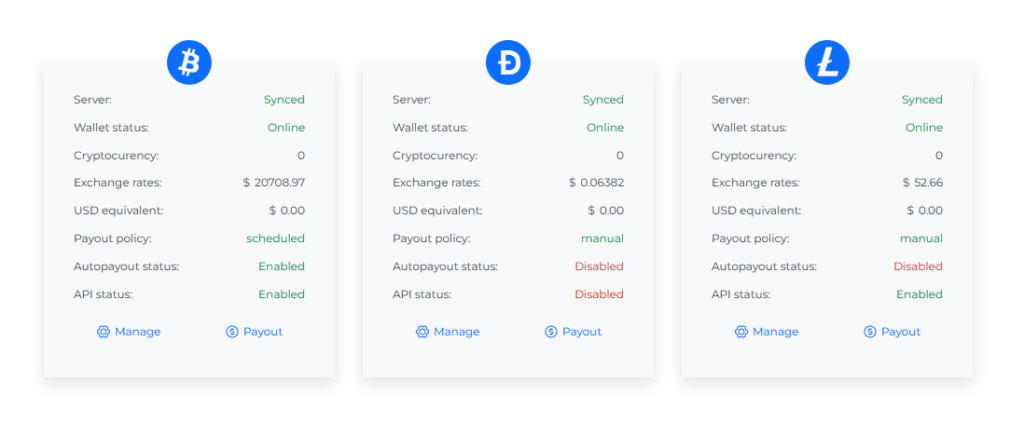
Support for the service is provided by the hosting provider Virtual Systems, which has operated since 2009. The team presented the first version of SHKeeper in January 2022. At launch, the processor offered a direct way to receive payments in bitcoin (BTC), Litecoin (LTC) and Dogecoin (DOGE).
Over time SHKeeper added Ethereum (ETH), Monero (XMR), Tron (TRX), Polygon (MATIC), Avalanche (AVAX), XRP, BNB, as well as the stablecoins USDT and USDC. In the near future, the team will add support for Solana (SOL) and Toncoin (TON).
How does SHKeeper work?
SHKeeper is a self-hosted solution that can be installed on your own servers without granting access to anyone else. It operates as standalone software.
“It is important to understand which system you are using. Depending on it, you can use the API documentation for integration, or write a module yourself,” the service’s representatives note.
The SHKeeper team has posted on GitHub ready-made modules for WordPress/WooCommerce, WHMCS, PrestaShop, OpenCart and Magento. The processor can also be integrated with popular CMS and plugins, your own code or product.
SHKeeper works by generating and monitoring unique crypto addresses for each invoice.
“It is crucial that you have your own system—be it a CRM, back-office software, an online store or a similar platform—that will handle interactions with your customers and create invoices,” the SHKeeper developers explain.
After an invoice is generated and a cryptocurrency is selected, the system makes an API call to the gateway. In turn, SHKeeper provides a unique address together with the exact amount due. The service constantly monitors this address; once funds arrive, it triggers a callback API to confirm the transaction.
“SHKeeper is a self-hosting-only solution. No third party processes payments or charges transaction fees. Standard blockchain fees apply to incoming and outgoing payments.
Our processor has an intuitive UX: payment buttons are quite easy to embed on many resources. If this causes difficulties, we will always respond and explain how to do it,” the SHKeeper team comments.
For tokens such as USDT or USDC, you must maintain a balance in the network’s native currency. The service uses these funds to cover transaction fees.
Users of SHKeeper can charge fixed amounts or a percentage of their customers’ payments. The processor also allows you to:
- set up automatic withdrawals of digital assets to a cold wallet based on a period (for example, monthly) or accumulated amount;
- accept payments from clients anonymously without KYC;
- credit any overpayment to the balance with a notification to the SHKeeper user;
- make partial payments.
What do you need to use SHKeeper?
To deploy the crypto processor you need to:
- define the list of digital assets you will accept; depending on the number of coins, choose a server with suitable parameters. The service offers the ability to host full nodes or use SHKeeper’s nodes for free;
- configure the server yourself following the instructions, or contact the SHKeeper team for assistance. Clients can choose from three integration options. In addition, you can test a demo version of SHKeeper before installation (login: admin, password: admin);
- create passwords and configure SHKeeper; embed SHKeeper into your project. As mentioned above, free modules for WooCommerce/WordPress, WHMCS, PrestaShop, OpenCart and Magento are available on GitHub.
On first launch, SHKeeper will synchronise with the blockchains. If you install your own full nodes, the process may take additional time.
Conclusions
SHKeeper is a non-custodial solution that gives online businesses an autonomous module for accepting payments in ten cryptocurrencies, as well as the USDT and USDC stablecoins.
Clients can add crypto payments and tailor them to their needs—independently or with the help of the SHKeeper team. They are not dependent on third-party providers and pay no additional fees.
Рассылки ForkLog: держите руку на пульсе биткоин-индустрии!