



In recent weeks, a new wave of applications for spot ETF based on the first cryptocurrency has swept the market. Requests to the U.S. Securities and Exchange Commission (SEC) have been sent by financial giants BlackRock, Valkyrie, Fidelity Investments, WisdomTree and Invesco. ForkLog and consulted experts explain the significance of this eagerly awaited investment instrument.
Where it all began
Various ETFs for bonds, currencies worldwide, gold, real estate and oil have been available for decades. The most well-known example is the SPDR S&P 500 ETF Trust, which tracks the S&P 500 index.
However, many exchange-traded Bitcoin funds have been rejected for years. In 2021 the SEC did approve applications for ProShares and VanEck for a futures-based Bitcoin ETF, but spot instruments have yet to receive the green light.
The ProShares Bitcoin ETF began trading on the New York Stock Exchange on October 18, and less than a month later the price of the first cryptocurrency reached a historic high at $69,000.
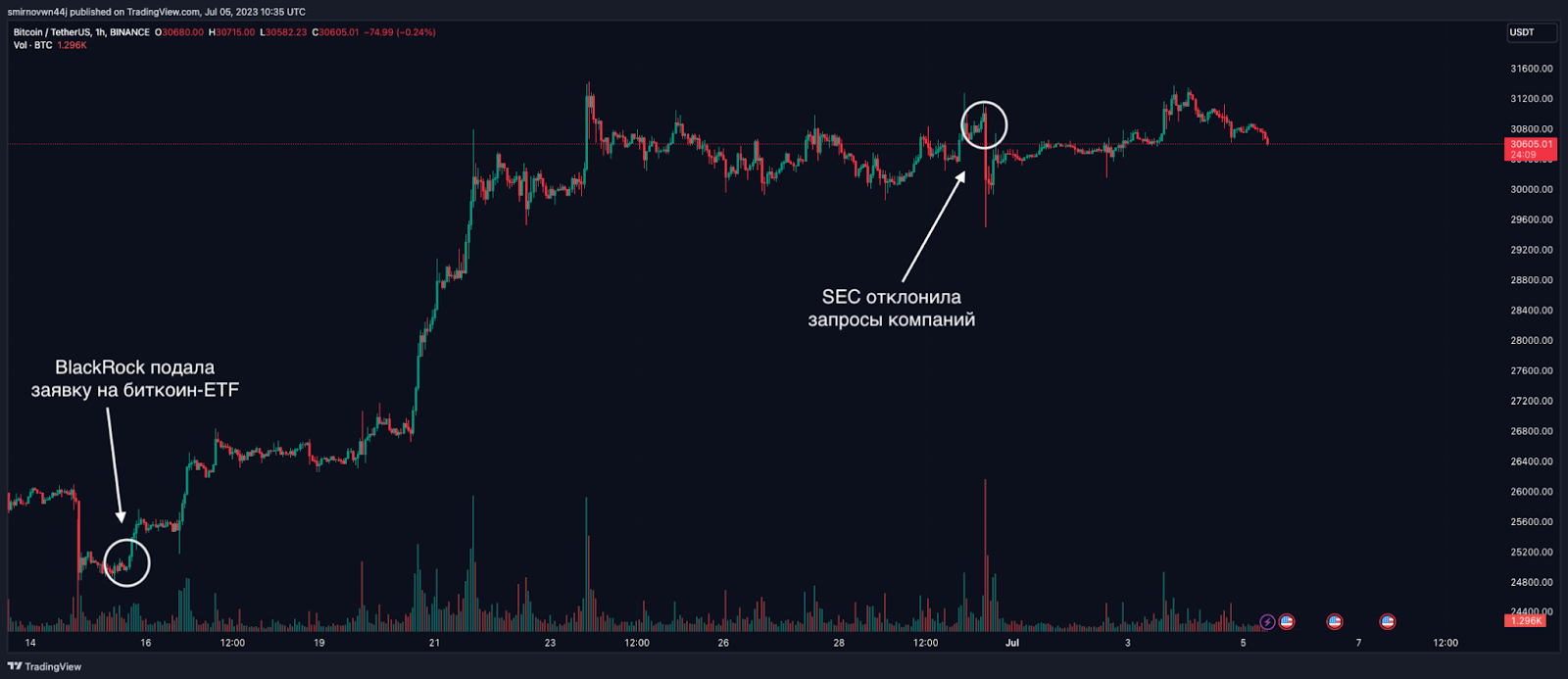
In the summer of 2023 a new race for spot Bitcoin funds began. But this time the SEC rejected the initiative, citing a lack of information regarding the so-called joint surveillance agreement and details of this mechanism. Interested companies supplemented their requests and again submitted the documents to the SEC.
The market is now awaiting the regulator’s final decision, which could be a turning point for the industry. Against the backdrop of ETF news, shares of crypto companies, including Coinbase, MicroStrategy, Riot Blockchain and Marathon Digital Holdings, have shown double-digit gains. Bitcoin itself also reacted, rising above $31,000.


MicroStrategy founder Michael Saylor named the appearance of a Bitcoin-based ETF “an important step on the road to institutional adoption.”
High hopes
There is a view in the community that approval of the instrument would decisively lift the crypto market out of its bear phase thanks to inflows from traditional investors and, consequently, higher liquidity. However, experts caution against expecting a sharp rise in prices.
The main advantage, however, would be a more stable regulatory environment in the digital asset sector.
“The industry has been waiting for institutional money for the last five to six years. This creates inflated expectations, especially regarding the price of Bitcoin and other digital assets. Their entry into the market does not promise rapid price growth, as many expect,” says Andrey Velikiy, co-founder of Allbridge.io.
According to him, the emergence of spot Bitcoin ETFs would make the market “more mature” and help ease pressure on assets during large purchases or sales. He noted that the instrument’s value is overstated in the context of the “ideological component,” since cryptocurrencies were originally created as an alternative to the traditional financial system, and the appearance of exchange-traded funds runs counter to that concept.
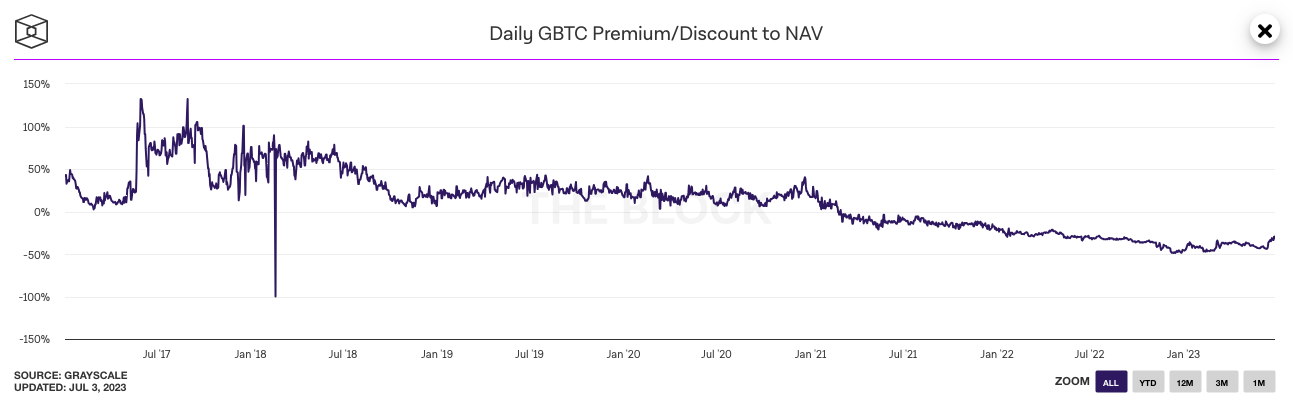
The absence of spot ETFs based on the first cryptocurrency also leads to the growth of over-the-counter products, such as GBTC, which are expensive, illiquid and not very efficient.
Since 2021, the premium of Grayscale’s product to NAV has begun to shrink, and at its low point it reached almost 50%. Meanwhile, the head of the company Michael Sonnenshein named transforming the Bitcoin Trust into an ETF a top priority.

Rusch? The head of FinTech & Crypto practice at the law firm DRC, Yulia Privalova, argues that approval of a spot Bitcoin fund would simplify crypto investments, removing the need to buy and custody assets personally. At the same time, the instrument would enable a broader population to access a new form of money.
SEC’s likely approach
According to Privalova, the SEC is a “very conservative body” that “is slow to embrace any novelty.” The commission needs clear regulations, aligned with rules and standards that would guarantee safety and investor protection.
“The SEC decision could change a lot, and that is a heavy responsibility that the regulator is not ready to take on,” she explained.
She added that going forward the agency will likely require firms to demonstrate compliance with securities laws for their Bitcoin ETFs. In particular, the SEC will require adherence to anti-fraud, transparency rules, as well as data on operations and corresponding reporting.
To sum up, Privalova noted the low probability of approval for spot Bitcoin ETFs in the form in which they are currently presented. In her view, at this stage none of the applicants will be able to meet the SEC’s requirements in full.
Meanwhile, Andrey Velikiy stated that the final decision depends on the U.S. government’s stance on cryptocurrency regulation more broadly. If authorities want to become a financial hub for a new generation of assets, that would render the jurisdiction more friendly; otherwise the market will continue to face bureaucratic hurdles, he noted.
“The SEC has historically delayed decisions since the Winklevoss brothers filed for a Bitcoin ETF. This is largely because the U.S. has not had a clear stance toward the cryptocurrency market,” says Allbridge.io co-founder.
Ultimately, the approval process may drag on and require numerous changes. However, Velikiy argues that major players such as BlackRock, WisdomTree and Valkyrie have enough sway to secure a favourable outcome for spot Bitcoin ETFs.