


Insert coin to continue
GameFi is one of the blockchain industry’s most contentious arenas. From loud promises of passive income in games to widespread disappointment and the collapse of some flagship projects, the journey has been rough.
By 2025 the segment has entered a new phase: shedding speculative hype, raising the quality of platforms and gameplay, and adapting to the real needs of players and investors. This ForkLog article analyses the evolution of GameFi, its key challenges and the market’s prospects.
What came before
In 2020–2021, on the back of decentralised finance (DeFi), rudimentary gameplay introduced by projects such as CryptoKitties was augmented with a Play-to-Earn (P2E) model. It let users earn tokens for activity, attracting millions of players, particularly in countries with unstable economies.
At its peak, Axie Infinity enabled players in the Philippines and Venezuela to earn more than the average wage: they bought NFT pets, fought battles and received rewards in Smooth Love Potion (SLP) tokens.
Yet P2E proved economically unsustainable. After a sharp run-up in 2021, Axie Infinity suffered a steep decline: its user base shrank by almost 90% and its tokens fell in value.
As noted in Nansen’s 2022 study, the model assumed a constant influx of new players, which made the system vulnerable. Broad profit-taking and cashing out into fiat added pressure on SLP, setting off a “death spiral”. As a result its price dropped by roughly 86% over the year.
A similar story befell The Sandbox—despite collaborations with well-known brands, the project failed to retain users. According to Messari, on March 1st 2025 The Sandbox’s market capitalisation stood at $661.7m ($1.3bn in December 2024). The SAND token slid from $0.54 to $0.27, losing more than 50% in a quarter.
Most telling was Decentraland—despite its hyped status, the metaverse saw activity steadily decline: in October 2022 fewer than 1,000 transactions a day were executed.
Architectural choices in early GameFi projects baked in several problems:
- Speculative tokenomics. For many players and guilds, quick gains became the main motivation, prompting constant hopping between projects in search of higher yields. In such conditions token prices in many GameFi projects rose chiefly on the back of new-player inflows; in-game economies were not anchored in real utility, serving instead as fuel for short-lived manias.
- Weak gameplay. Developers rushed products to market, often neglecting the core: the quality of the game itself. As a result, projects quickly lost user engagement.
- High barriers to entry. Onboarding into GameFi became a quest of its own. Setting up wallets, buying tokens, using DeFi interfaces and paying fees created big hurdles for newcomers. Pay-to-Win titles—where victory hinged on purchasing costly NFT assets—undermined motivation for many.
- No AAA calibre. “Triple-A” in gaming denotes big budgets, depth and polish on a par with studios such as Bethesda or Blizzard. Web3 lacks a true AAA analogue: major publishers are wary of experimental terrain, and startups lack resources for full-cycle production. That slows GameFi’s path to the mainstream.
What changed
After the first generation of GameFi projects faltered, criticism poured in—from traditional gamers and the crypto community alike. Many teams left; others stayed and began to rebuild the segment’s architecture from scratch. Projects started rethinking their approach and bringing the following into production.
Sensible tokenomics. The original Play-to-Earn model, fixated on income, often clashed with good gameplay. It is giving way to Play-and-Earn—gameplay first, income as a bonus. In successful projects such as Pixels and Big Time, tokens serve utility roles: access to events, upgrades, and DAO votes. Rewards are capped and in-game economies are balanced.
Updated UX. To tackle high fees and sluggish transactions on Ethereum, GameFi projects are moving to L2 solutions: Arbitrum, ZKsync, Starknet. That meaningfully cuts costs and brings the experience closer to Web2 norms.
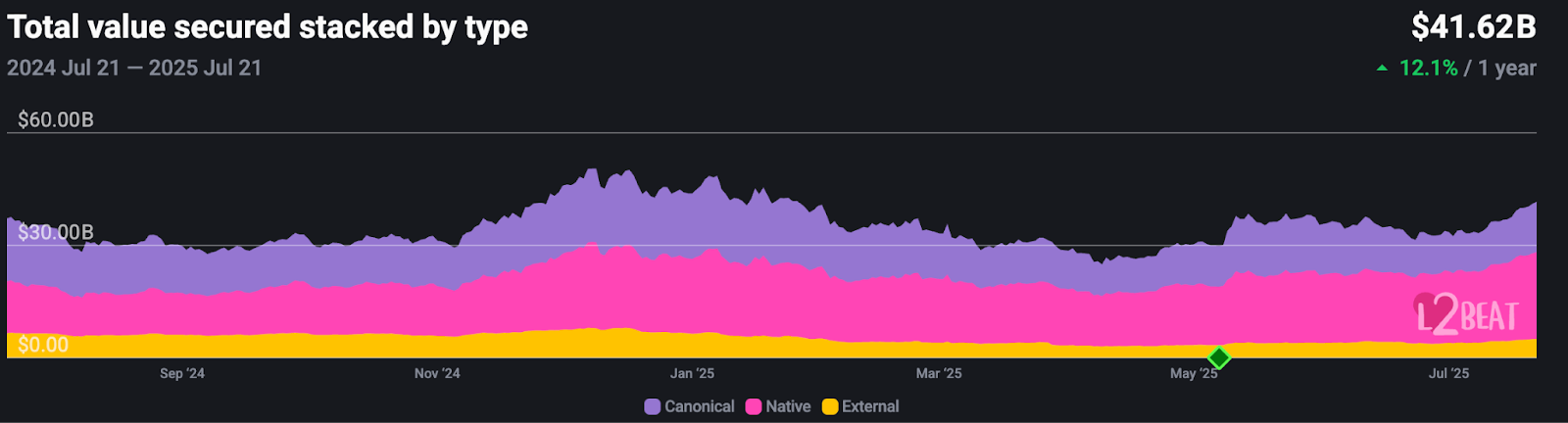
Onboarding is being simplified in parallel: passwordless sign-ins, account abstraction and subscription models are emerging. Players no longer need to grapple with blockchain intricacies—they can simply jump in and play.
Analysts at Delphi Digital stress that second-layer solutions are pivotal for improving UX and lowering transaction costs. In the The Complete Guide to Rollups they detail the advantages of ZK rollups and optimistic rollups—from scalability to cost minimisation—both critical for gaming dapps.
Hybrid game design. Previously, launching a token could be enough to kick-start a project. Now the GameFi crowd competes with Web2 studios on depth of mechanics, interface usability and engagement.
Many projects are reverting to tried-and-tested monetisation: in-game purchases (skins, upgrades, characters) remain optional and do not affect balance. That enables Free-to-Play, where NFTs can be earned via in-game achievements or drops without mandatory upfront spend.
This lowers barriers for newcomers and fosters a fairer playing field. A case in point is Big Time, where NFTs are used solely for customisation and confer no gameplay advantage.
Rise of UGC ecosystems. Games built around user-generated content have become a key trend. Through DAOs and in-game editors, players create maps, modes and items that shape a project’s trajectory and generate revenue.
Projects undertaking large-scale GameFi overhauls include:
- Axie Infinity. After a major breach, the team focused on launching the new Ronin 2.0 blockchain, revamping the economy and moving from aggressive Play-to-Earn to Play-and-Earn, with an emphasis on gameplay and retention;
- Decentraland. Actively developing DAO governance and UGC integration, improving UX and boosting engagement through events and economic incentives;
- Illuvium. Following its beta release, the team is focusing on tokenomics balance and expanding gameplay, strengthening RPG mechanics and offering new avenues for engagement.
By 2025 one thing is clear: GameFi will not die; it will transform.
What next: AI, AR/VR and cross-chain gaming
A deeper transformation looms. Integrating artificial intelligence enables adaptive experiences: dynamic NPCs, procedural narratives and personalised scenarios. For example, developers are using LLMs that learn from and adapt to player behaviour.
Nvidia is already testing autonomous in-game characters called ACE—they can hold conversations, adapt to player actions and assist in combat, as shown in a demo based on PUBG. The development of AR/VR and spatial computing is also accelerating: researchers are using reinforcement learning for dynamic, procedurally generated AR worlds.
Cross-chain gaming solves fragmentation: Inter-Blockchain Communication (IBC) and the Cross-Chain Interoperability Protocol (Chainlink CCIP) allow NFTs and other tokens to move freely across chains, which is critical for building multi-game ecosystems. All this expands GameFi’s long-term potential and strengthens its appeal to new players and developers.
The industry has already undergone a brutal shake-out: hype has given way to pragmatism. Token-chasing has ceded to hypothesis-testing and the selection of solutions that work.
Among the winners are L2 and ZK rollups, convenient onboarding tools, Play-and-Earn models, and UGC- and DAO-driven ecosystems. The focus has shifted to core metrics: daily active users (DAU), retention, TVL and NFT trading volumes.
The future of web3 gaming will be shaped by the early winners.
We intend to ensure:
— they’re properly decentralized, on zk-rollups and eth.
— they have sustainable tokenomics.
— most importantly: they’re incredibly fun.Gaming utility will dwarf speculative vol.
— Robbie Ferguson | Immutable (@0xferg) September 1, 2022
At the same time, AR and VR are being woven in—technologies that are turning game worlds into more immersive, socially rich spaces.
In 2025 GameFi is no longer an experiment but an emerging niche with clear logic, where gameplay and product quality come first. Mass adoption is still ahead, but the ecosystem now has the necessary infrastructure and a seasoned community.
Text: Katerina Kostenko
Рассылки ForkLog: держите руку на пульсе биткоин-индустрии!