



Iran’s Bitcoin Scheme Deemed ‘Virtually Unfeasible’ by Analysts
Iran's cryptocurrency scheme for Hormuz passage deemed unfeasible by experts.
Iran demands payment for passage through the Strait of Hormuz in cryptocurrency. Experts consider this scheme “virtually unfeasible” through legal channels, reports Bloomberg.
However, the initiative has revealed a vast infrastructure for circumventing sanctions. Last year alone, the IRGC moved over $3 billion through digital assets. The total value of the country’s cryptocurrency ecosystem reached $7.8 billion.
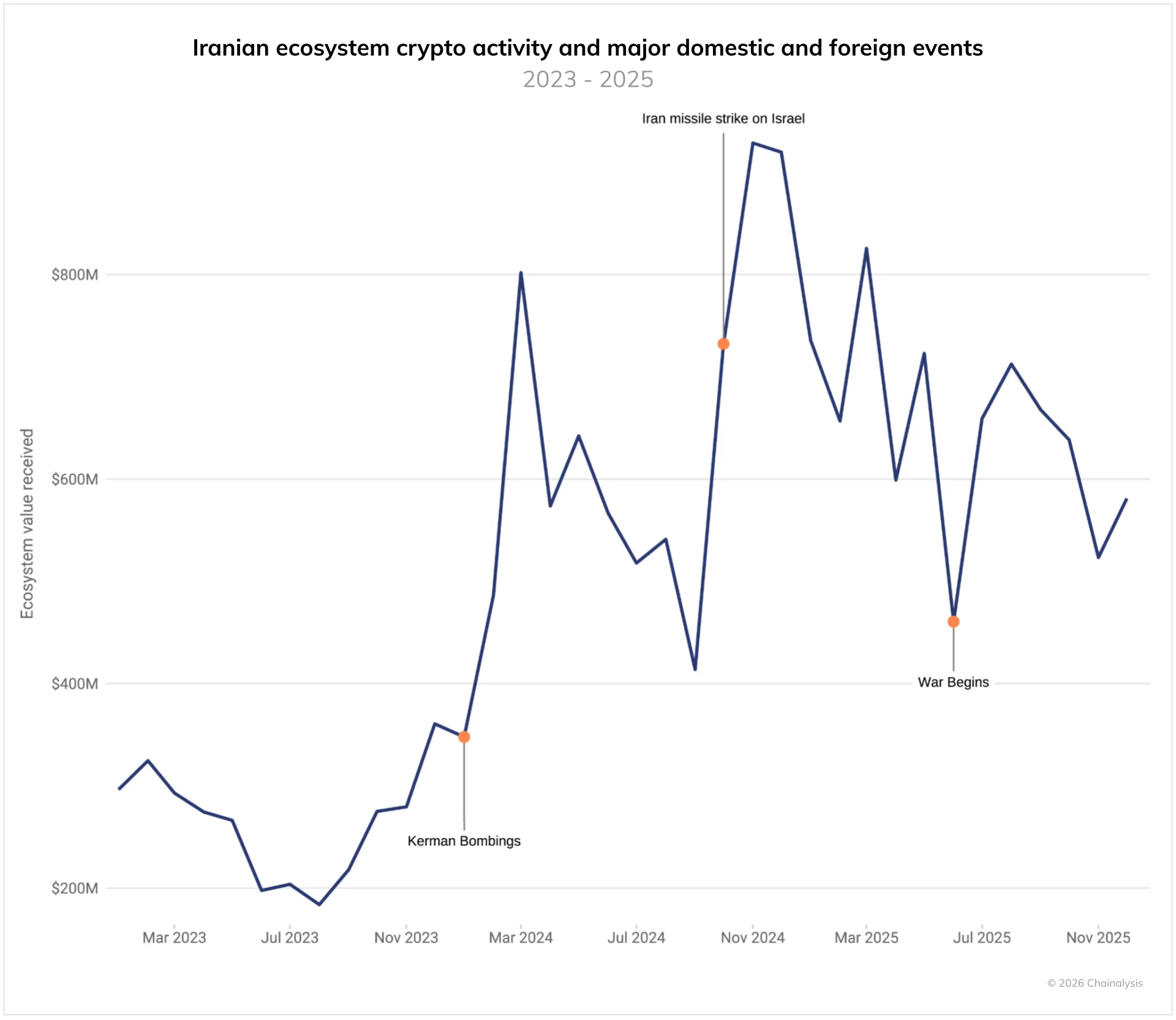
According to analysts at TRM Labs, Tehran permits the use of virtual currencies through a network of local intermediaries. This is part of a system designed to ensure state control over crypto flows.
For international transfers, Iran relies on intermediaries. For instance, in January, the US Treasury for the first time imposed sanctions against two British exchanges — they assisted the IRGC in conducting stablecoin operations amounting to about $1 billion. This was an attempt by the country to obscure the payer’s connection to a sanctioned organization.
Collecting tolls through an IRGC-linked intermediary would deprive participants of such cover. Thus, all difficulties fall on shipping companies attempting to pass through the Hormuz.
Challenges for Shipping Companies
Many firms using the strait are registered in the West and are subject to strict regulatory requirements.
“Shipping companies are already under strict scrutiny — they operate in a high-risk area. If there’s a risk that a transaction falls under sanctions, no dealer will take it on,” explained Jake Ostrowskis of Wintermute.
Even operators accustomed to grey sanction-avoidance schemes will face problems. They typically turn to unregulated offshore brokers who exchange cash for cryptocurrency without asking questions. However, the transparency of the blockchain exacerbates the situation.
“Whether stablecoins or bitcoin — it’s all in public ledgers. Sooner or later, this transfer will be seen,” noted Bohan Jiang, a senior derivatives trader at FalconX.
GSR co-founder Rich Rosenblum noted that it all depends on the specific oil carrier. Companies from the so-called shadow fleet are already actively using bitcoin.
For traditional operators, the only way to obtain cryptocurrency is to buy it on an exchange or from an over-the-counter dealer. However, this presents a problem: most regulated platforms will flag and block the transfer if a connection to Iran is detected.
The passage of a standard supertanker with 2 million barrels of oil could cost about $2 million. According to traders, this amount can easily be processed through an exchange or over-the-counter dealer if sanction risks are excluded.
“But most exchanges won’t want their client to send money to Iran. Technically, they could buy cryptocurrency, withdraw it from the exchange, and then send it from their personal wallet,” noted Rosenblum.
In such a case, due to blockchain transparency, US intelligence agencies would quickly track the transaction and blacklist the tanker owner or intermediary with the OFAC.
What Next?
US President Donald Trump stated that he is considering the possibility of sharing revenues from passage through the strait. If the parties can agree, the payment process could become simpler.
At the same time, Rosenblum believes that in such a scenario, OFAC and the Department of Energy would need to create a separate settlement system for shipping companies.
Ari Redbord of TRM Labs emphasized that Iran has always sought ways to circumvent sanctions and escape the American financial system. After the conflict began, this task became even more pressing.
“This is part of a broader picture. Russia and China, other sanctioned entities, are also seeking alternative payment rails to avoid dependence on the West,” he added.
Back in late January, Elliptic experts discovered that Iran’s central bank had acquired USDT worth $507 million.
Рассылки ForkLog: держите руку на пульсе биткоин-индустрии!