




The market capitalization of the stablecoin sector could reach $1.15 trillion in the next five years, leading to a gradual outflow of deposits from traditional banks, according to analysts at Jefferies, as reported by CoinDesk.
They noted that the accelerating development of this segment is putting pressure on the profits of conventional financial institutions. While digital dollars are unlikely to cause a sudden outflow of funds, banks could lose 3% to 5% of core deposits over five years. This will inevitably increase funding costs and reduce business margins.
“The medium-term risk of a gradual outflow of deposits due to new income opportunities and payment scenarios should not be ignored,” the experts noted.
Stablecoins have already become a cornerstone of crypto trading. Following the adoption of the Genius Act in the U.S., their use has significantly expanded to include everyday transactions, treasury operations, and cross-border transfers.
In 2025, the adjusted volume of stablecoin transfers exceeded $11.6 trillion, a 49% increase from the previous year. At the time of writing, the total market value of fiat-pegged tokens stands at $314 billion.


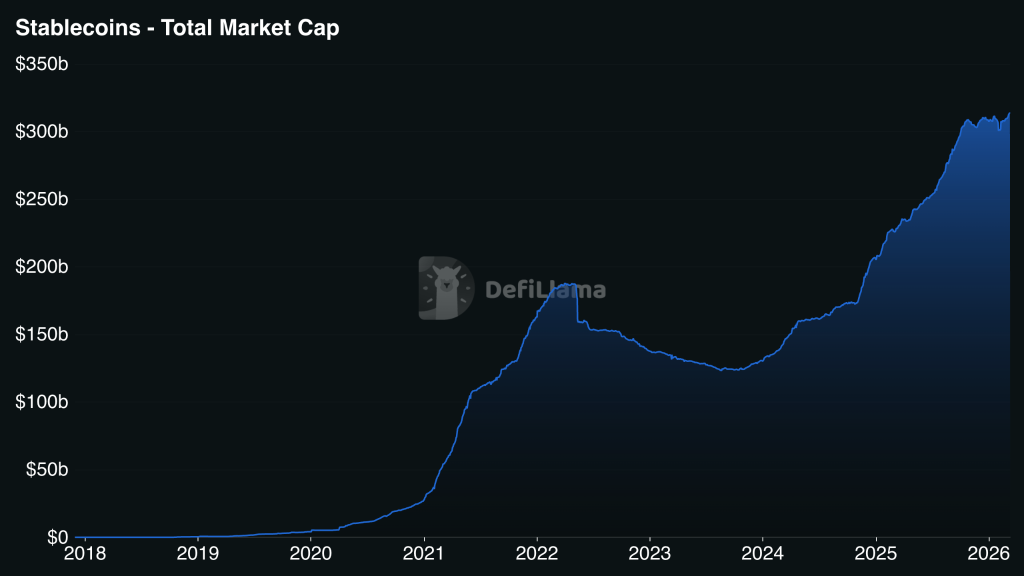
Jefferies anticipates that by 2030, this figure will rise to $800 billion-$1.15 trillion. For banks, this is critical: stablecoins function like digital cash 24/7 and provide access to DeFi platforms with yields higher than traditional accounts.
Bank of America CEO Brian Moynihan has already warned that the U.S. system could lose up to $6 trillion in deposits. The Institute of Banking Policy expressed a similar view, citing a U.S. Treasury study.
Long-term Threat
The key limiting factor is regulation. The current version of the market structure bill (Clarity Act) limits the appeal of stablecoins as a savings tool. However, the final adoption of the document in this form remains uncertain.
“Clarity will establish stablecoins as payment, not savings instruments, closing the ‘yield loophole’ left in Genius,” Jefferies stated.
Some traditional financial giants are trying to adapt to the new conditions. Fidelity Investments has already issued its own stablecoin, FIDD. Bank of America and Goldman Sachs are exploring similar opportunities.
Experts estimate that banks with a high share of retail and interest-bearing deposits are most at risk of capital outflow. Jefferies analysts identified Wintrust, Flagstar, WBS, EagleBank, and Axos as among the most vulnerable institutions.
Meanwhile, large institutional players and custodians already investing in crypto infrastructure are much better protected.
Back in January, SkyBridge Capital founder Anthony Scaramucci accused U.S. banks of “killing” stablecoins to benefit China.