



Joseph Lubin Foresees Global Economy Transitioning On-Chain
CEO ConsenSys also supported the crypto treasury model and commented on the wave of DeFi hacks.
Ethereum co-founder and ConsenSys CEO Joseph Lubin has stated that the global economy will gradually transition on-chain. He made this remark at the Consensus 2026 conference, reports CoinDesk.
“We are moving towards a world where virtually the entire economy will be tokenized,” noted Lubin.
According to him, tokenization has moved beyond experimentation—it first took hold in stablecoins, then spread to treasury bonds and other real assets.
Traditional financial institutions and regulators are increasingly considering blockchain as infrastructure for the capital market, he emphasized.
Ethereum as a Base for Tokenization
In a conversation with The Block, Lubin estimated the volume of traditional financial assets at approximately $700 trillion. He believes Ethereum is structurally prepared to absorb a significant portion of this flow—thanks to its neutrality, security, and compatibility with EVM.
This is also facilitated by the network’s inherent architecture, which allows for the issuance of assets without creating a separate blockchain for each one.
The future growth of Ether, according to the expert, is linked to the on-chain transfer of stocks, treasury bonds, ETFs, and other financial instruments.
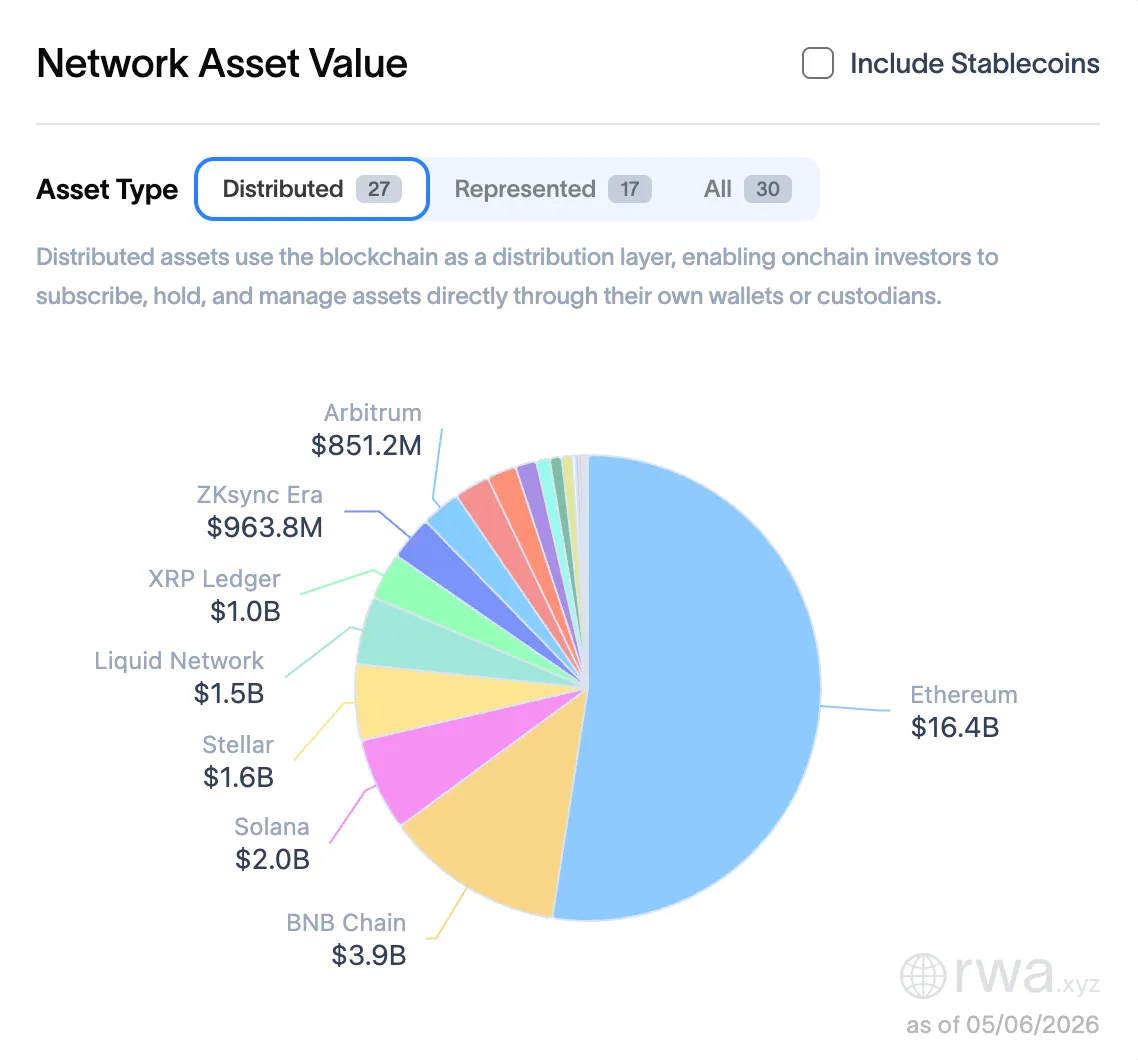
Ethereum already leads in tokenization activity of RWA: the platform’s share in the segment, which exceeds $31 billion, is over 50%.
Treasury Companies
Lubin described the model of crypto treasuries as “a valuable, powerful, and important construct for the digital asset space and traditional finance.”
🔥-side with @ethereumJoseph and @robbieklages live from MainStage pic.twitter.com/4eihBoYDYM
— #Consensus2026 → Miami (@consensus2026) May 5, 2026
Companies accumulating Ethereum and Bitcoin could become a source of long-term capital for the ecosystem, he believes. Among successful examples, the ConsenSys CEO highlighted Strategy, BitMine, and SharpLink.
Such structures are beneficial if they do not abuse leverage, can withstand volatility, and are focused on developing the underlying networks.
However, Lubin distinguished these firms from “superficial copies.” In his view, launching treasury companies based on “weak” tokens or short-lived ecosystems could harm the projects themselves.
DeFi Hacks and AI’s Role
The Ethereum co-founder also commented on recent incidents in the DeFi sector, including the hack of the Kelp protocol. ConsenSys and Lubin personally had previously directed 30,000 ETH to the DeFi United fund, created to restore rsETH collateral.
The expert does not view these attacks as evidence of the failure of decentralized finance. He stated that the early financial infrastructure is undergoing a painful strengthening process, with attackers effectively exposing weaknesses in protocols.
Lubin estimates that the coming year will remain unstable. However, he is confident that the development of artificial intelligence will help create more reliable software.
Quantum Risks
The ConsenSys CEO separately addressed the topic of quantum computing. He noted that Ethereum’s transition to quantum resistance is already embedded in the existing scaling roadmap and will become a “byproduct” of planned improvements.
The situation with Bitcoin is more complex, Lubin added. In his opinion, the community will eventually need to set a deadline for phasing out vulnerable address types. Such a transition could spark disputes over ownership rights—especially concerning old inactive coins.
Previously, the community was outraged by developer Jameson Lopp’s initiative, which proposes freezing assets vulnerable to quantum computers. Around 1.7 million BTC are at risk.
Back in September last year, Lubin predicted a 100-fold increase in Ethereum’s price due to mass adoption by institutional players.
Рассылки ForkLog: держите руку на пульсе биткоин-индустрии!