




The issuance of US Treasury bills (T-bills) has become a key liquidity indicator, shaping the dynamics of digital gold. Meanwhile, the balance sheets of the Federal Reserve and other central banks play only a secondary role, according to analysts at market maker Keyrock.
Impact of T-bills
Research data indicates that a 1% change in global liquidity provokes a 7.6% movement in the price of the leading cryptocurrency in the following quarter. However, Keyrock specialist Amir Hadjian emphasized that not all types of financial injections equally affect high-risk assets.
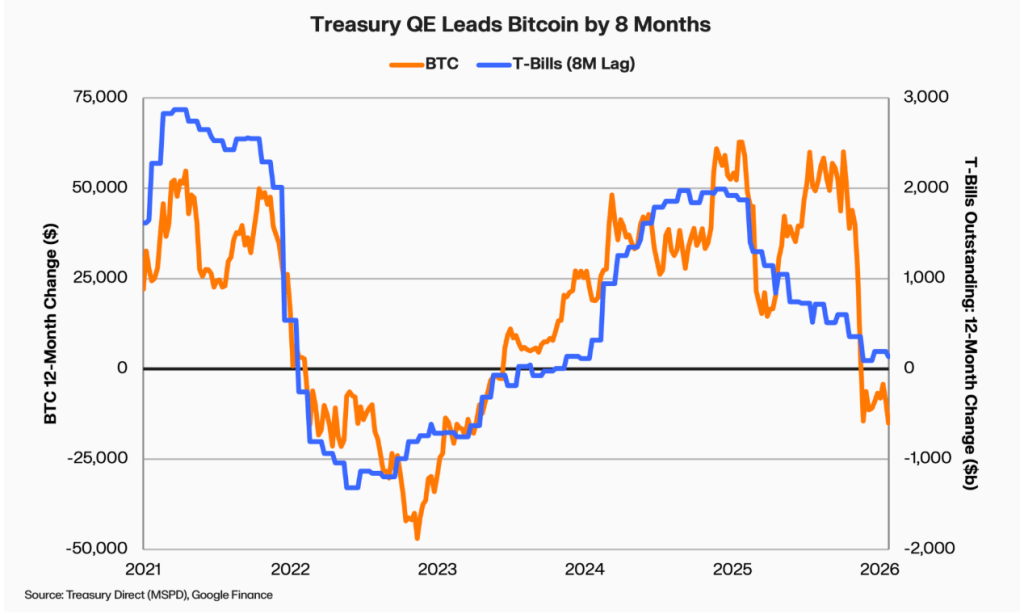
The report states that since 2021, the correlation between T-bill issuance and the price of Bitcoin has reached 80%. The issuance of government bonds serves as a leading indicator with a time lag of about eight months.
“When the Treasury increases the issuance of bills, it finances expenditures that flow into the real economy and then into risky assets like Bitcoin. If issuance falls or turns negative, this fiscal stimulus dries up,” explained Hadjian.


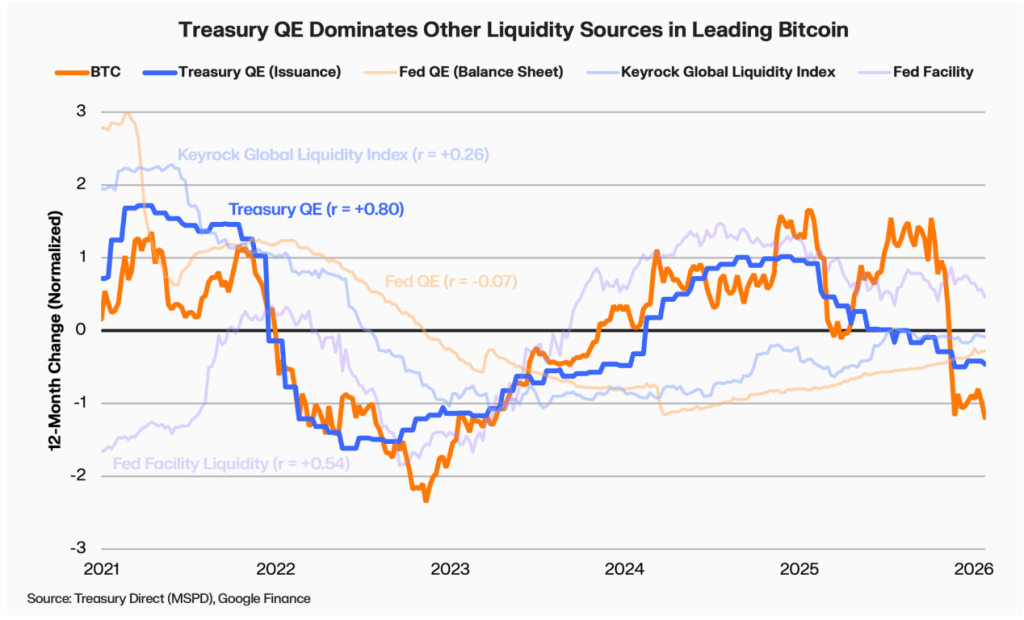
Historically, the growth of net Treasury bond issuance has been a leading indicator of Bitcoin’s dynamics. Institutional capital and spot ETFs have reduced the sensitivity of the leading cryptocurrency to liquidity changes by about 23%. Despite the continued correlation, the impact of macroeconomic factors on the asset has become less pronounced.
These findings contradict the popular belief that the dynamics of digital gold primarily depend on the Federal Reserve’s interest rate. Analysts expect that the global liquidity factor will fully reflect on Bitcoin’s price only at the end of 2026 or the beginning of 2027.


US Debt Repayment and Market Liquidity Influx
Global liquidity is on the brink of significant changes, according to Keyrock analysts. In the next four years, a substantial portion of the US national debt, which has exceeded $38 trillion, is due for repayment.
The US Treasury will need to refinance this burden. Since a significant portion of current obligations was formed during a period of near-zero interest rates, new loans will be significantly more expensive for the department.


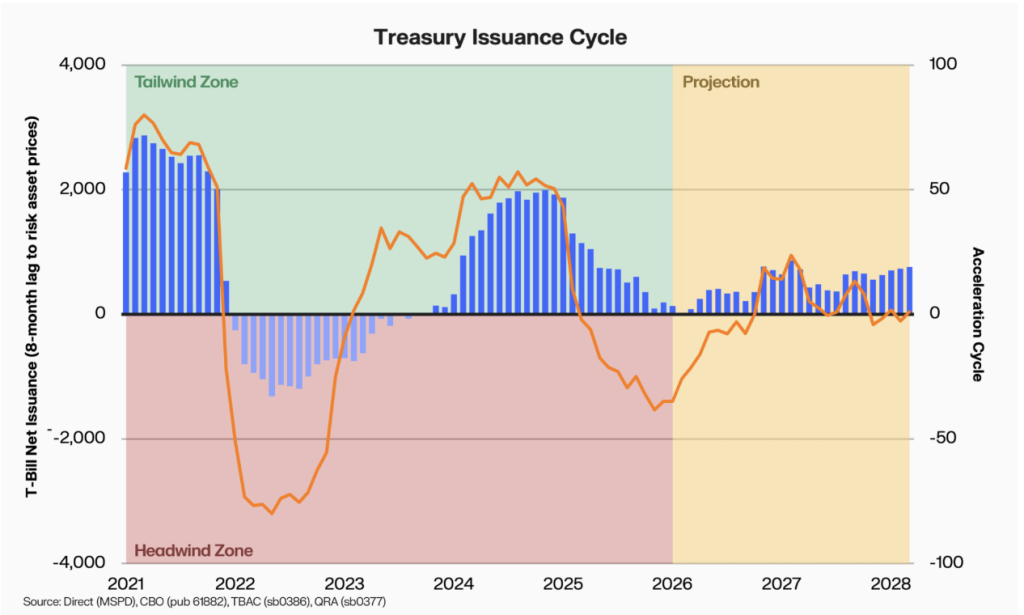
Keyrock anticipates that the US will increase the issuance of Treasury bills to service the national debt. Analysts forecast that by 2028, the annual issuance volume could stabilize at $600 billion-800 billion.
Recently, the latest US inflation data briefly boosted Bitcoin’s price.