




- Market makers can crash token prices, creating a “death spiral” for projects.
- Opaque deals between market participants foster abuse.
- Retainer models with fixed fees reduce risks and encourage long-term cooperation.
Given incentives that allow abuse, market makers, instead of securing a listing on CEX and providing liquidity, can trigger a “death spiral” for smaller crypto projects, reports Cointelegraph.
The risk stems from the “credit option” model, under which native tokens are handed to a market maker who then uses them to stimulate trading activity.
In practice, some intermediaries may rely on an ambiguous lending structure that enriches them at the expense of the projects they are meant to support.
Such deals, often pitched as low risk and high return, can tank an asset’s price and force young teams into scrambling to stabilise it.
Ariel Givner, founder of Givner Law, explained that under this scheme, if tokens fail to list on a CEX, market makers return them within a year—at a higher price.
It is not uncommon for intermediaries to dump borrowed coins and then buy them back at a discount, which becomes their profit.
“I have not seen a single token that genuinely benefited from these market makers. I am sure there are ethical ones, but those I have dealt with simply destroy charts,” — the expert lamented.
How it works
A Cointelegraph review of contracts found that leading market makers, including Wintermute and DWF Labs, have used credit option structures as part of their business model.
DWF Labs says it does not use the practice because it has enough balance sheet to sustain its operations. Industry figures and on-chain analysts remain sceptical.
“We do not weaken the ecosystems we invest in,” — said DWF Labs managing partner Andrey Grachev.
Wintermute did not respond to a request for comment. Earlier, CEO Evgeny Gaevoy stated plainly in a series of posts that the firm is “in the business of making money by trading” and is not a charity.
3) Furthermore to make things clear – we are not a charity (or foundation?). Very much far from it, Wintermute (like any other prop trading firm) is in business of making money by trading. More specifically, our core business is trading digital assets. As such, we are very much…
— wishful_cynic (@EvgenyGaevoy) February 3, 2025
According to Jelle Butu, co-founder of market maker Enflux, many teams do not fully grasp the pitfalls of the credit option model.
Before signing, he advised, teams should assess whether lending out their tokens will deliver quality liquidity against clear metrics. Those metrics are often missing or described vaguely, Butu explained.
The outlet analysed six such agreements, including those involving multiple market makers, and recorded token price declines.


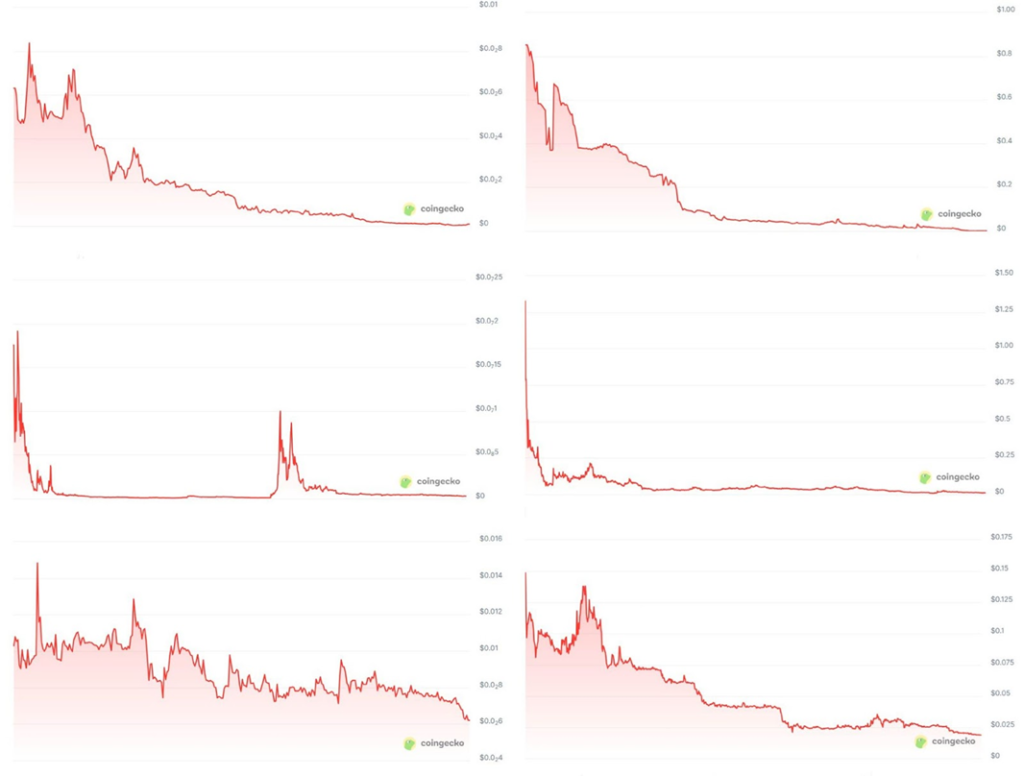
Kristiyan Slavov, co-founder of the Web3 accelerator Delta3, agreed with these conclusions.
“We have interacted with projects that ended up in deep shit after working under the credit option model. […] They hand over tokens, and then they are dumped. That is roughly how it goes,” — he said.
It is not all bad
Butu says the model is not inherently harmful if structured properly.
An expert on listings, who requested anonymity, agreed with the Enflux co-founder.
“I saw a project that had up to 11 market makers — about half used the credit model, the rest were smaller firms. The token did not fall because the team knew how to manage price and balance risks across several partners,” — he explained.
The adviser likened the model to a bank loan. Institutions offer different terms, he noted, but none will bankroll a clearly shaky project. In crypto, the balance of power often favours those with more information.
Earlier, the founder of DeFiance Capital under the moniker Arthur_0x noted the lack of transparency in relationships between project teams and market makers, undermining confidence in the altcoin market. He accused centralised exchanges of turning a blind eye.
The listing expert, for his part, said not all CEXs behave this way. Some flag unethical conduct and freeze an account while investigating, he added.
Market makers’ incentives
Some of Cointelegraph’s sources advocate a retainer model: the project pays a market maker a fixed monthly fee in exchange for clearly defined services. Such agreements carry less risk, though they cost more in the short term, they said.
“In such a scheme, market makers have an incentive to work with projects in the long term,” added Slavov.
The industry is increasingly aware of the risks tied to credit option models, especially as sudden token collapses set off alarm bells more often.
In a now-deleted post, the X account Onchain Bureau claimed that the recent 90% plunge in Mantra’s OM was due to the expiry of a similar agreement with FalconX. Project representatives denied this, saying the firm is a trading partner, not a market maker.
The outlet noted that this case highlights a growing trend — often with good reason — to blame credit option structures for token collapses.
In a market where deal terms are hidden behind NDAs and roles such as “market maker” or “trading partner” are fluid, public suspicion is unsurprising, Cointelegraph added.
Until transparency and accountability improve, the credit option model will remain one of crypto’s least understood — and most abused — deal types, the publication concluded.
Earlier, experts called insider manipulation the reason for OM’s recent 90% crash.
Earlier, the Movement Network team launched an investigation after Binance ended co-operation with an unnamed market maker over manipulation of MOVE’s price.