




Global uncertainty is pushing investors into safe-haven assets, draining liquidity from crypto. The stagnation in stablecoins supply has become a “noticeable obstacle” for bitcoin and the broader digital ecosystem, Matrixport analysts say.
📊Today’s #Matrixport Daily Chart — February 24, 2026 ⬇️
Stablecoin Growth Stalls: Another Liquidity Warning Sign for Bitcoin?#Matrixport #Bitcoin #Stablecoins #Crypto #Liquidity #OnChainData #MarketStructure #Regulation #DigitalDollar pic.twitter.com/YOVjwMZQmw
— Matrixport Official (@Matrixport_EN) February 24, 2026
“Stablecoins are the primary channel of liquidity in digital assets, and stagnation often means that capital goes back into fiat rather than stays in the crypto market,” the experts noted.
Since the start of 2026, the supply of these digital assets has shrunk by $5.6bn—from $159bn to $153.4bn. “Stablecoin” reserves at leading crypto exchange Binance have also fallen 19% since November 2025.


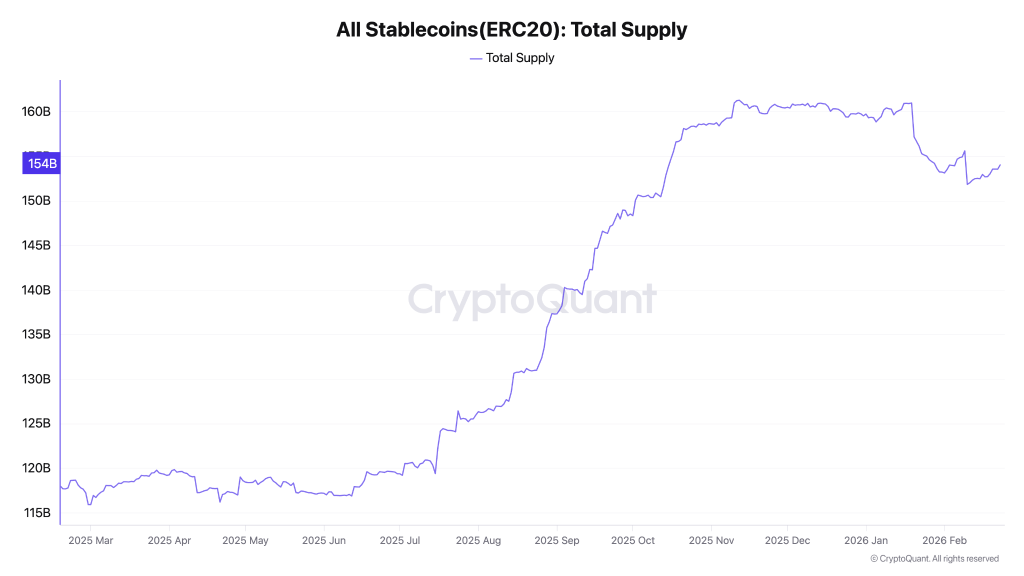
According to the experts, if outflows persist, bitcoin will continue to face a liquidity shortfall.
Even the long-awaited passage of the market-structure law (Clarity Act) is unlikely to revive the sector overnight—it will take real demand and fresh inflows, not merely regulatory relief, they concluded.
Outlook
A CryptoQuant contributor under the handle Darkfost believes market liquidity conditions are “unlikely to improve any time soon.”
🗞️ Stablecoin reserves fall back to 2024 levels
“These reserves, which typically adjust based on investor demand, have dropped from $50.9B to $41.4B, representing a decline of 18.6%. As stablecoins continue to flow out, Binance’s reserves have now returned to levels last… pic.twitter.com/ycN3TZIt2d
— Darkfost (@Darkfost_Coc) February 23, 2026
He cited Federal Reserve governor Christopher Waller, who said that strong labour-market data could prompt the central bank to keep rates in their current range.
“Such monetary policy typically restrains the inflow of capital into risk assets,” the expert noted.
Analysts at Glassnode expect liquidity to recover no sooner than in six months.
🔄UPDATE:
The Realized Profit/Loss Ratio (90D-SMA) has now fallen below 1, confirming a full transition into an excess loss-realization regime.
Historically, breaks below 1 have persisted for 6+ months before reclaiming it, a recovery that typically signals a constructive… https://t.co/nzdIG5LkEX pic.twitter.com/uYvZ6i99fA— glassnode (@glassnode) February 24, 2026
They pointed to the realised profit/loss ratio, which has fallen below 1 for the first time since 2023. This confirmed a full transition into an excess loss-realisation regime, the experts explained.
Historically, stretches at these levels have lasted more than six months. A recovery has typically signalled an influx of fresh capital into the sector.
At the time of writing, bitcoin is trading around $62,900, down 5% over the past 24 hours.


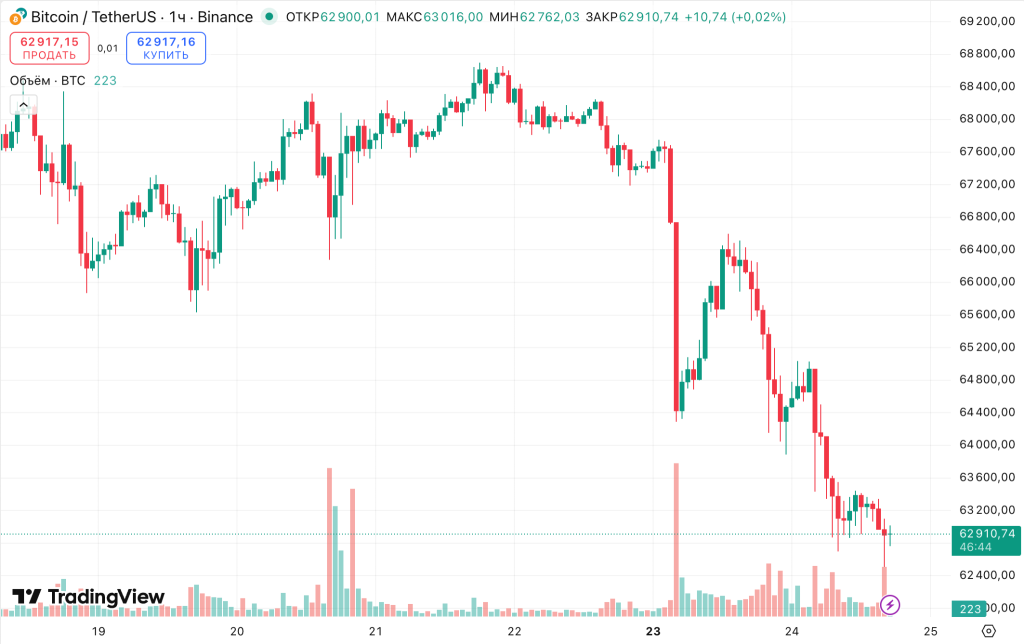
On February 24, Bitrue analyst Andri Fauzan Ajiima forecast a drop in the leading cryptocurrency to $47,000 if $60,000 is breached.