


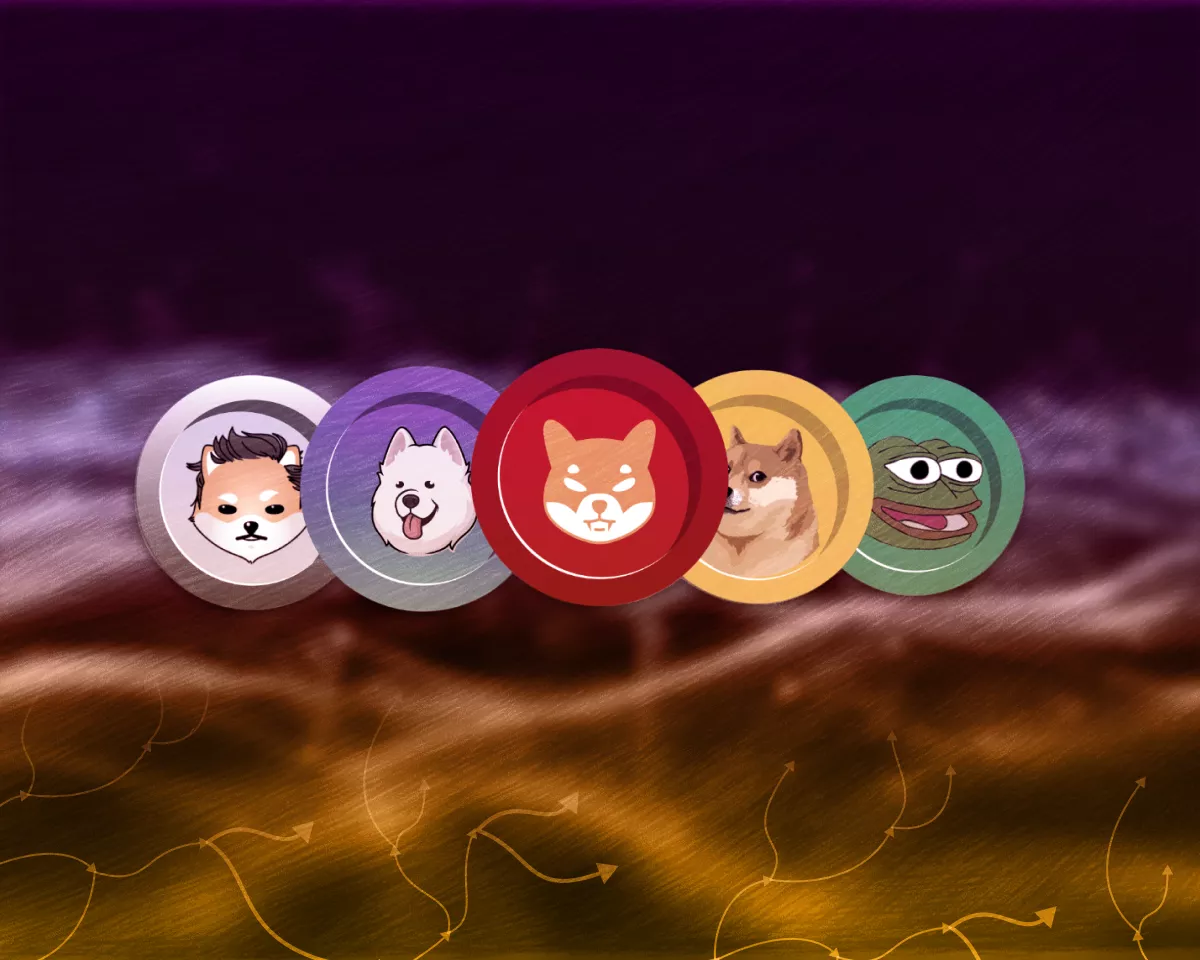
Meme stream: why ‘dog’ tokens are so popular, according to CoinEx
Since April 2024, crypto projects have launched more than 1m tokens on Ethereum (370,000) and Solana (640,000). Most of them are meme tokens.
What explains the popularity of such assets, and why do their creators pick the Solana blockchain? We answer with the exchange CoinEx.
Coin or token?
Meme tokens and meme coins are digital assets that reference internet memes, pop culture and online trends. Developers launch them as a joke or satire and typically focus on growing a community rather than technical innovation.
Investors often lump meme coins and meme tokens together, but there is a fundamental difference: the former are issued on their own blockchains (for example, Dogecoin), the latter are issued on networks such as Ethereum and Solana .
The first and best-known meme coin is considered to be Dogecoin — a fork of Luckycoin (itself a fork of Litecoin) named after the internet meme “Doge”. The Dogecoin network was launched in December 2013 — 18 months before Ethereum’s mainnet.
As smart-contract blockchains developed, a multitude of meme tokens appeared. They are now issued on Solana, The Open Network (TON) and other L1s, as well as Ethereum L2s such as Arbitrum and Base.
The CoinEx team highlights three reasons for their popularity:
- the maturity of blockchain infrastructure;
- a revolt against TradFi and “serious” crypto projects;
- a lack of new market trends.
We explore each in turn.
Faster, simpler, cheaper
Launching meme tokens is far easier than in 2013, when the Dogecoin mainnet went live.
“Creating a meme token with the Meme Coin Creator tool on Solana will cost about 12–15 SOL ($2,000–2,500 at the time of writing). That is a relatively small sum, given that in May the total market capitalisation of meme tokens on this blockchain reached $9 billion,” CoinEx representatives comment.
Solana offers a favourable environment for meme tokens thanks to several features:
- Fast transactions. The network can process more than 50,000 TPS, enabling a DEX trading experience comparable to a CEX.
- Low fees. Sub-$0.01 transactions greatly lower the barrier to entry for newcomers. This fuels trading volumes and the overall frenzy around meme tokens. For instance, Jeo Boden (BODEN), listed only on the Raydium DEX on March 9, reached a $200m market cap within two weeks;
- An active community. Solana has a large social following that amplifies virality.
Among the more notable meme tokens on this network are dogwifhat, Bonk, BOOK OF MEME, Popcat, cat in a dogs world and Myro.
Before Solana, Ethereum led the segment. It is home to meme tokens such as Pepe, FLOKI, Memecoin and Shiba Inu (SHIB), which ranks 11th by market capitalisation on CoinMarketCap. The latter rose to prominence when Ethereum co-founder Vitalik Buterin sent 50trn SHIB to charity and later burned 410trn SHIB worth more than $6.5bn.
JUST IN: #Ethereum founder Vitalik Buterin was seen wearing Shiba Inu pajama pants at the #ETH conference in Denver. pic.twitter.com/kOmKVewuiZ
— Watcher.Guru (@WatcherGuru) February 19, 2022
The Ethereum ecosystem still boasts several advantages:
- A large developer community. According to the Developer Report, Ethereum leads all blockchain ecosystems by active developers by a wide margin;
- Reliable operation. The network has processed blocks continuously since 2015, whereas Solana has periodically suffered outages;
- A developed DeFi stack. Per DeFi Llama, Ethereum ranks first in DeFi with more than $50bn in total value locked. The leaderboard also includes Arbitrum, Blast, Base and other L2s.
According to a recent study by Cointelegraph Magazine, after the Dencun upgrade, Base saw a surge in users, transactions and TVL. Most of the activity is in meme tokens, yet one in six of them is a scam.
“The ease of launching meme tokens has a flip side: the segment is flooded with outright scams. For example, scammers issue ‘honeypot’ assets that you can buy but cannot sell because of smart-contract restrictions.
It is better to avoid DEXs and choose a vetted centralised platform if you are a beginner and want to trade something like HarryPotterObamaSonic10Inu (ERC-20) (BITCOIN)
,” CoinEx recommends.
A revolt against the (crypto) system
One of the main reasons for the rise of meme stocks in GameStop (GME) was a “war” of retail traders against Wall Street. Users bought up the shares to deny big players the chance to sink the company.
CoinEx representatives believe meme tokens can also be seen as a protest against TradFi:
“But if bitcoin is a protest against the traditional banking system, meme tokens are a ‘revolt within a revolt’. They set themselves against not only the traditional financial world but also bitcoin maximalists and large projects with tens of pages of descriptions.”
For example, the white paper of the Notcoin meme token on TON consists of nine blank pages. By contrast, TON’s document by Nikolai Durov runs to 126 pages of detailed technical description.
“New projects look for venture investors, bitcoin ETFs attract billions of dollars from institutions. The industry is getting approval from TradFi, which does not sit well with the cypherpunk ethos. Meme tokens are a protest against the trend,” the CoinEx team explains.
Meme-token teams often use this to justify a lack of technological innovation and/or fair distribution.
“Meme tokens are hard to value, because everything is done just for lulz. Such assets mock traditional finance and the weak spots of the crypto industry, but they generate no long-term value.
Bitcoin’s protest against TradFi aims to build an alternative financial system. Meme tokens do not offer new solutions. Their creators are good marketers, not developers and economists,” CoinEx representatives comment.
Nothing new
Meme coins have been around for a long time, but they began to gain traction in 2023 as the industry recovered from FTX’s collapse.
“Solana came back from the dead, Ethereum’s L2s and BRC-20 on bitcoin developed actively. But we ran into a crisis of ideas: it turned out there was little to launch on the new infrastructure beyond stablecoins, governance — and meme tokens,” CoinEx notes.
Trends such as RWA and DePIN have yet to capture a mass audience as ICOs or yield farming in DeFi once did. Broadly, meme tokens are a reaction to the industry’s “stagnation”.
In May 2024, the well-known crypto trader DonAlt suggested that meme tokens would suffer significant losses.
“I am convinced — for memes it’s over. The rest of the market might get out of this, but I expect a giant dump in memes. Good luck if your portfolio is in the tenth iteration of a dog or a cat,” he said.
CoinEx partly agrees with DonAlt’s view:
“Nothing lasts forever, and in crypto trends change very quickly. Meme tokens could still perform well if the broader market rises. Bitcoin’s dominance remains high in 2024, but it could fall at any moment, which should benefit altcoins. Those who do not want to risk the profits from meme tokens but plan to stay in the market can convert them into Ethereum (ETH), Toncoin (TON) and the native coins of other networks where memes are popular,” CoinEx believes.
Conclusions
Since Dogecoin’s launch in 2013, meme tokens have been an integral part of the cryptocurrency market. These projects are tightly intertwined with internet culture and attract swathes of fans across the web.
In 2024, it is quite straightforward to launch a meme coin on Solana or Ethereum; deep technical expertise is not required. Creating long-term value, however, remains a difficult task for such projects.
Рассылки ForkLog: держите руку на пульсе биткоин-индустрии!