




We aim to inform readers not only about developments in the bitcoin industry but also about what is happening in related technological spheres — cybersecurity and in the world of artificial intelligence (AI).
ForkLog AI has gathered the week's most important AI news.
- Russian banks collect biometric data that do not conform to the Unified Biometric System (UBS) standards.
- In Chicago, calls to ban the ShotSpotter gunfire-detection system.
- In the UK, support for scanning users' smartphones for CSAM materials.
- Meta will increase the number of recommendations in Facebook and Instagram feeds from accounts the user does not follow.
- Enthusiasts created a Keanu Reeves deepfake with realistic facial expressions.
- Scientists turned dead spiders into robots.
- The week's most significant AI deals.
Media: Russian banks collect subpar biometrics
90% of biometric data collected by Russian banks do not meet the standards of the Unified Biometric System (UBS).
According to Kommersant, the main problem lies with the Quality Control Library (QCL). The system is designed to filter data, and its current version passes only 10–30% of biometric samples provided by banks, with the rest needing to be deleted.
Also important is the type of information. For UBS, photos and voice samples are required, while commercial biometric systems (CBS) collect fingerprints, iris scans, palm-vein patterns and other data.
To date, CBS stores up to 70 million facial templates, of which fewer than 50 million are unique, and 20 million voice records. UBS would include only 4–5 million samples.
The Ministry of Digital Development is considering preserving biometrics that did not pass the QCL review, with “due regard for information-security requirements.”
In Chicago, calls to ban the ShotSpotter gunfire-detection system
Civil-rights groups filed a lawsuit against Chicago authorities over the use of the ShotSpotter gunfire-detection technology.
Representatives of the MacArthur Justice Center described the AI system as “inaccurate and unreliable.” They accused city police of “blind faith” in the technology in the case of Michael Williams, who spent 11 months in prison due to false clues from ShotSpotter. Law enforcement did not even investigate other possibilities of the murder, the filing says.
According to activists, 89% of warnings generated by the system do not indicate any crime. Over two years, AI sent more than 40,000 unverified notifications to the police, they added.
ShotSpotter called the accusations “absolutely false.” An independent review found the system's accuracy to be 97%, the company noted.
Plaintiffs seek compensation for Williams and a ban on using ShotSpotter in Chicago.
New Orleans Police to resume use of facial recognition
The New Orleans City Council partially lifted the ban on police use of facial-recognition technology.
Officers will now be able to request access to biometric-identification systems to identify suspects or witnesses in investigations.
The police department said that lifting the ban would give “overworked city forces” more tools to locate and arrest people involved in killings and other acts of violence.
Civil-rights groups called the council's decision a “mistake.” They noted that the police offered no evidence of the “importance” of AI systems in crime solving.
The prohibition on facial-recognition technology in New Orleans was introduced in 2020 amid mass protests.
UK backs plan to scan smartphones for CSAM
The National Cyber Security Centre (NCSC) and the Government Communications Headquarters (GCHQ) backed the plan to scan citizens' smartphones for CSAM materials.
The project envisages technology firms like Facebook and Apple deploying AI-based systems to monitor messages for CSAM; according to NCSC and GCHQ, such software would protect minors while safeguarding privacy.
Children's advocacy groups backed the plan, calling it an “important and trustworthy” intervention.
Critics warned that the project undermines the benefits of end-to-end encryption. Instead, they said, non-technological methods to detect child abuse should be prioritised.
Media: Google may hand data from Nest devices to police without a warrant
Google may hand user data from Nest devices to police on request, without user consent or a warrant.
According to Google's policy, in cases where there is a potential to prevent someone's death or serious harm, the tech giant may disclose the necessary information to authorities.
A Nest spokesperson said the company tries to notify users about data transfers but reserves the right to disclose information even without a warrant in emergencies.
Britain to unveil a mind-reading fighter prototype
In 2027, Britain will present a working prototype of the Tempest fighter capable of reading pilots' thoughts.



Pilot helmets will be equipped with sensors to monitor brain signals and other medical data used to train AI. The technology would help pilots control the fighter in unexpected or stressful situations.
According to the developers, a demonstrator combat aircraft will be built at the Lancashire factory. The fighter will serve as a test bed for a range of technologies.
The project involves the British defence contractor BAE Systems, automaker Rolls-Royce, European missile-maker MDBA and the engineering group Leonardo.
Meta to boost recommendation algorithms on Facebook and Instagram
By the end of 2023, Meta will increase the share of recommendations of new accounts on Instagram and Facebook.
According to CEO Mark Zuckerberg, AI can surface content that users find engaging, thereby boosting engagement and platform quality. Meta will start using AI to recommend everything people share on social networks, including photos and links, he added.
Zuckerberg noted that today Facebook algorithms surface 15% of content, and on Instagram the figure is even higher.
AMD introduces AI-powered noise suppression
The AMD team has released the Noise Suppression AI noise-reduction tool. The feature is available in the Radeon Adrenalin graphics driver update, version 22.7.1.
The AI-driven plugin removes background noise and improves the clarity of the user's speech in real time. The tool works for both input and output devices, helping to minimise noise from the other party's microphone.
Noise Suppression runs on PCs with Ryzen 5000-series processors or newer, or Radeon RX 6000-series GPUs or newer.
Enthusiasts create a realistic Keanu Reeves deepfake
AI developers have created a digital copy of Keanu Reeves with realistic facial expressions.
![METAHUMAN in DeepFaceLab [KEANU REEVES] Deepfake](https://i.ytimg.com/vi/VL54WEQv3dQ/hqdefault.jpg)
Enthusiasts used the Metahuman tool intended for rendering 3D models in Unreal Engine 5, and also employed the DeepFaceLab deepfake app.
Scientists create robots from dead spiders
Researchers from Rice University have turned dead spiders into robots capable of grasping small objects. The necrobots can lift a weight 130% greater than their own.
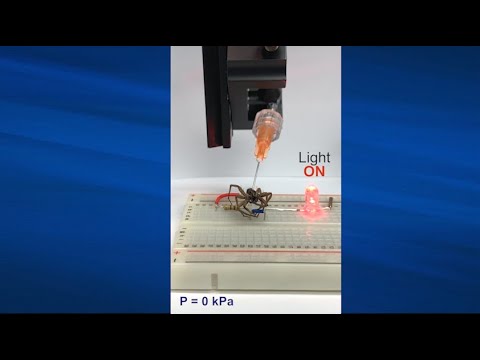
Researchers inserted a needle into the prosoma of a spider and fixed it with a drop of super glue. Using a syringe they filled or drew air from the prosomal chamber, making the limbs move. Such a necrobot can perform up to 1,000 opening-and-closing cycles.
According to the scientists, future robo-spiders could assist in assembling microelectronics or in catching insects.
The week's most significant AI deals
From 24 to 30 July 2022, AI startups raised more than $519 million. Here are the most notable deals.
- Seedtag получила more than $252 million to scale AI tools for contextual advertising.
- Chinese collaborative-robot maker Jaka Robotics привлек $150 million.
- Theator собрала $39.5 million to support a platform for analysing surgical videos.
- RPA Supervisor привлекла $20 million to develop tools for automating routine tasks.
- Nash получила $20 million to expand the software-development team for managing and recommending local deliveries to customers.
- Butlr собрали $20 million to advance smart-sensor tech for office occupancy assessment.
- Evabot привлекла $10.83 million to support a chatbot that surveys potential recipients of corporate gifts.
- Drover AI получила $5.4 million to develop a computer-vision system for scooters.
- Shinkei Systems собрали $1.3 million.
Also on ForkLog:
- Google fired an engineer, who detected “mind” in AI.
- In Britain, calls to ban facial recognition in stores were made.
- The former Google CEO compared AI with nuclear weapons.
- The US Congress passed a law to spur chip manufacturing.
- AlphaFold predicted almost all known biological proteins.
Subscribe to ForkLog AI news on Telegram: ForkLog AI — all AI news!