



The Monero network underwent a rollback of 18 blocks, rendering 117 transactions invalid. This was noted by ecosystem users.
Nothing to see here. Qubic just pulled a casual 18 blocks reorg on Monero 🤷 pic.twitter.com/fwSFY3olNu
— zuqka ױ (@AvdiuSazan) September 14, 2025
The reorganisation began on September 14 at block #3,499,659, when the mining pool Quibic released a hidden chain that turned out to be longer than the main one. Network nodes automatically accepted it as correct, cancelling previous blocks.
A researcher known as Rucknium confirmed the incident on GitHub. A crypto podcaster under the pseudonym Xenu described the event as “the largest reorganisation in Monero’s history.”
Monero was hit by an 18 block reorg a few hours ago, which invalidated 118 transactions. This is the largest reorg in Monero’s history. Unsurprisingly ***ic is looking for any way to stay relevant and to stop the bleeding of their dumping price.
— xenu (@xenumonero) September 14, 2025
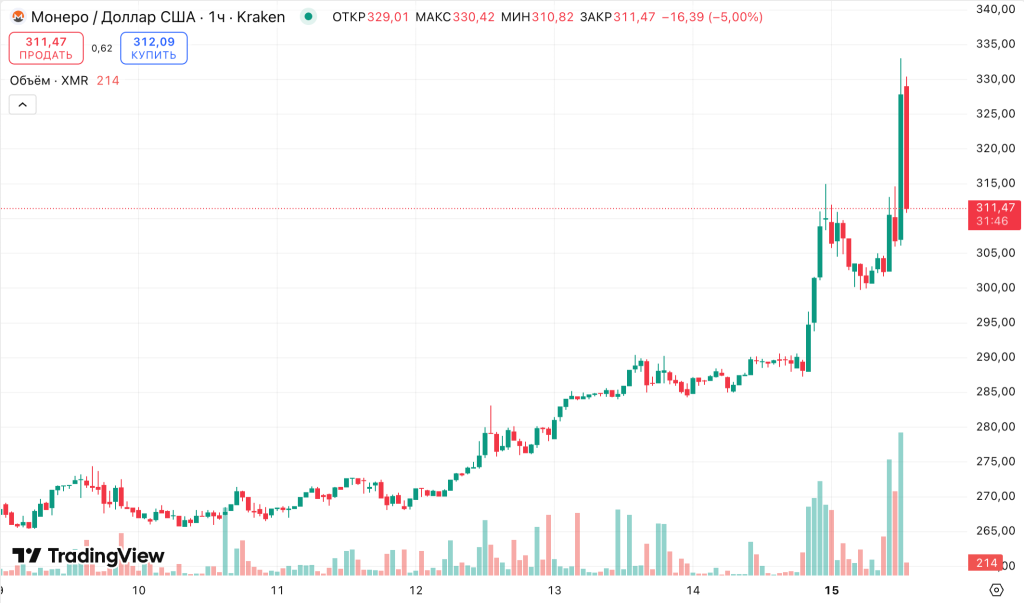
The price of the network’s native token, XMR, rose by 6%. At the time of writing, the asset is trading at $311.


Xenu suggested that the Qubic team is attempting to create mechanisms to “halt the coin’s collapse.”
Community Reaction
An analyst known as Vini Barbosa questioned the reliability of the Monero network and stopped accepting payments in XMR “until developers resolve the issue.”
Monero is still suffering from the selfish mining attacks
An 18-block-deep reorg recently hit the chain.
Affected blocks were 3499659 → 3499676.
A massive amount of transactions were invalidated.Personally, I don’t consider the Monero network reliable at this point. I’ll stop… pic.twitter.com/ToRl9qYmzg
— Vini Barbosa (@vinibarbosabr) September 14, 2025
“I know many will say I’m spreading FUD. That’s not the case. I’m simply reacting to the current situation, which I didn’t create, stating a fact and making a personal decision, prioritising my financial security,” he added.
Rucknium believes Monero will have to sacrifice decentralisation to counteract Qubic’s influence. He suggests that node operators are likely to start using DNS checkpoints—a mechanism where nodes download verified block data from trusted community servers. This could be a temporary solution to prevent further chain reorganisations.
“If the Monero community does not take this issue seriously, the project will forever remain at risk of sudden collapse,” warned SlowMist founder Yu Xian.
Back in August, the Qubic team claimed to have captured a significant portion of the network’s hashrate. Researchers refuted a 51% attack on Monero, but the community expressed concern and began exploring the possibility of upgrading the Proof-of-Work consensus algorithm.