



Monero, Zcash and Dash: how the three privacy veterans are faring
Since 2012 privacy coins have been a prime headache for regulators and arguably one of the most important practical achievements of the cypherpunks. Using Monero, Zcash and Dash as examples, ForkLog recalls how this asset class emerged and what has helped it survive despite regulatory bans.
Monero
Monero was preceded by the CryptoNote white paper, published in 2012 under the name Nicolas van Saberhagen. The protocol was designed to ensure a high degree of privacy and transaction anonymity, addressing shortcomings in Bitcoin and other early projects. The first cryptocurrency to use CryptoNote was Bytecoin (BCN), launched in July 2012.
Riccardo Spagni was the leading developer in Monero’s early community, drawn by anonymity and improvements on Bitcoin’s code. Studying CryptoNote, he saw kinship in its ideas and elegance in its implementation. But when Bytecoin launched with an 80% premine, angering the community, his attention turned to its fork Bitmonero, which looked open enough and not like a scam. Spagni and Bitmonero’s creator, known as thankful_for_today, soon fell out after the latter insisted on jointly mining two currencies — Bitmonero and Bytecoin.
Spagni, Francisco Cabanas and five anonymous engineers then organised a fork, launching a parallel implementation of the chain. Monero was born. The mysterious thankful_for_today eventually vanished from the internet, leaving the project with a single chain.
Monero launched in April 2014 with the ticker XMR to provide strong anonymity and confidentiality for transactions, unlike Bitcoin’s network where flows can be traced via a public blockchain. The protocol uses several cryptographic techniques to conceal transfer data:
- Ring Signatures. Digital signatures that can be created by any member of a group. It is computationally infeasible to determine which key produced a signature and to trace a transaction’s origin;
- Stealth Addresses. One-time addresses automatically generated for each new transaction. A Monero user can publish a single stealth address yet receive all incoming funds to different addresses. They are not linked to the published address — only sender and recipient know where the coins moved;
- Bulletproofs. A type of ZKP that enables confidential transactions in Monero and other protocols. In 2022 Bulletproofs+ was released, speeding up transactions and increasing ring size from 11 to 16, making tracing harder;
- Dandelion++. A feature that obscures links between transactions and node IP addresses.
Monero stands out for an architecture that renders the source, recipient and amount of a transaction untraceable. The introduction of RingCT in 2017 also hid the amount, making the network even more confidential.
Even so, in 2020 Riccardo Spagni said an “ideally private” cryptocurrency is unattainable: there is always a risk that some part of a transaction becomes visible and helps unravel others. Ring signatures can obfuscate trails but do not guarantee complete anonymity. A logical step to raise privacy is to use more than one Monero wallet and move coins between them.
A telling case came in September 2020, when America’s IRS offered a $625,000 bounty to contractors who could develop Monero-tracking tools. Chainalysis and Integra FEC won the tender. According to CoinDesk, Chainalysis said it would provide a “practical tip” in 65% of tracing attempts.
The PoW-mining boom did not pass Monero by. Crypto-enthusiasts reaped hefty profits with minimal capital — briefly. Difficulty climbed and ASICs arrived, striking at decentralisation, anathema to the project’s founding ethos. To protect the community and the network, updates and hard forks were released to counter ASICs:
- in 2018 updates changed the CryptoNight algorithm, rendering ASIC miners useless. This preserved decentralisation by keeping mining accessible to ordinary CPU and GPU users;
- in November 2019 a new algorithm — RandomX — was launched, optimised for CPU mining. It demands significant device RAM and random program execution, making ASIC mining highly unprofitable.
That did not stop Bitmain, the biggest maker of ASICs. In September 2023 the firm unveiled a model aimed at XMR mining.
Monero’s hashrate has ebbed and flowed with algorithm changes. The switch to RandomX boosted it, as more CPU miners could join. By May 2024 its average reached roughly 2.5 GH/s, while average daily transactions in 2023 were 15,000–20,000. That metric continued to improve in the first half of 2024, often touching 40,000 a day.
For storing and spending XMR, users can choose both hardware (cold) and software (hot) wallets. Popular cold options include Ledger and Trezor; hot options include the classic Monero GUI Wallet (a “heavy” full client) and lighter mobile choices — Feather, Monerujo, Cake Wallet.
The last of these plays a notable role in the ecosystem, supporting the network and community. The wallet began XMR-only but now supports Bitcoin, Litecoin and six other assets. The Cake Wallet community runs promotional campaigns to popularise Monero.
Real-world use suggests the token’s suitability and uptake across many online shops — not just those selling illicit goods, and mostly the reverse. A tweet by a Monero researcher and privacy enthusiast vividly shows the growth and share of XMR payments across marketplaces.
Monero’s community is among the industry’s strongest. Over its lifetime more than 800 developers have contributed code, predominantly using TypeScript. Activity, according to the developer portal, is near the top end (High Activity).
After the closure of Local Monero in May 2024, the community lost a P2P exchange and its largest liquidity hub. Even so, supporters continue to promote anonymous Haveno and Bisq, which operate over Tor.
After being extradited to South Africa, Riccardo Spagni cannot leave the country owing to an open fraud case unrelated to Monero. He has stepped back from a key role in the project and is focusing on a new venture — Tari, a Monero sidechain intended as a decentralised digital-asset protocol.
Today Monero remains one of the most popular privacy coins. As of June 1st 2024 XMR’s market capitalisation stands above $2.5bn, with daily trading volume around $50m.
Zcash
Zcash (ZEC) launched in October 2016 as a fork of Bitcoin. It was initially called Zerocoin, created in 2013 by Matthew Green and Eli Ben-Sasson.
Zerocoin was designed to work with Bitcoin, used the digital gold’s codebase and sought to enhance its privacy. In 2015 Zooko Wilcox joined the project; the name was changed to Zcash.
Wilcox served as CEO of Electric Coin Company (ECC) until he was succeeded by Josh Swihart, senior vice president of growth.
Zcash’s main innovation is ECC’s in-house development — and subsequent refinement — of zk-SNARKs (Zero-Knowledge Succinct Non-Interactive Argument of Knowledge). The technique has become a popular cryptographic method: a ZKP that lets transactions be verified without revealing information about them.
Unlike Monero, users can choose transaction type — transparent (t-addresses) or shielded (z-addresses). In 2022, for convenience, all address types were combined into Unified Addresses. Users now generate a single address that automatically determines transaction type. According to Swihart, the number of shielded coins is steadily growing. In May the figure hit a record high of more than 1.4m in the corresponding pool.
Zcash uses a modified Bitcoin codebase. The ZEC supply is capped at 21m, of which more than 15m had already been mined as of June 1st 2024. PoW mining uses Equihash, which checks the RAM miners employ. Since a 2020 upgrade, miners can receive rewards directly to shielded z-addresses to enhance their privacy.
After an early, highly profitable phase for GPU mining, ASICs took over the algorithm, centralising the network while preserving its stated anonymity.
Key milestones:
- one of the network’s first upgrades, Sapling, arrived in October 2018. It significantly improved performance and speed for shielded transactions, making them more accessible;
- in 2019 a new zk-SNARK called Halo was introduced to tackle scalability and the need for a “trusted setup”. Halo 2 was open-sourced in September 2020;
- November 2020 brought another important upgrade — Canopy. With the first halving, changes improved security. A development fund was established and the so-called Founders’ Reward — under which 20% of newly minted ZEC supported developers and early investors for the first four years — was removed;
- the 2022 Network Upgrade 5 added Halo Arc components, advancing zk-SNARK innovation. Zcash moved fully to Halo proofs, eliminating the need for a “trusted setup” and strengthening its cryptography;
- in 2021 the team outlined a five-year plan and floated a possible switch to Proof-of-Stake (PoS). Ethereum cofounder Vitalik Buterin backed the idea, but as of June 2024 it remains unrealised.
A unique feature of the blockchain is the “Zcash ceremony”, or “trusted setup”, held at launch in 2016 and involving six people who created a master key. Soon after the genesis block, five participants revealed their identities. In 2022 former NSA and CIA contractor Edward Snowden disclosed that he was the sixth participant, under the pseudonym John Dobbertin.
In the past three months network metrics have picked up somewhat, notably the number of active addresses, which began to climb out of a year-long trough in May 2024, approaching 16,000. Over the same period miners actively moved “old” ZEC from the first Sprout and Sapling pools to Orchard, the improved pool created in 2022, which now holds more than 340,000 coins.
After a three-year pause, Grayscale resumed buying ZEC, according to Coinglass. Assets under management in the Zcash Trust currently total nearly $9.5m.
Despite regulatory bans on privacy coins, ZEC can still be held and traded on Binance. But it sits in the higher-risk Monitoring category under tighter oversight by the CEX, and transfers of shielded tokens are prohibited. In response, the community is coalescing, creating a more convenient, quasi-anonymous environment and updating leading wallets (Nighthawk, Zashi, Edge). As announced in May 2023, it is also forging new collaborations with the privacy-focused Brave browser and Filecoin Foundation to bring shielded transactions to the browser’s Web3 wallet.
Per CoinGecko on June 1st 2024, ZEC’s market capitalisation exceeds $400m, with daily trading around $20m.
Dash
Rounding out the trio is Dash, a payments system created in January 2014 by programmer Evan Duffield, with a token of the same name.
Initially known as XCoin and later Darkcoin, the project was renamed Dash in March 2015. It emerged from a Bitcoin fork and suffered an early glitch that allowed 1.8m DASH (about 10% of supply) to be mined in two days. The team proposed a restart, but community criticism led to a decision to press on.
Dash builds on Bitcoin’s transaction-anonymisation technique CoinJoin, mixing a user’s coins with others via PrivateSend. In the wallet they exist as discrete coins sourced from different addresses. Thus a single transaction combines DASH from at least two other owners. In essence, coins never leave the wallet; their holders are swapped.
With InstantSend, Dash offers fast and relatively cheap transfers (under $0.01). Its architecture includes double-spend protection and optional privacy. A decentralised masternode network provides extra security and functionality. Governance and funding are handled by a DAO.
As with Zcash, users choose the desired level of privacy. Underscoring the point in late 2020, Fernando Gutiérrez, chief marketing officer of Dash Core Group, insisted that “Dash should no longer be perceived as one of the privacy-focused cryptocurrencies. A better description is a means of payment”.
DASH is mined via PoW using X11, which runs several rounds of 11 different hash functions (blake, bmw, groestl, jh, keccak, skein, luffa, cubehash, shavite, simd, echo). The approach makes it one of the more cryptographically complex — and thus fairly secure — systems.
As of May 2024 about 11.8m coins had been mined out of a maximum 18,920,000. Emission distribution was changed by a 2023 vote to:
- rewards to masternode holders — 60%;
- DAO budget — 20%;
- miner rewards — 20%.
Dash’s history features efforts to improve user experience and network performance. In March 2019 the Evolution upgrade went live to simplify everyday use.
By mid-2021 developers launched the DashDirect payments app, enabling DASH spending with merchants. It tied together more than 155,000 retail and service locations and 125 online shops in the US.
For a project built for payments, the ability to spend is essential — and the team has done a decent job. The official site lists a whole “where to spend” category with thousands of retailers and online shops worldwide.
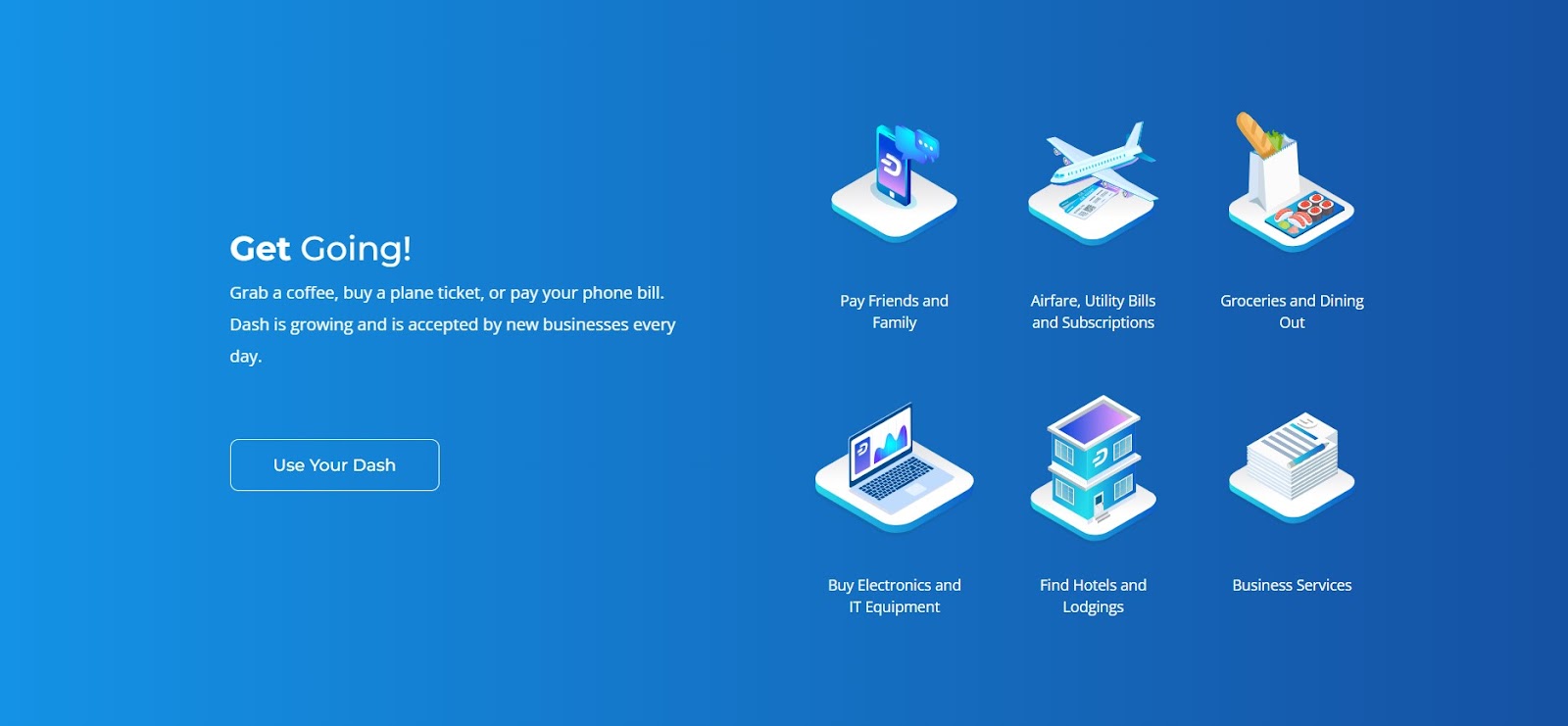
Since 2018 Dash has been actively used in Venezuela to buy everyday goods — food and medical supplies. Adoption took off amid hyperinflation and the struggle to meet basic needs. The service also enables bill payments, including electricity and internet.
The project continues to evolve. In May 2024 the team declared itself ready for decentralisation and hopes to put the delisting wave behind it — and even return to some CEXs.
According to CoinGecko, DASH’s market capitalisation in June 2024 is around $350m, with daily trading above $20m. Per Messari, active addresses are near a yearly high, above 100,000.
Conclusion
After a long lull, metrics across all three projects are ticking up. This may reflect coin migration after bans and delistings — and the threat of more to come. Rising on-chain activity, however, points to genuine user growth and practical use of privacy-focused assets.
As of June 1st 2024, the market capitalisation of the Privacy category on CoinGecko was nearing $7bn.
Many people prefer anonymity for personal aims: saving, investing and conducting private transactions. It is especially relevant in countries with tight financial controls or unstable economies, where assets risk loss or confiscation. In addition, Web3 charities (such as The Giving Block) and traditional funds are beginning to accept privacy coins for donations, letting donors stay out of sight if they wish.
Despite pressure from regulators and law enforcement, this corner of crypto continues to find users by offering practical ways to protect personal information.
Text: Sergey Golubenko
Рассылки ForkLog: держите руку на пульсе биткоин-индустрии!