



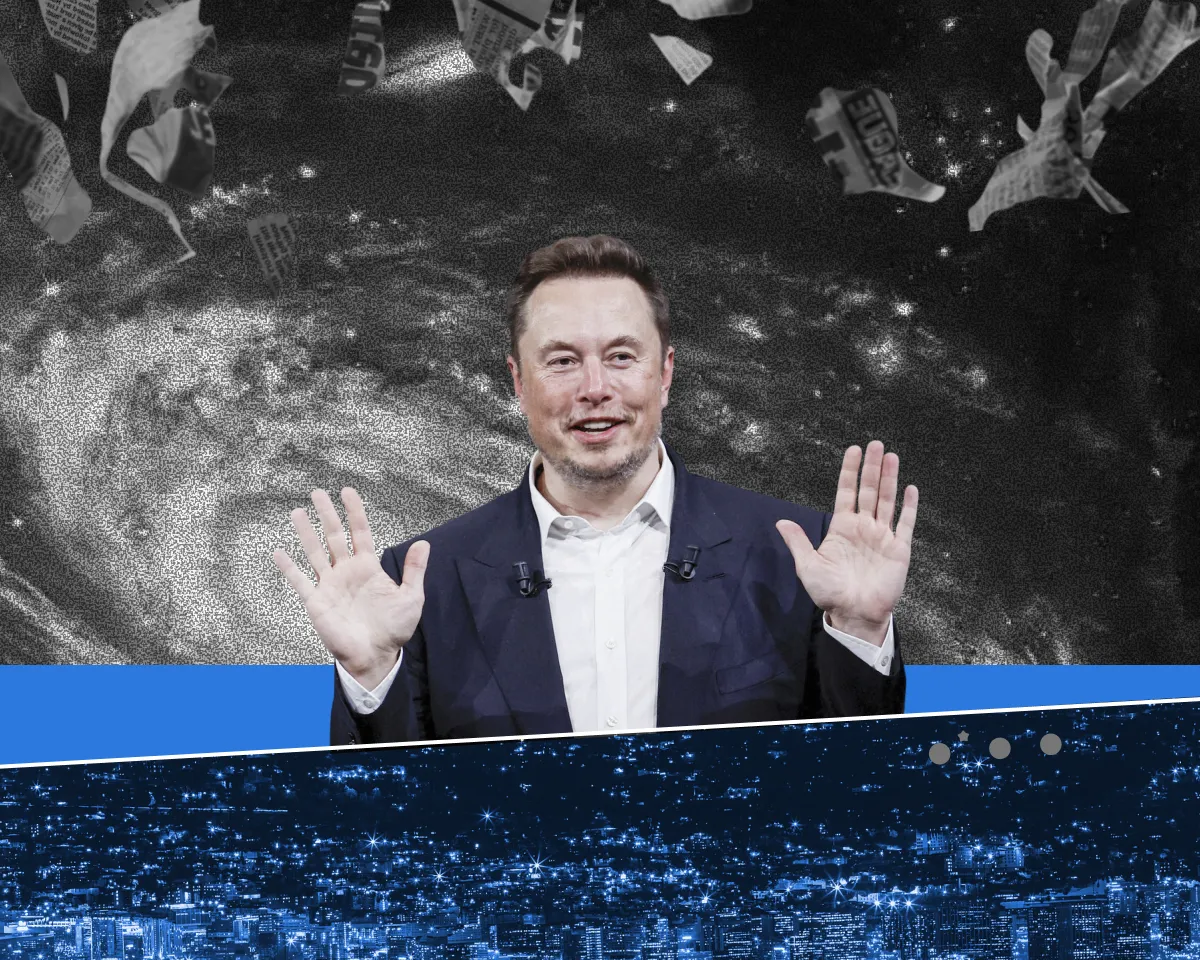
Artificial intelligence could surpass human capabilities as early as 2026, according to Elon Musk, head of Tesla, SpaceX, and xAI. He made this statement during a conversation with BlackRock CEO Larry Fink at the WEF in Davos.

“I think by the end of this year, we might have AI that is smarter than any human. No later than next year. By 2030 or 2031, the neural network will be smarter than all of humanity,” the entrepreneur said.
Musk’s comments align him with a growing group of tech company leaders who believe that AGI will emerge within a few years rather than decades, raising concerns about changes in the labor market.
The Tesla chief believes that the economic potential of artificial intelligence will be realized not in software, but through integration into humanoid robots capable of performing physical work on an industrial scale.
“If you have ubiquitous AI that is free or close to it, and robotics, you will see explosive growth in the global economy,” the billionaire noted.
Musk affirmed the view that humanoids will eventually outnumber humans.
“My forecast for a favorable future is this: we will create so many robots and AI that they will meet all human needs,” he said.
Optimus
Musk announced that Tesla is already using an early version of its humanoid robot Optimus in factories. The devices perform basic operations and will tackle complex tasks by the end of 2026.
The company also plans to begin selling androids to the general public by the end of 2027.
Musk emphasized the need to transition to solar energy for the development of the robotics sector. Its large-scale implementation will determine how quickly AI systems can develop.
“The sun is undoubtedly the largest source of energy. If you look beyond Earth, it provides up to 100% of all energy. The sun accounts for 99.8% of the mass of the Solar System,” he added.
The entrepreneur insisted on cautious development of AI and robotics.
“We don’t want to end up in a James Cameron movie ‘Terminator’,” the billionaire noted.
Tesla Robotaxis
Another area of automation Tesla is focusing on is robotaxis. The company has begun offering real rides to customers in Austin.
In December 2025, the firm launched driverless taxis without drivers overseeing the process, but also without passengers.
In June, the first test rides began. One passenger noted the car’s high speed and autonomous parking capabilities.
Tesla’s head of AI, Ashok Elluswamy, wrote that “several” cars from the robotaxi fleet will operate without supervision. Over time, their share will increase.
China — The Leader
While Tesla plans to sell robots by the end of 2027, Chinese startups are already delivering thousands of humanoids annually.
In 2025, Chinese company Unitree Robotics delivered over 5,500 units to clients. It ramped up production ahead of its stock market debut.
Unitree’s annual production exceeded 6,000 units, excluding deliveries and the development of wheeled models and other robotic products.
The company became the leader among major humanoid robot manufacturers in the country in 2025. However, some reports place AgiBot at the top in terms of global market shipments. The firm sold over 5,000 units and earned $142 million.
A new report by Counterpoint Research showed that in 2025, China accounted for more than four out of five humanoid robots sold.
The global shipment volume reached 16,000 devices, mainly used for data collection and research, as well as in logistics, manufacturing, and automotive industries.
In January 2026, LG Electronics introduced a new generation home robot with artificial intelligence — LG CLOiD.