



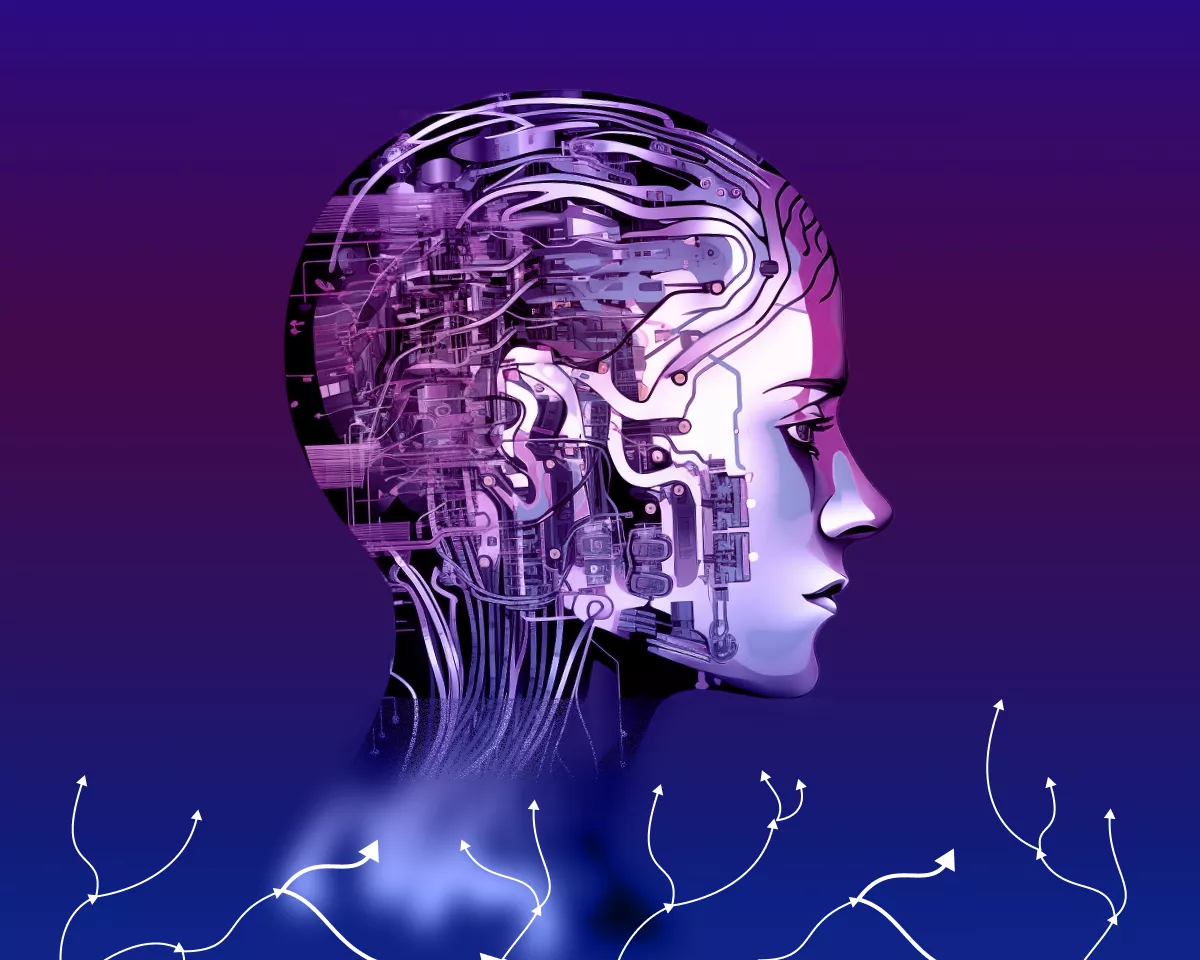
• An increasing number of companies are venturing into the production of humanoid robots.
• Androids are set to replace workers in sectors involving heavy, dangerous, and tedious tasks.
• Major players are ready to invest significantly in startups that combine AI and robotics.
Cybernetics has once again become a hot topic of the modern era, primarily driven by advancements in artificial intelligence, enabling developers to produce increasingly autonomous machines.
David Holz, founder of the research lab Midjourney, predicted that by the 2040s, there will be a billion humanoid robots on Earth, and by the 2060s, a hundred billion robots throughout the solar system.
Probably something like that, provided the foundations of civilization are stable
— Elon Musk (@elonmusk) January 16, 2024
“Probably. Provided the foundations of civilization are stable,” agreed Elon Musk.
Tesla Optimus
Musk’s companies’ actions support his words. The humanoid robot Tesla Optimus, first unveiled at the AI Day event on August 19, 2021, has learned household tasks. It can sort blocks by color and participate in assembling its copies.
On January 15, the owner of Tesla posted a video on X showing the humanoid robot Optimus folding a shirt.
Optimus folds a shirt pic.twitter.com/3F5o3jVLq1
— Elon Musk (@elonmusk) January 15, 2024
Later, Musk clarified that the robot’s actions are controlled by a human operator.
1X Eve
Funded by OpenAI, humanoid robots have learned to perform some tasks autonomously. Startup 1X introduced the Eve model, trained using end-to-end learning.


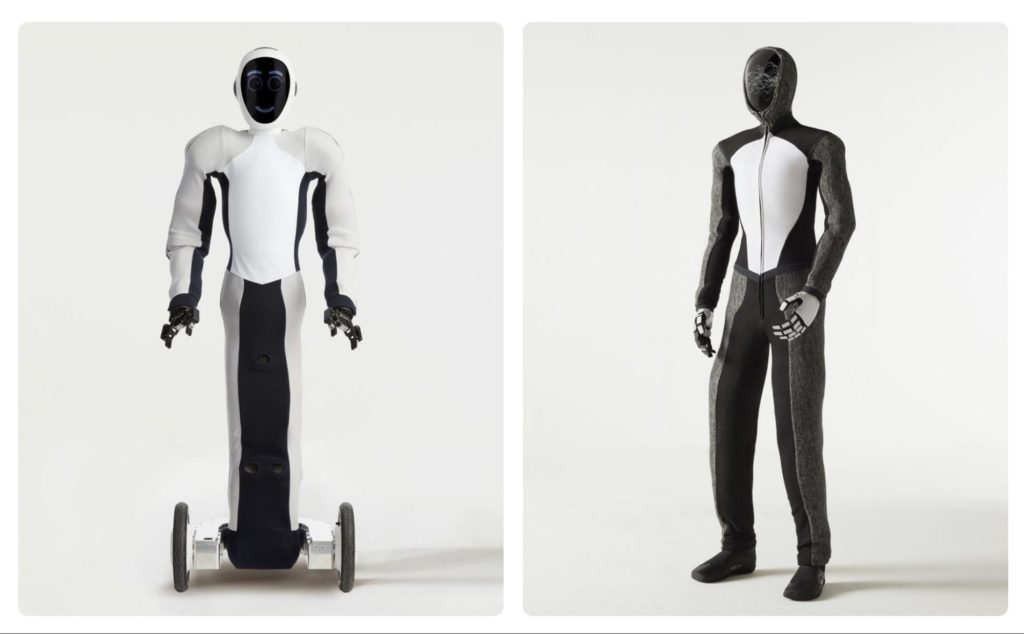
Sam Altman’s company has invested over $125 million in the development. Eve performs various actions under the control of neural networks without operator involvement. They can open doors, collect and organize scattered items, and connect themselves to charging stations.
However, a downside is the robots’ movement on wheels, which limits maneuverability.
In January, 1X introduced a new model, Neo. According to the description, the android can walk, run, climb stairs, and navigate spaces.
Watako Lab
In Japan, a humanoid with a human-like gait has been created. The android from Watako Lab not only walks in a manner familiar to humans but also moves its arms confidently.
やっと、やっとここまできた…。
もう少し、あと少し…。 pic.twitter.com/ya38JBYZjU
— わたこ (@WatakoLab) October 29, 2023
Thanks to advanced equipment and complex software, its actuators and sensors work in harmony, providing precise and controlled movements, mimicking complex human biomechanics.
EX Robots
Scientists in China aim to make not only the gait but also the appearance of robots more realistic. At the Dalian Museum of Future and Science, prototypes with skin made of medical silicone, imitating real skin down to the finest details, are on display.


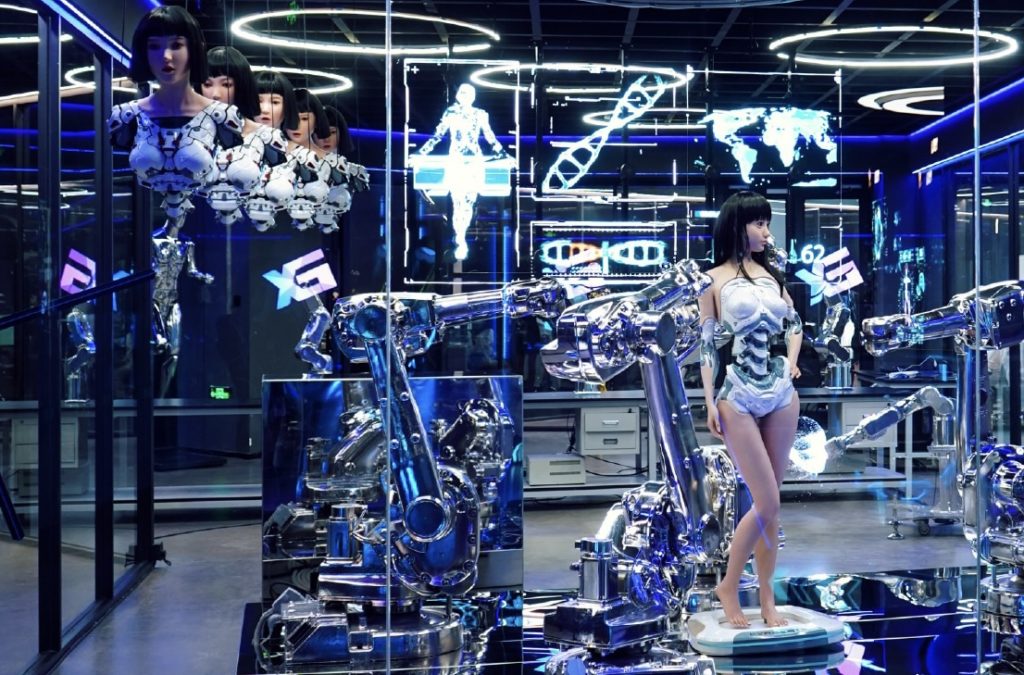
The humanoids are developed by EX Robots. Its founder, Li Boyan, stated that their androids are currently the most complex product in the industry, as they have more than 140 degrees of freedom from face to fingertips.
“Our robots can communicate not only through voice but also express their emotions through facial expressions. They can also determine the mood of the person they interact with, making them very human-like,” added Li.
The price of androids produced by EX Robots is around $140,000. They are being tested as administrators, retail store cashiers, and social workers caring for the elderly.
Figure
Figure is advancing cybernetic technologies to create autonomous humanoids designed to perform tasks in factories and warehouses. To replace workers in industrial enterprises, it is crucial to train these robots to learn without human assistance.


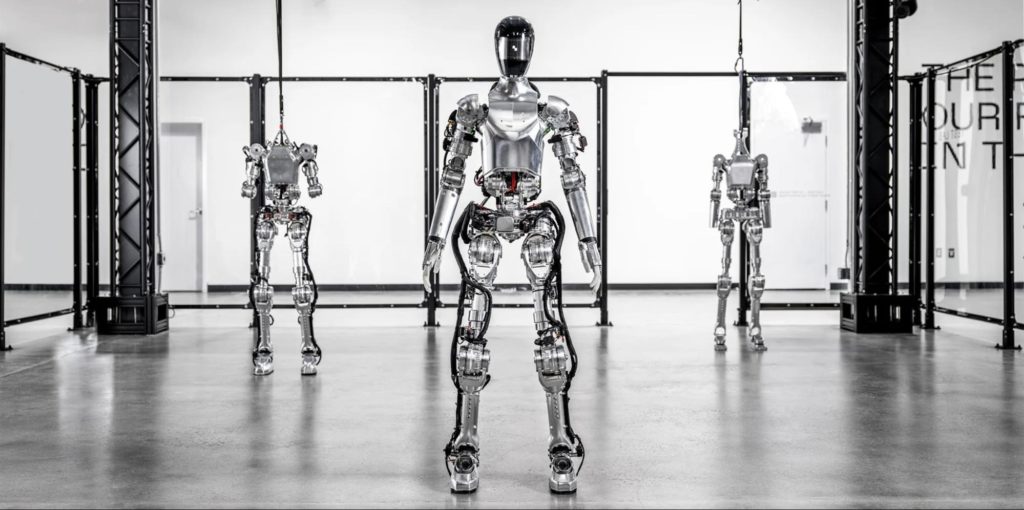
For example, the Figure 01 model learned to brew coffee independently after watching a video tutorial. The significance lies not in the machine performing the actions but in the ability to replicate them after observing a real person.
Delegating heavy and tedious tasks to robots will help employees focus on processes that cannot be automated, as well as increase production efficiency while reducing the number of accidents.
In January, BMW Manufacturing and the robotics startup Figure announced a partnership. They agreed to allow androids to work at the car manufacturer’s plant in Spartanburg, South Carolina, USA.
This collaboration marked a revolution in the automotive industry through the combination of artificial intelligence and robotics.
Back in January, Figure attracted $675 million from Jeff Bezos, Microsoft, Nvidia, Amazon, Intel, LG, Samsung, and OpenAI.