


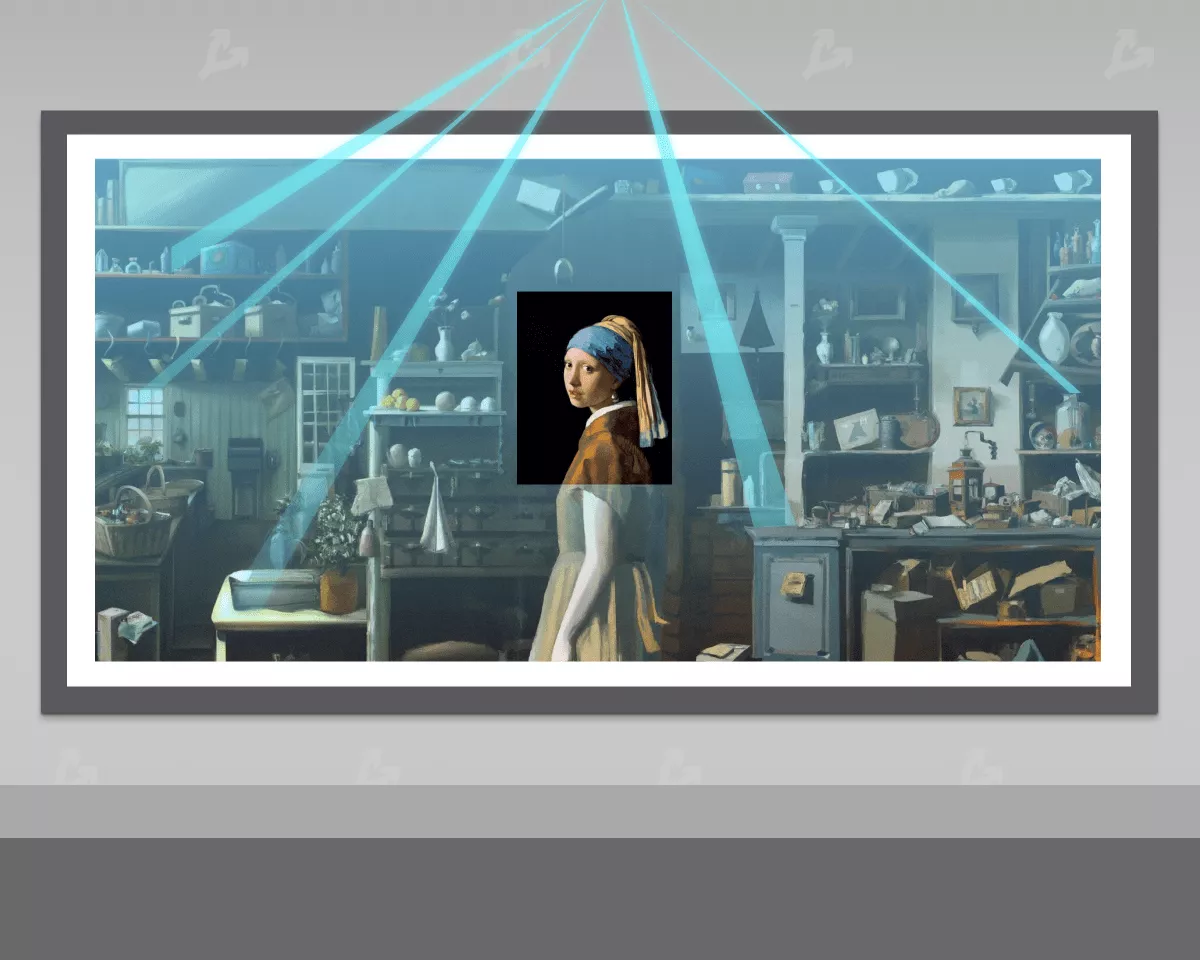
AI helps verify authenticity of disputed Renoir painting.
Swiss company Art Recognition employed AI to verify the authenticity of the painting Portrait of a Woman (Gabrielle) allegedly by French painter Pierre-Auguste Renoir. The Guardian reports.
Auction house Sotheby’s valued the work, owned by a private collector, at 100 000-150 000 pounds (about $118 000-170 000). However art historians dispute its authenticity.
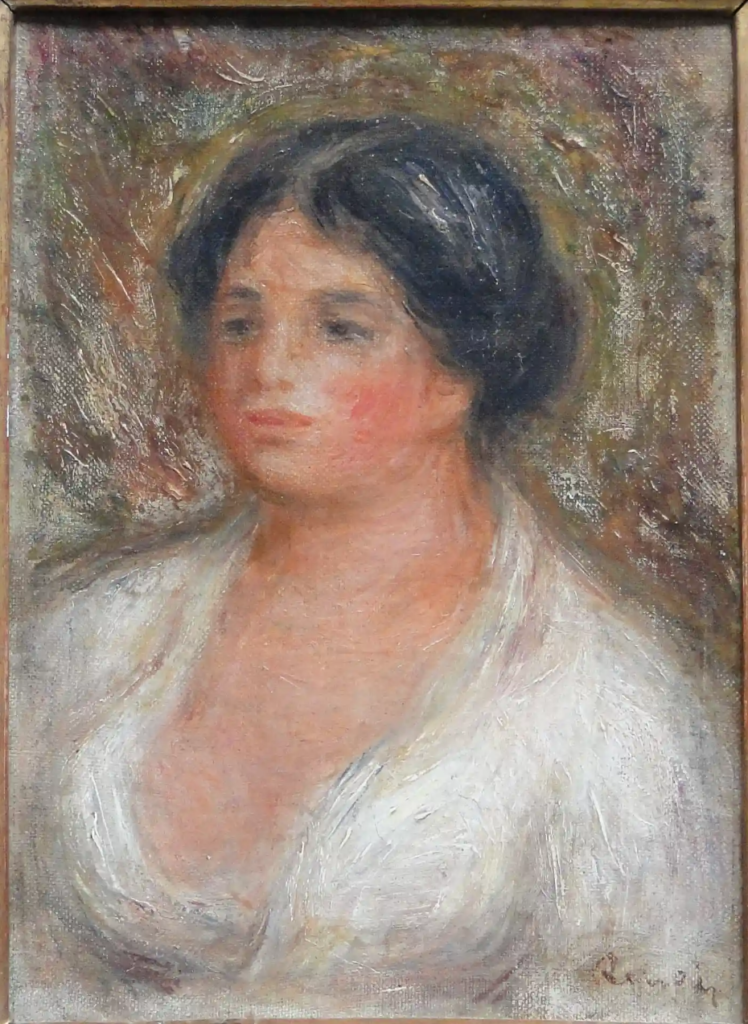
When Институт Вильденштейна—Платтнера, which develops каталоги-резоне for Renoir, declined to include “Gabrielle” in its listing, the portrait’s owner turned to Art Recognition.
Specialists at the company used photographs of 206 authentic Renoir paintings and their fragments to train the AI algorithm to recognise his brushwork and color combinations. To improve accuracy, they also trained the neural network on works by other artists with a similar style who painted in the same period as the French Impressionist.
As a result, the technology determined that with an 80.58% probability the Portrait of a Woman belongs to Renoir.
Subsequently, the painting’s owner consulted Paris-based experts GP.F.Dauberville&Archives Bernheim-Jeune, which publish their own catalogues raisonnés of Renoir’s works. Conducting a scientific analysis of the portrait’s pigments, they also confirmed the authenticity of Gabrielle.
However, art connoisseurs argue that AI accuracy depends on the quality of the paintings on which it was trained. If the works are forged or contain retouched areas, this will affect the system’s performance and create even greater uncertainty.
Art historian Bendor Grosvenor expressed concern that such technologies could devalue experts’ contributions to assessing the authenticity of paintings.
“So far, the methods used to train AI programs and the fact that the company bases attribution solely on a photograph taken with an iPhone are not impressive,” he said.
Grosvenor added that the technology is weak in its inability to account for the condition of the works.
“Many paintings by old masters are damaged and marred by layers of grime and paint, and without forensic examination it is impossible to determine whether a work is authentic,” he added.
According to Art Recognition chief Karina Popovich, the company understands the importance of training-data quality and therefore used photographs only of genuine canvases.
“We sincerely want to give art historians the ability to use AI to help inform decisions in cases where they have doubts. But they must be open to this technology,” she said.
Earlier in October 2021, Art Recognition’s AI challenged the authenticity of Rubens’ Samson and Delilah, displayed at the National Gallery in London.
In the same month, Google AI researchers recreated destroyed Gustav Klimt paintings using artificial intelligence.
Subscribe to ForkLog’s Telegram news: ForkLog AI — all the news from the AI world!
Рассылки ForkLog: держите руку на пульсе биткоин-индустрии!