




In 2024, social engineering has become the forefront of tactics employed by fraudsters and extortionists within the crypto industry. The primary attack vector has been the social network X, according to insights shared by analysts from Merkle Science.
Experts examined 36 incidents that were constructed using social methods “from start to finish.”


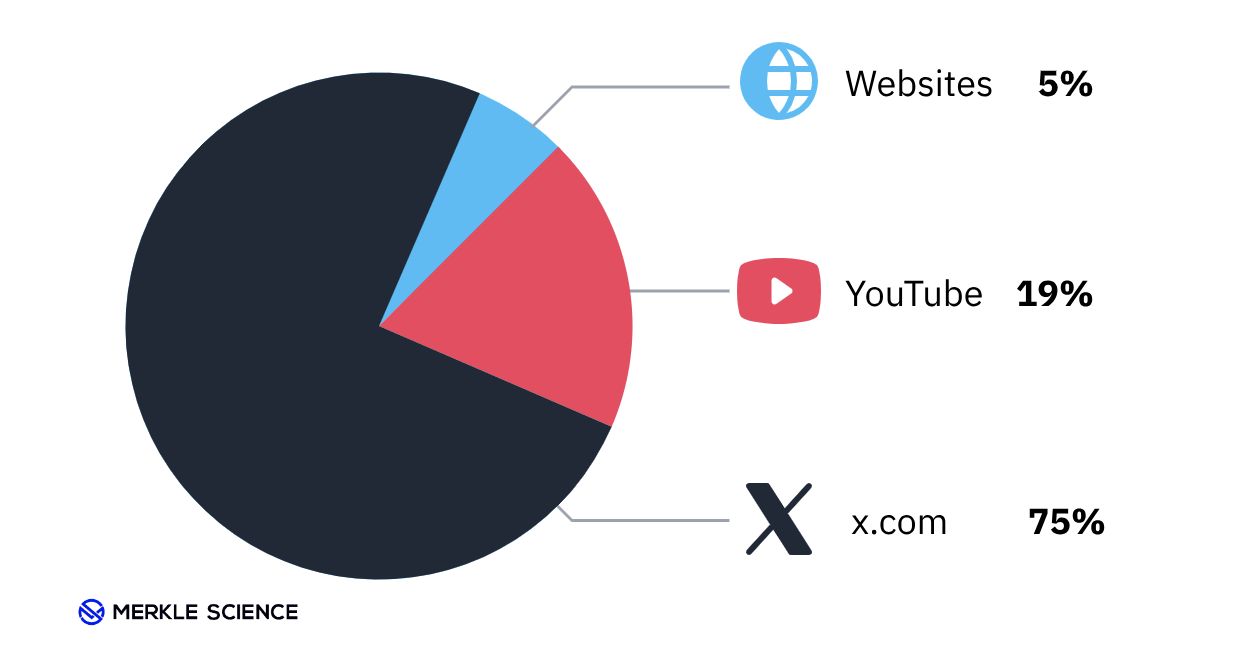
Approximately 75% of these incidents occurred on the former Twitter, 19% on YouTube, and 5% on official project websites.
Analysts emphasized that for crypto projects, it is crucial not only to ensure on-chain security but also to fortify Web2 communication channels against interference.
According to Merkle, well-known personalities and brands in the tech sector are the most popular targets for attackers, accounting for a combined share of 49% (30% and 19% respectively).

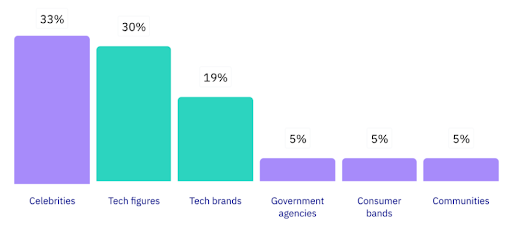
Celebrities were victims in 33% of cases. Government agencies, consumer brands, and communities each accounted for 5%.
Experts noted that perpetrators prefer accounts with a certain level of community trust and connections to the tech industry or cryptocurrencies.

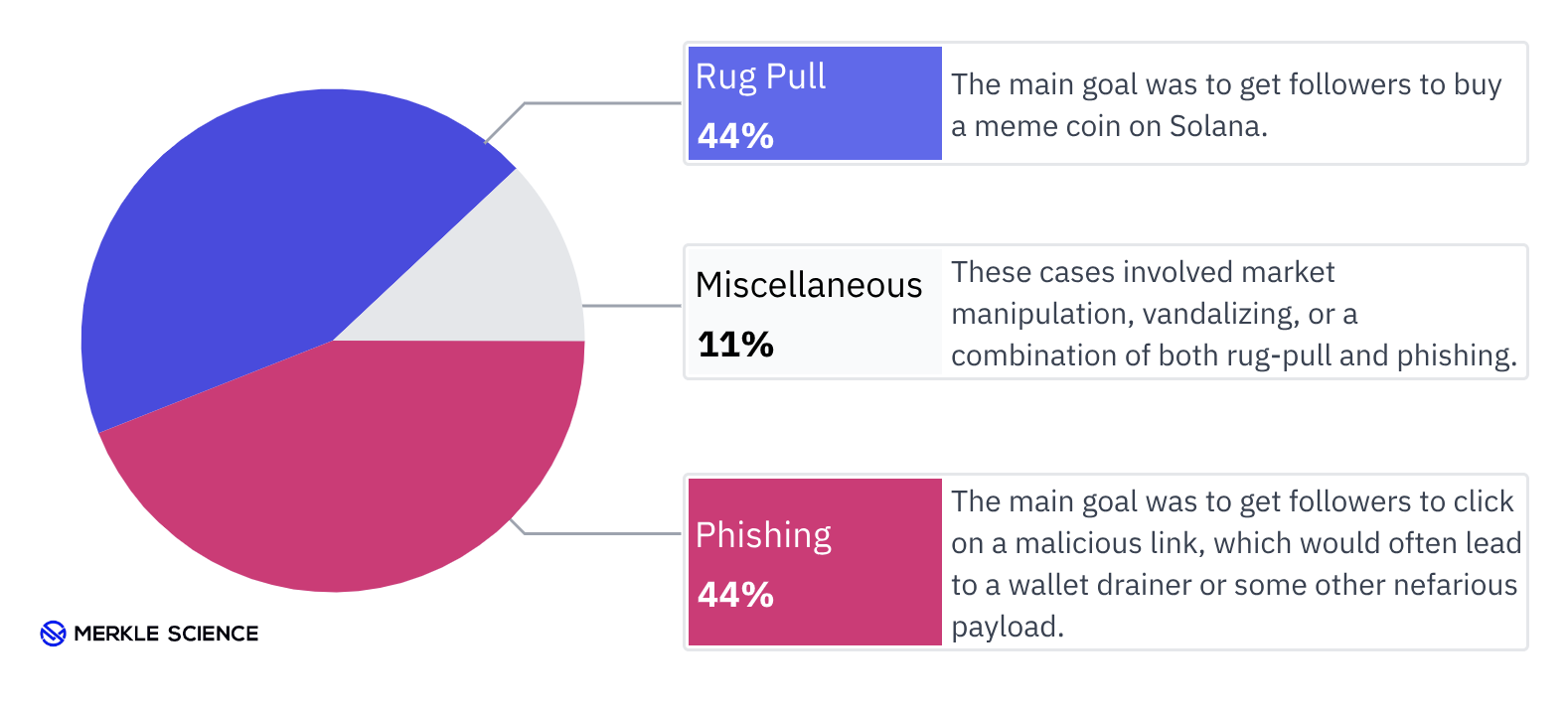
Rug pull and phishing schemes accounted for 44% of all incidents — fraudsters used compromised social media accounts to promote tokens or distribute malicious links.
The remaining 11% of cases involved a combination of the aforementioned methods, market manipulation, and vandalism.
According to Merkle Science specialists, to completely prevent attacks, it will be necessary to enhance authentication methods, develop incident response strategies, and foster an understanding of the issue among influencers and their communities.
As reported by Chainalysis, in 2024, bitcoin extortionists’ revenues decreased from $1.25 billion to $813 million.