



A substantial share of EOS token purchases during the ICO was provided by a cluster of addresses affiliated with each other. This suggests the possible use of wash trading to artificially inflate trading volumes, according to a study by analytics firm Integra.
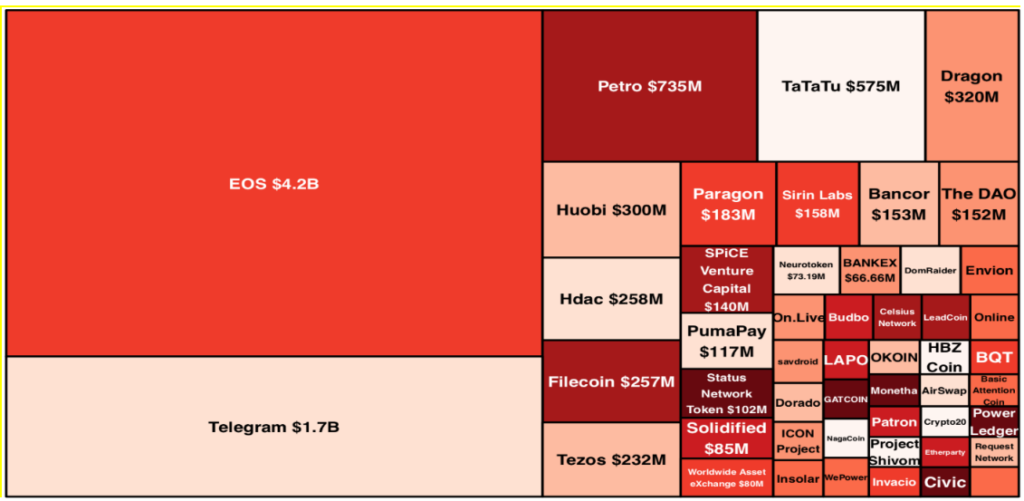
In 2017-2018, blockchain company Block.one conducted the EOS ICO. In the token sale, the project raised $4.2 billion — a record that still stands.


The Integra team, led by finance professor John Griffin of the McCombs School of Business at the University of Texas at Austin, analyzed the ICO transactions and identified a cluster of suspicious transfers among affiliated parties. According to the report, these operations “pumped” the price of EOS and prompted investors to participate in the token sale.
‘The seemingly artificial demand from suspicious addresses had two effects: first, direct manipulation of EOS’s asking price higher through additional purchases, and raising the token’s market value; second, creating a false impression of the token’s value that prompted investors to buy it,’ the report states.
Analysts identified 21 addresses that regularly made unusually large purchases of EOS followed by sales on exchanges in under an hour. Integra estimates that the total value of assets recirculated in this manner amounted to 1.2 million ETH (~$815 million at the time).


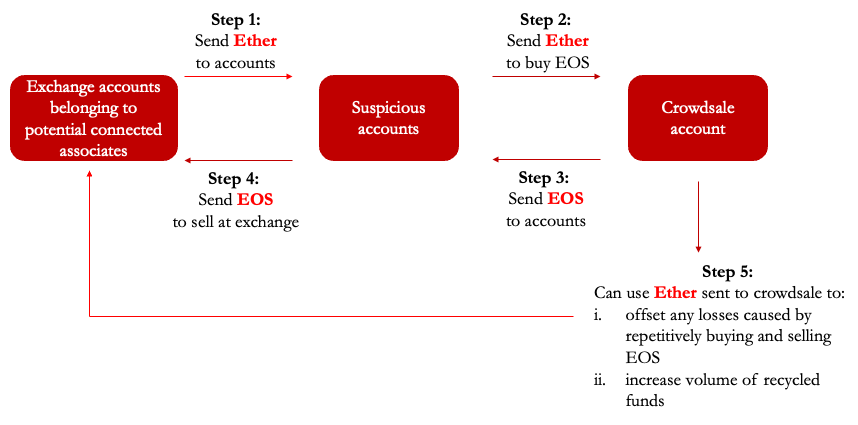
‘This [the number of addresses and the amount of deals] should be regarded as a lower bound, given our conservative method of identifying suspicious addresses. The recirculation scheme could be more extensive and include other ways of manipulating EOS’s price,’ the analysts write.
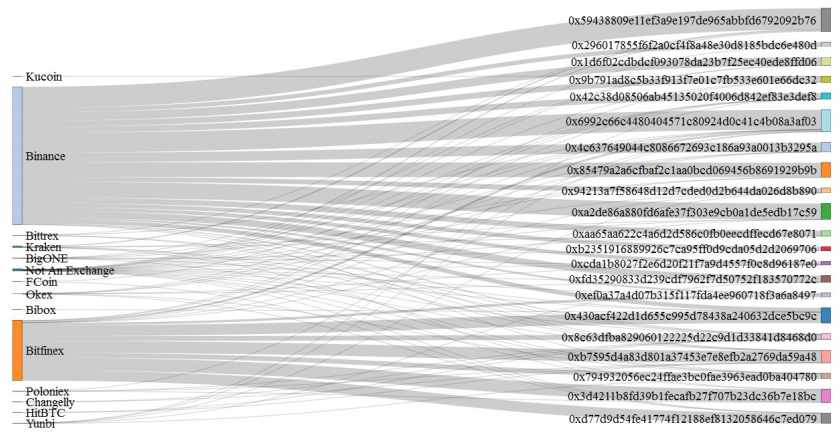
98% of the ETH used in the recirculation scheme was obtained by suspicious addresses from Binance and Bitfinex. Integra noted that this is unusual, as institutional investors rarely use unprotected exchanges to store large sums.


The report does not name the owners of the addresses implicated in the alleged scheme. Analysts also do not directly tie them to Block.one or individuals affiliated with it. They noted that by the end of the token sale these accounts accounted for nearly a quarter of all EOS purchases.
In July 2021, law firm Clifford Chance did not uncover evidence of Block.one purchasing EOS tokens on the primary market. Experts concluded that addresses owned by the organization did not conduct transactions in favor of the relevant smart contracts.
Earlier in June, Block.one announced a settlement with ICO investors. The company will pay them $27.5 million.
In October, the organization agreed to pay the SEC a penalty of $24 million. The regulator accused it of violating securities laws.
Read ForkLog’s Bitcoin news on our Telegram — cryptocurrency news, rates and analytics.